What Are the Legal Protections Against Women's Discrimination at Work?
TL;DR
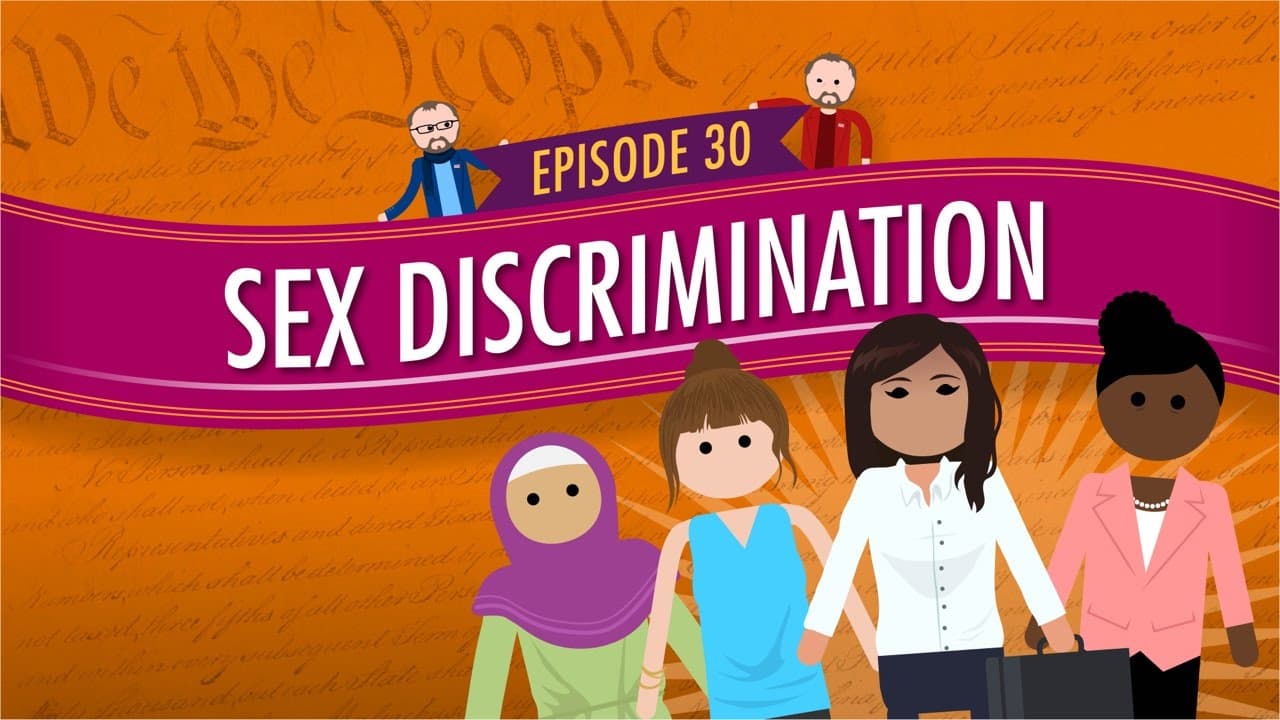
Legal protections against discrimination in the workplace for women are primarily established through the Civil Rights Act of 1964, specifically Title 7. This act prohibits employment discrimination based on sex, ensuring women are shielded from unfair treatment and sexual harassment, which can manifest as quid pro quo or hostile work environment scenarios. Despite legal advancements, women continue to face discrimination, highlighting the need for ongoing protections.
Transcript
Hi, I’m Craig, and this is Crash Course Government and Politics and today I am going to talk to you about something the affects almost everybody, jobs. Unless you are very lucky or very unlucky, at some point in your life, you will probably have a job and more likely than not, you will be employed by someone else. The big boss. The person who tells... Read More
Key Insights
- Employment discrimination laws protect against bias based on race, religion, ethnicity, or sex, with specific focus on women despite them not being a minority.
- Intermediate scrutiny is applied in legal cases involving sex discrimination, which is more rigorous than rational basis review but less than strict scrutiny.
- The 1964 Civil Rights Act, especially Title 7, is crucial in outlawing employment discrimination and outlines unlawful practices by employers.
- Proving discrimination in court can be challenging; plaintiffs must show they belong to a protected class and that discrimination occurred.
- Sexual harassment is considered a form of discrimination, with two main types: quid pro quo and hostile work environment.
- Quid pro quo harassment involves exchanging workplace benefits for sexual favors, while hostile work environment is created by pervasive inappropriate conduct.
- Courts hold employers accountable for maintaining a workplace free of harassment, even if the harassment is by other employees.
- Despite progress, women still face significant discrimination, necessitating ongoing legal protections and scrutiny to ensure equality.
Install to Summarize YouTube Videos and Get Transcripts
Explore YouTube Video Summarizer or Get YouTube Transcript Extractor
Questions & Answers
Q: What does intermediate scrutiny mean in the context of sex discrimination?
Intermediate scrutiny is a legal standard used by courts to evaluate cases involving sex discrimination. It is more rigorous than rational basis review but less stringent than strict scrutiny. This standard is applied to ensure that laws or government actions that mention or target women are carefully examined for fairness and necessity.
Q: How does the Civil Rights Act of 1964 protect against employment discrimination?
The Civil Rights Act of 1964, particularly Title 7, prohibits employers from discriminating based on race, color, religion, sex, or national origin. It outlines unlawful employment practices, such as refusing to hire or firing individuals due to these characteristics, and aims to ensure equal employment opportunities for everyone.
Q: What challenges exist in proving employment discrimination?
Proving employment discrimination is challenging because plaintiffs must demonstrate that they belong to a protected class and that discrimination occurred. Direct evidence, like explicit discriminatory statements, is rare. Often, plaintiffs rely on statistical evidence to show patterns of discrimination, which can be difficult to obtain and interpret.
Q: What are the two main types of sexual harassment in the workplace?
The two main types of sexual harassment are quid pro quo and hostile work environment. Quid pro quo involves exchanging workplace benefits for sexual favors, while a hostile work environment is created by pervasive inappropriate conduct that makes the workplace intimidating or abusive. Both forms are considered discrimination under employment law.
Q: How are employers held accountable for workplace harassment?
Employers are responsible for maintaining a harassment-free workplace. If harassment occurs, even by other employees, courts can hold employers accountable for failing to prevent or address it. Employers must implement policies and training to prevent harassment and take appropriate action when complaints are made to ensure a safe work environment.
Q: Why are women given special legal protections despite not being a minority?
Women receive special legal protections because, historically, they have been subjected to unequal treatment and discrimination in various aspects of life, including employment. These protections reflect the recognition of past and ongoing mistreatment and aim to ensure women receive equal opportunities and treatment in the workplace and beyond.
Q: What is the significance of the Burlington vs. Ellerth case?
The Burlington vs. Ellerth case is significant because it highlights the issue of sexual harassment in the workplace. Kim Ellerth's case involved unwanted advances from her supervisor, illustrating quid pro quo harassment. The case underscored the importance of addressing and preventing harassment, setting a precedent for employer liability in maintaining a harassment-free workplace.
Q: What progress has been made in addressing sex discrimination in employment?
Significant progress has been made in addressing sex discrimination through legal protections, increasing women's presence in the workforce, and their growing power as voters. Laws like the Civil Rights Act and court rulings have helped reduce discrimination, but challenges remain, necessitating continued efforts to achieve full equality and eliminate the need for heightened scrutiny.
Summary & Key Takeaways
-
The video discusses employment discrimination laws, particularly focusing on women who, despite not being a minority, face significant workplace discrimination. It explains intermediate scrutiny, a legal standard used to evaluate such cases.
-
The Civil Rights Act of 1964 is highlighted as a key piece of legislation that prohibits discrimination based on race, religion, ethnicity, and sex, with Title 7 specifically addressing employment practices.
-
Sexual harassment is explored as a form of discrimination, with examples illustrating quid pro quo and hostile work environment scenarios. The courts' responsibility to ensure a harassment-free workplace is emphasized.
Read in Other Languages (beta)
Share This Summary 📚
Summarize YouTube Videos and Get Video Transcripts with 1-Click
Try YouTube Summary with ChatGPT & Claude or YouTube Transcript Generator
Explore More Summaries from CrashCourse 📚




Summarize YouTube Videos and Get Video Transcripts with 1-Click
Try YouTube Summary with ChatGPT & Claude or YouTube Transcript Generator