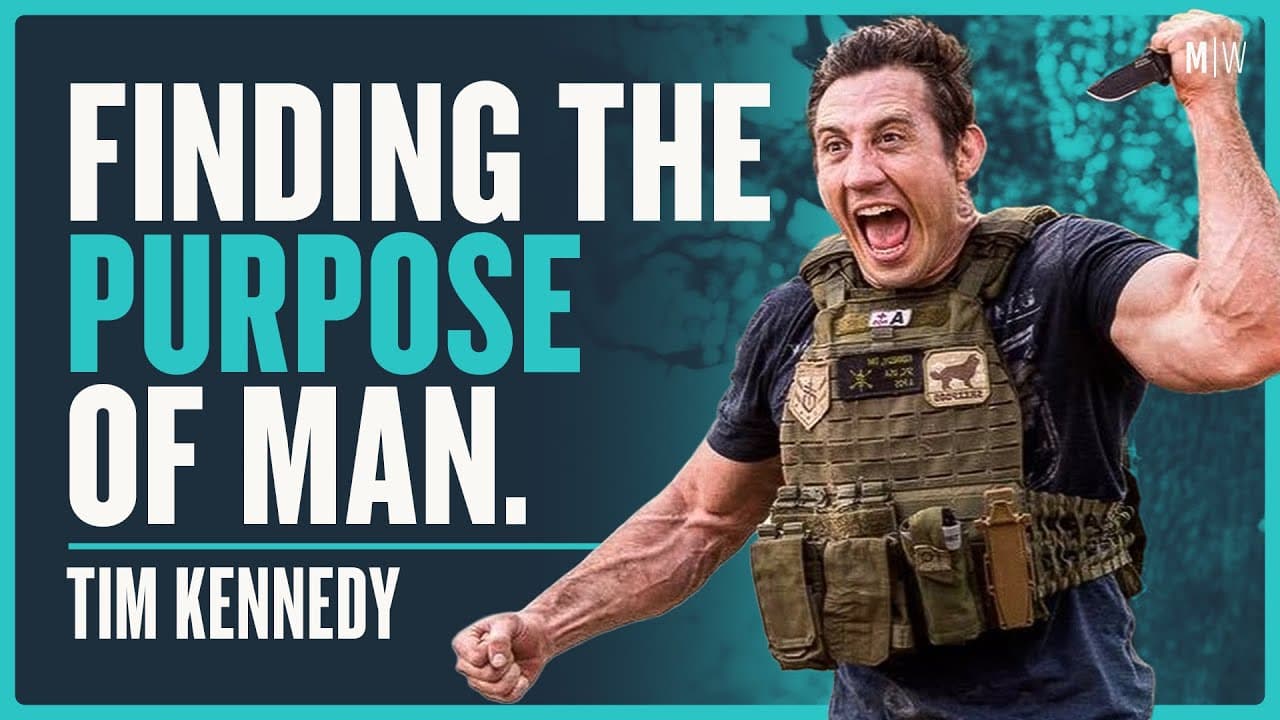
Tim Kennedy - Lessons Learned Through Pain | Modern Wisdom Podcast 481
TL;DR
Tim Kennedy argues that pain and failure should be felt, remembered, and used to correct the choices that caused them. He refused painkillers while being stitched after UFC fights because he wanted mistakes in the Octagon to carry a consequence. He also credits stubbornness, a relentless pursuit of purpose, and a family culture that rejected mediocrity for keeping him moving through struggles. Read on for his lessons about purpose, responsibility, and resilience.
Transcript
when i was fighting the ufc i would never let the doctor ever use any painkiller anytime he had to stitch me closed because i wanted to feel that pain because i made a mistake in there in the octagon and i didn't want to dull the pain because there should be a consequence for that pain and i wanted to remember that pain in the future tim kennedy am... Read More
Key Insights
- 👨🎨 Pain serves a purpose and should be embraced rather than avoided or dulled.
- 💗 Tim Kennedy's drive and pursuit of purpose stem from his stubbornness and the high-achieving environment he grew up in.
- 👨🎨 Reflecting on pain and failure helps in personal growth and learning from mistakes.
Install to Summarize YouTube Videos and Get Transcripts
Explore YouTube Video Summarizer or Get YouTube Transcript Extractor
Questions & Answers
Q: Why did Tim Kennedy refuse painkillers after UFC fights?
Kennedy refused painkillers when doctors stitched him because he wanted to feel the consequence of mistakes he had made in the Octagon. He believed dulling the pain could weaken his memory of those mistakes and the lessons they carried.
Q: What does Tim Kennedy believe pain can teach a person?
Kennedy treats pain as feedback about mistakes and bad decisions. By feeling and remembering it, he believes he can carry its lesson into future choices rather than avoiding the consequence.
Q: What drove Tim Kennedy to keep moving through failure and struggle?
Kennedy attributes his persistence partly to being stubborn and unable to stop. He describes this combination as a relentless pursuit of purpose that kept him moving through bad decisions, failure, and serious struggles.
Q: How did Tim Kennedy’s family influence his standards?
Kennedy says he was surrounded by high achievers, including his grandfather, father, brother, and uncles. In his childhood environment, being ordinary or average was not accepted, and anything short of doing his best was considered insufficient.
Q: Did Tim Kennedy always want to join the Army?
Yes, Kennedy says he knew from an early age. A kindergarten journal he still has shows a camouflaged person jumping from an airplane alongside someone practicing martial arts.
Q: What childhood experience showed Tim Kennedy’s attitude toward bullies?
At age four, Kennedy confronted a boy who mocked a girl’s haircut. He punched the boy and pushed him from a playscape, breaking the boy’s arm, and says the episode reflected his early determination to stand up to bullies.
Q: How does Tim Kennedy describe his path toward his purpose?
Kennedy calls the journey long, arduous, and meandering. Although he says he became distracted and made many bad decisions, he kept moving and felt that straying from his purpose repeatedly brought serious repercussions.
Q: How does Tim Kennedy view personal responsibility for his problems?
Kennedy acknowledges that responsibility can potentially creep beyond what a person truly controls. However, when he examines what was going wrong in his own life, he says almost all of it resulted from his choices and their repercussions.
Summary & Key Takeaways
-
Tim Kennedy shares his experiences of refusing painkillers during UFC fights, as he believes that feeling the pain is an important consequence of his mistakes in the Octagon.
-
Kennedy reflects on the factors that have driven him, including his stubbornness and relentless pursuit of purpose, despite making many bad decisions in his youth.
-
He attributes his drive and high standards to his family background, surrounded by greatness and a culture that rejected mediocrity.
Read in Other Languages (beta)
Share This Summary 📚
Summarize YouTube Videos and Get Video Transcripts with 1-Click
Try YouTube Summary with ChatGPT & Claude or YouTube Transcript Generator
Explore More Summaries from Chris Williamson 📚


Summarize YouTube Videos and Get Video Transcripts with 1-Click
Try YouTube Summary with ChatGPT & Claude or YouTube Transcript Generator