How to Distinguish Between Cottonmouths and Water Snakes
TL;DR
To distinguish between cottonmouths and broad-banded water snakes, look for key characteristics: cottonmouths have triangular heads, vertical pupils, and heat-sensing pits, while broad-banded water snakes have narrow heads and circular pupils. Misidentification can lead to unnecessary killings, so always treat snakes as potentially venomous and admire them from a safe distance.
Transcript
- I'm Coyote Peterson. Right now we're hiking in the southern swamps of Texas, which is home to two different water snake species. One is venomous, and one is not. If your life depended on it, would you be able to tell the difference? (dramatic music) Stick around, 'cause we're about to show ya. (dramatic jungle music) (animal growling) As the sun ... Read More
Key Insights
- 🐍 Properly identifying snake species is critical to avoid killing harmless snakes.
- 💦 Broad-banded water snakes are commonly misidentified as water moccasins due to their similar coloration near water bodies.
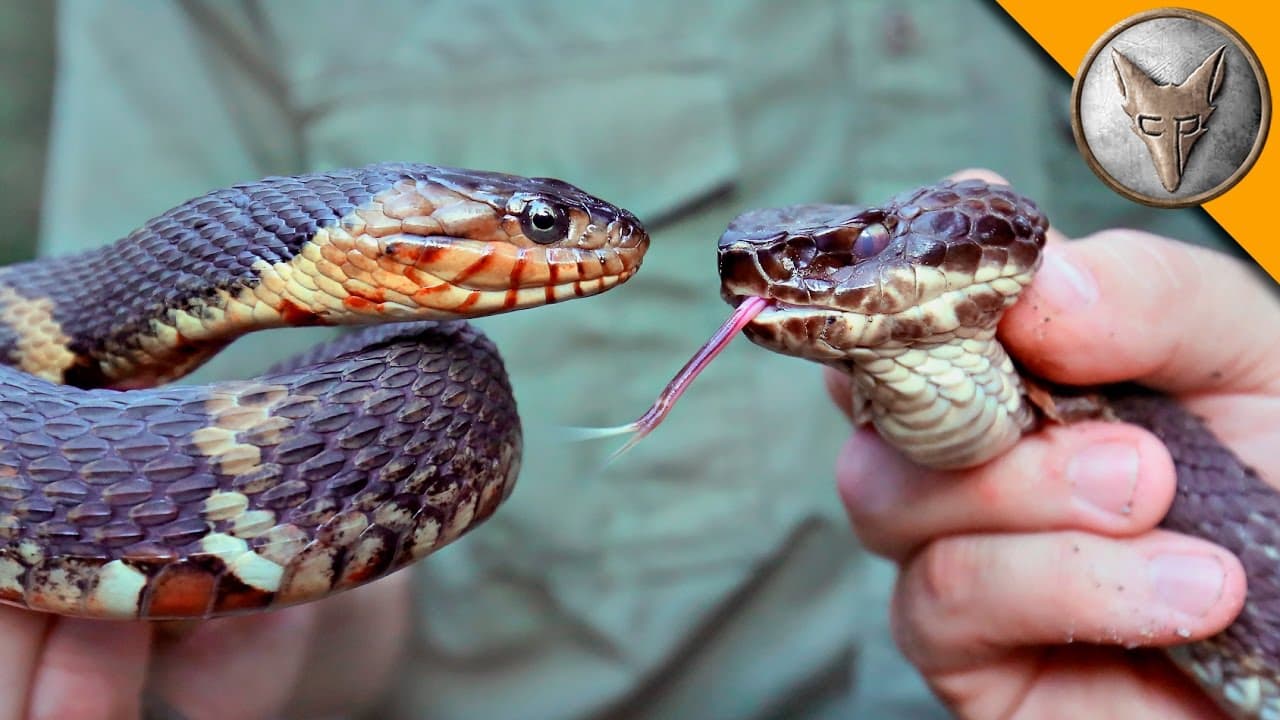
- 🤕 Water moccasins have a triangular-shaped head, vertical pupils, and heat-sensing pits on their faces, while broad-banded water snakes have a narrow head, circular pupils, and lack pits.
- 🥺 The venom of water moccasins is highly toxic, and a bite can lead to serious health complications or death.
- ❓ Both species exhibit defensive behaviors to deter potential predators.
- 🐍 Snakes should be admired from a safe distance, and it is important to treat all encountered snakes as potentially venomous.
Install to Summarize YouTube Videos and Get Transcripts
Explore YouTube Video Summarizer or Get YouTube Transcript Extractor
Questions & Answers
Q: Why is it significant to correctly identify snake species?
Correctly identifying snake species is crucial because non-venomous snakes are often wrongfully vilified as venomous, leading to unnecessary killings. It is important to prevent the destruction of harmless snakes and only eliminate potential threats when necessary.
Q: What are the differences between the broad-banded water snake and the water moccasin?
The broad-banded water snake has a narrow head, circular pupils, and lacks pits on its face. On the other hand, the water moccasin has a triangular-shaped head, vertical pupils, and heat-sensing pits on its face. The water moccasin is also thicker in body compared to the broad-banded water snake.
Q: How dangerous is the water moccasin's venom?
The water moccasin's venom is highly toxic and can potentially cause serious harm, including tissue damage, loss of limbs, or death. Although there are few reported deaths from water moccasin bites, immediate medical attention is necessary in case of a bite.
Q: What are some defensive behaviors exhibited by these snakes?
The broad-banded water snake may flatten its head and puff it up to mimic a triangular shape, resembling a water moccasin when threatened. The water moccasin has a defensive behavior of mimicking a rattlesnake by opening its mouth, displaying a white throat, and rattling its tail.
Summary & Key Takeaways
-
Coyote Peterson is on a mission to find and compare a venomous snake and a non-venomous snake in the southern swamps of Texas.
-
He highlights the importance of identifying snake species correctly to prevent the unnecessary killing of non-venomous snakes.
-
Coyote successfully catches both a non-venomous broad-banded water snake and a venomous water moccasin, showcasing the distinct differences between the two species.
Read in Other Languages (beta)
Share This Summary 📚
Summarize YouTube Videos and Get Video Transcripts with 1-Click
Try YouTube Summary with ChatGPT & Claude or YouTube Transcript Generator
Explore More Summaries from Brave Wilderness 📚


Summarize YouTube Videos and Get Video Transcripts with 1-Click
Try YouTube Summary with ChatGPT & Claude or YouTube Transcript Generator