What Is the Future of Feminism and Its Key Challenges?
TL;DR
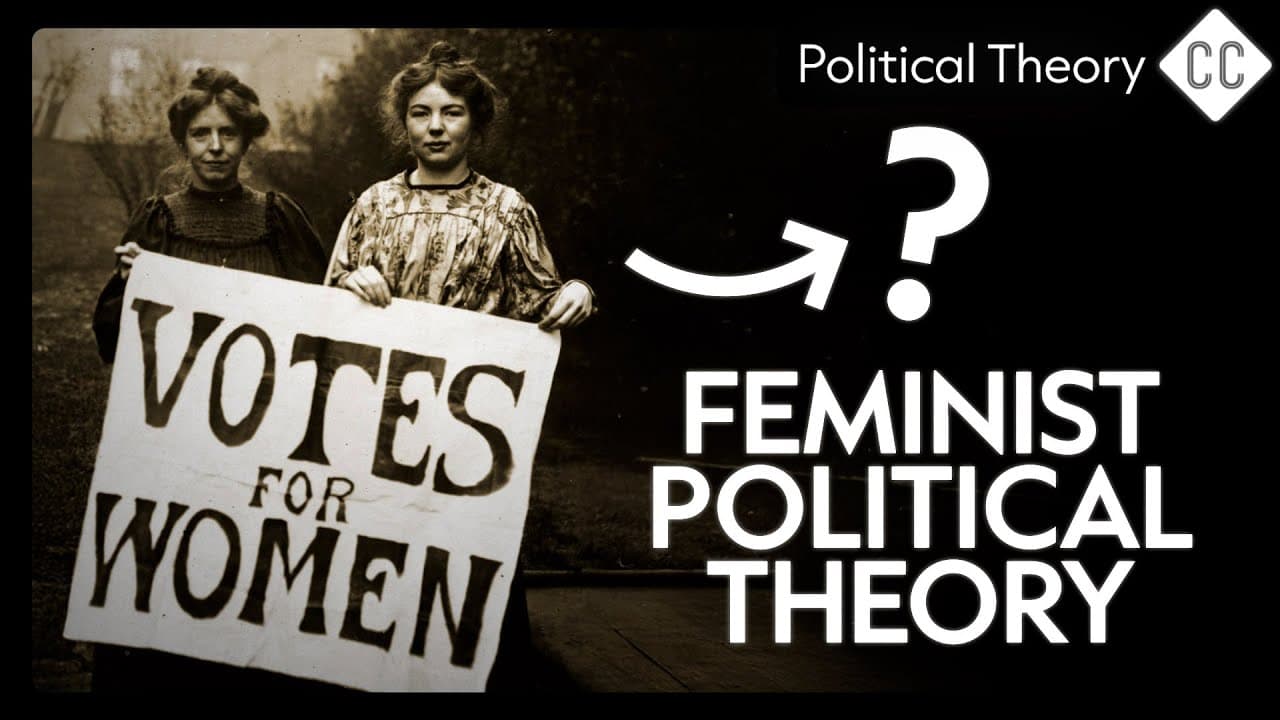
The future of feminism involves ongoing debates about gender, race, and class, as well as the roles of trans rights and essentialism. Key challenges include redefining womanhood, addressing systemic patriarchy, and ensuring inclusivity within feminist movements. Feminist political theory is dynamic, evolving from historical roots to contemporary struggles, continually asking what it means to advocate for all women.
Transcript
What does it actually mean to be a woman? In 2013, Aimee Stephens was fired from her job as a funeral director two weeks after coming out as a trans woman. Her boss testified in court, explicitly stating that he fired her because she “was no longer going to represent [herself] as a man.” Over the next seven years, this case of sex discrimination ... Read More
Key Insights
- The case of Aimee Stephens highlights ongoing legal battles for trans rights, showing that questions about gender identity remain central to feminist discourse.
- Mary Wollstonecraft's early feminist work laid the groundwork for subsequent movements, emphasizing the importance of education for women, though initially focused on upper-class white women.
- Significant legislative achievements, such as the Equal Pay Act and Title IX, marked progress in gender equality, but contemporary debates, like abortion rights, show ongoing struggles.
- Simone de Beauvoir and other thinkers have critiqued language and societal norms, revealing how deep-seated biases shape perceptions of gender and equality.
- The concept of patriarchy, as explored by thinkers like Carole Pateman, broadens the focus from individual male dominance to systemic oppression affecting women's freedoms.
- Kimberlé Crenshaw's intersectionality theory reveals how race, class, and gender interconnect, affecting women's experiences and highlighting the need for inclusive feminism.
- Debates within feminism, such as essentialism versus performativity, challenge definitions of gender, with figures like Judith Butler advocating for a view of gender as performative.
- The future of feminism involves diverse perspectives, from reformists focusing on legal change to radicals advocating for dismantling patriarchy and addressing colonial legacies.
Install to Summarize YouTube Videos and Get Transcripts
Explore YouTube Video Summarizer or Get YouTube Transcript Extractor
Questions & Answers
Q: What is the significance of Aimee Stephens' case?
Aimee Stephens' case is significant as it underscores the ongoing legal and social battles for trans rights. Her firing for identifying as a trans woman led to a landmark Supreme Court ruling in 2020, establishing that firing someone for their LGBTQ identity is illegal. This case highlights the continued relevance of questions about gender identity in feminist discourse.
Q: How did Mary Wollstonecraft contribute to early feminist movements?
Mary Wollstonecraft's work, particularly her treatise 'A Vindication of the Rights of Woman,' was pivotal in challenging the notion that women were incapable of abstract thought and reasoning. She advocated for the formal education of women, albeit focusing on upper-class white women, setting the stage for future feminist movements and influencing suffragists who fought for women's voting rights.
Q: What were some key legislative achievements in the feminist movement?
Key legislative achievements include the Equal Pay Act of 1963, which aimed to eliminate gender-based wage disparities, and Title IX in the 1970s, which increased women's access to sports. The Roe v. Wade decision protected abortion rights, although it was overturned in 2022, highlighting ongoing feminist debates. These milestones represent significant strides toward gender equality.
Q: How do feminist thinkers critique language and societal norms?
Feminist thinkers like Simone de Beauvoir critique language and societal norms by revealing how they perpetuate gender biases. De Beauvoir argued that terms like 'man' and 'human' are not neutral, often excluding women. Such critiques highlight the need to address deep-seated biases in language and societal structures to achieve true gender equality.
Q: What is the concept of patriarchy in feminist theory?
In feminist theory, patriarchy refers to a system of beliefs and values that oppress women, going beyond individual male dominance. Thinkers like Carole Pateman have expanded this concept to include systemic oppression embedded in societal structures, influencing policies and attitudes. Patriarchy highlights the need for systemic change to achieve women's liberation.
Q: What is intersectionality, and why is it important?
Intersectionality, introduced by Kimberlé Crenshaw, is the idea that race, class, and gender intersect to shape women's experiences. It is important because it calls for an inclusive approach to feminism, recognizing that women face different challenges based on their intersecting identities. This concept challenges feminism to be more inclusive and address diverse women's needs.
Q: How do debates on essentialism and performativity shape feminist discourse?
Debates on essentialism and performativity shape feminist discourse by challenging definitions of gender. Essentialists argue for inherent gender traits, while thinkers like Judith Butler propose that gender is performative, shaped by actions and behaviors. These debates highlight the complexity of gender identity and influence discussions on inclusivity and the scope of feminist movements.
Q: What are the future directions of feminism discussed in the video?
The video discusses diverse future directions for feminism, including reformists focusing on legal and institutional changes and radicals advocating for dismantling patriarchy and addressing colonial legacies. It emphasizes the need for ongoing redefinition of gender, race, and class, and highlights the importance of inclusive approaches to address the diverse challenges women face globally.
Summary & Key Takeaways
-
The video explores feminist political theory, tracing its evolution from early thinkers like Mary Wollstonecraft to contemporary debates on trans rights and gender identity.
-
It highlights key legislative milestones, critiques of language and societal norms, and the introduction of concepts like patriarchy and intersectionality.
-
The video concludes by discussing the future directions of feminism, emphasizing diverse approaches and ongoing debates about gender, race, and class.
Read in Other Languages (beta)
Share This Summary 📚
Summarize YouTube Videos and Get Video Transcripts with 1-Click
Try YouTube Summary with ChatGPT & Claude or YouTube Transcript Generator
Explore More Summaries from CrashCourse 📚





Summarize YouTube Videos and Get Video Transcripts with 1-Click
Try YouTube Summary with ChatGPT & Claude or YouTube Transcript Generator