How Do Abortion Bans Impact Economic Inequality?
TL;DR
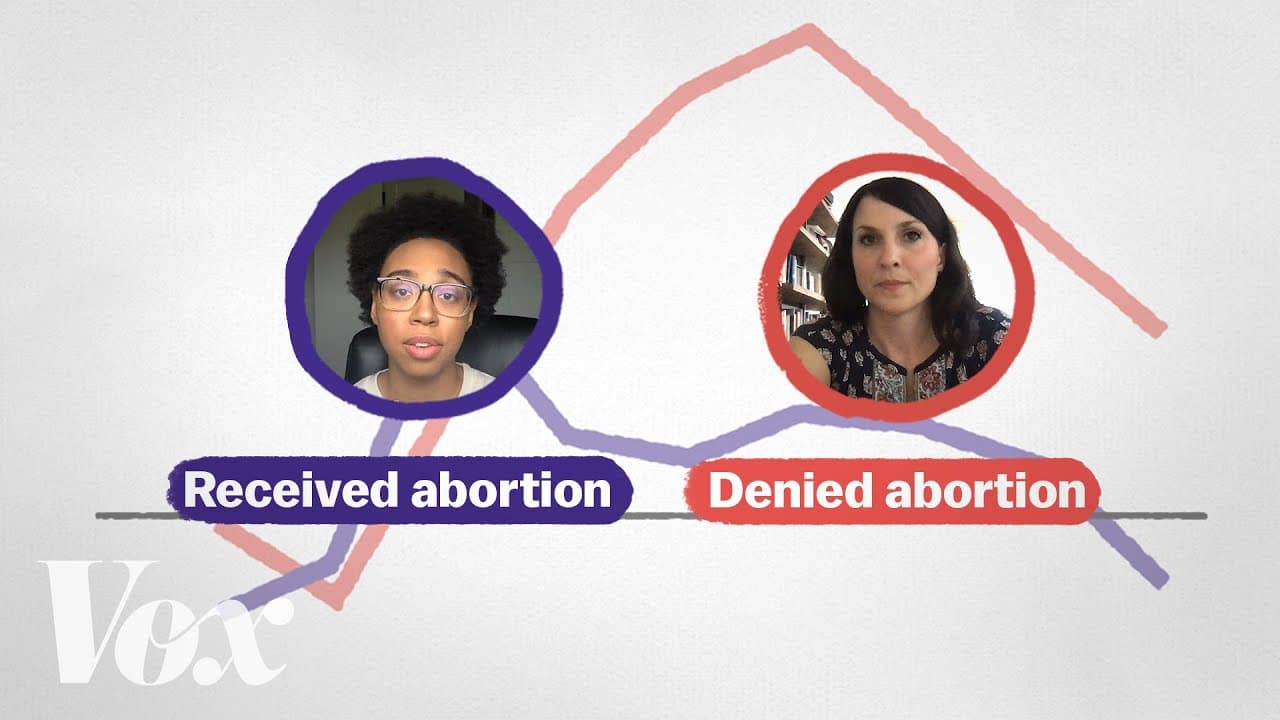
Abortion bans exacerbate economic inequality by forcing women to carry unwanted pregnancies, leading to significant financial distress. The Turnaway Study reveals that women denied abortions faced increased debt, eviction, and instability, with 72% of their children living in poverty compared to 55% for those who received abortions. The study highlights how economic instability often drives women to seek abortions in the first place.
Transcript
Imagine two similar women, who each have unwanted pregnancies. They both go to abortion clinics. One has a pregnancy that’s just days before the clinic’s gestational limit. And the other is just days past the limit. So one of them receives an abortion. And the other is turned away. Their different life trajectories after that might not tell you ... Read More
Key Insights
- The Turnaway Study tracked women denied abortions and found significant financial and social consequences for those forced to continue unwanted pregnancies.
- Economic instability was a common reason for seeking abortions, with many women facing increased financial distress when denied the procedure.
- The study revealed that women denied abortions were more likely to experience financial hardships, such as increased debt and evictions.
- Relationships often did not endure post-pregnancy, with a significant drop in relationship stability over five years among study participants.
- The study showed that women denied abortions were more likely to be living alone with their children, indicating a lack of support.
- Child support payments for women denied abortions were minimal, averaging only $20 a month, highlighting the economic challenges faced.
- The study found that 91% of women denied abortions chose to parent, suggesting adoption is not a feasible alternative for most.
- Children of women denied abortions were more likely to live in poverty, affecting their long-term well-being and opportunities.
Install to Summarize YouTube Videos and Get Transcripts
Explore YouTube Video Summarizer or Get YouTube Transcript Extractor
Questions & Answers
Q: What is the Turnaway Study?
The Turnaway Study is a research project conducted by the University of California San Francisco that tracked women who were denied abortions due to gestational limits. It aimed to understand the economic, social, and health impacts of being unable to terminate an unwanted pregnancy over a five-year period.
Q: What were the main findings regarding financial impacts?
The study found that women denied abortions experienced significant financial distress, including increased debt, evictions, and bankruptcies. These women had nearly 80% higher amounts of debt past due and a 78% increase in financial issues such as liens and evictions compared to those who received abortions.
Q: How did the study address relationship outcomes?
The study tracked the stability of relationships that led to pregnancies. It found that, regardless of abortion status, relationship stability decreased over time, with only 27% of participants remaining in the same relationship after five years. This highlights the low likelihood of enduring partnerships post-pregnancy.
Q: What did the study reveal about child support?
The Turnaway Study revealed that women denied abortions received minimal financial support, with average child support payments amounting to only $20 a month. This lack of financial assistance exacerbated the economic challenges faced by these women, many of whom were already living in poverty.
Q: What were the common reasons for seeking an abortion?
The most common reason for seeking an abortion among study participants was not being financially prepared. Other reasons included partner-related issues and the need to focus on other children. These motivations reflect the economic and social pressures faced by women considering abortion.
Q: How did the study address the feasibility of adoption?
The study found that 91% of women denied abortions chose to parent, indicating that adoption is not a feasible alternative for most. This challenges common pro-life rhetoric suggesting adoption as a viable option for unwanted pregnancies, highlighting the complexities of such decisions.
Q: What impact did being denied an abortion have on the children?
Children of women denied abortions were more likely to live in poverty, with 72% of these children living below the poverty line compared to 55% of children whose mothers received abortions. This underscores the long-term economic impacts on families unable to access abortion services.
Q: How did the Turnaway Study contribute to the abortion debate?
The Turnaway Study provided empirical data on the economic, social, and health impacts of abortion denial, offering a comprehensive view of the consequences faced by women and their families. This research contributes to the broader abortion debate by highlighting the real-world implications of restrictive abortion laws.
Summary & Key Takeaways
-
The Turnaway Study tracked women who were denied abortions due to gestational limits, revealing significant financial and social impacts. Participants often faced increased debt, evictions, and relationship instability, underscoring the economic challenges of forced parenthood.
-
Economic instability was a primary reason for seeking abortions, with the study highlighting the financial distress faced by women denied the procedure. These women experienced higher levels of financial distress, such as increased debt and evictions.
-
The study found that women denied abortions were more likely to live alone with their children and receive minimal child support. Additionally, most women denied abortions chose to parent, indicating adoption is not a viable alternative for many.
Read in Other Languages (beta)
Share This Summary 📚
Summarize YouTube Videos and Get Video Transcripts with 1-Click
Try YouTube Summary with ChatGPT & Claude or YouTube Transcript Generator
Explore More Summaries from Vox 📚



Summarize YouTube Videos and Get Video Transcripts with 1-Click
Try YouTube Summary with ChatGPT & Claude or YouTube Transcript Generator