How to Orchestrate Cloud Security Remediation
TL;DR
Consolidate security findings from multiple tools, prioritize them with application and external context, and route each issue to the correct remediation owner. Opus Security tracks tickets bidirectionally, validates fixes against source sensors, groups code-related findings by root cause, and provides unified posture, operational, comparative, and automated reporting across teams.
Transcript
Hi, I'm Henihar, the CEO of Opus Security. We help organizations get remediation done across any tool and any team. Prior to Opus, I was the VP of product and founding team member of Simplify, where my partner and I both saw firsthand the rapid evolution of security remediation from a fairly static classic vulnerability management problem to one th... Read More
Key Insights
- Security remediation is an organization-wide operational challenge because cloud security, application security, exposure, and traditional vulnerability tools can generate tens of thousands or more findings for thousands of owners across IT, DevOps, engineering, teams, and departments.
- Opus is a security remediation platform that consolidates findings from multiple vulnerability sources, prioritizes them with relevant context, orchestrates work across the organization, and applies automation whenever possible to help teams move from detection to completed remediation.
- Prioritization is based on contextual risk information, including application context or external sources. The platform also displays organizational associations, such as the relevant service, team, and production environment, so findings can be evaluated within the systems and operations they affect.
- Root cause analysis connects a detected security issue to the code or file that created it. Opus can also identify the code committer, who is presented as the person typically positioned to own and remediate the issue.
- Bidirectional ticket tracking links Opus with the responsible engineer's or team's board. The platform follows ticket progress and checks the original source sensor to validate that the vulnerability has actually been resolved before completing the lifecycle.
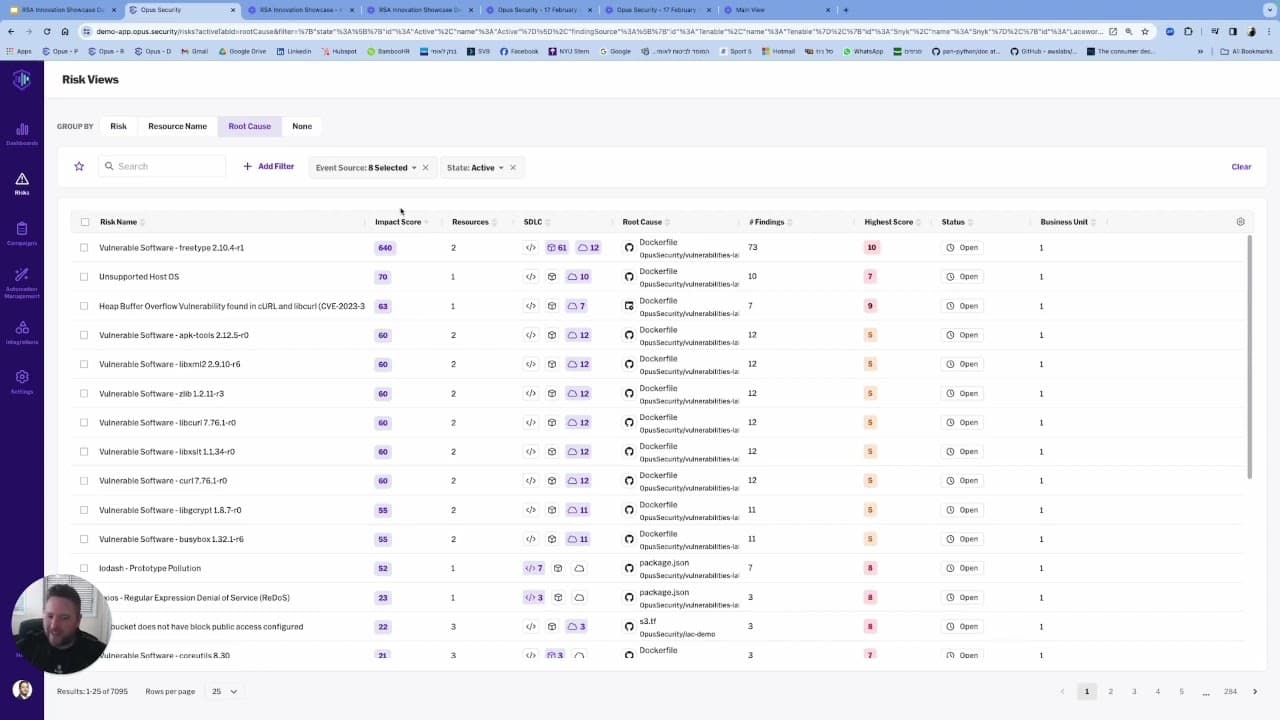
- Impact scoring combines the risk associated with a root cause and the number of findings affected by its remediation. This shifts engineering work from resolving isolated alerts toward selecting code fixes that can produce the greatest effect on security posture.
- A single root-cause fix can address many related findings. In the demonstration, one Docker file remediation spans seventy-three findings, including seventy-two issues on an image and one issue affecting a running container, all associated with the same owner.
- Unified reporting provides posture, operational, trend, and comparative metrics across tools, teams, services, groups, and organizational areas. A comprehensive reporting engine supports automated reporting to different parts and levels of the organization with minimal configuration.
Install to Summarize YouTube Videos and Get Transcripts
Explore YouTube Video Summarizer or Get YouTube Transcript Extractor
Questions & Answers
Q: How does Opus Security manage findings from multiple tools?
Opus brings findings together from cloud security, code security, application security, exposure, and traditional vulnerability management sources. It enriches and prioritizes those findings using application context or external sources, associates them with resources and organizational owners, and places them in a unified operational view that supports remediation across multiple teams and departments.
Q: How does Opus prioritize security vulnerabilities?
Opus prioritizes vulnerabilities by presenting a risk breakdown informed by application context or external sources. It adds organizational details such as the associated service, team, and environment, along with information about the affected resource. For code-related findings, it also calculates an impact score using the associated risk and the number of findings a fix would affect.
Q: How does Opus identify who should remediate an issue?
Opus connects each finding to organizational and technical context that helps identify the appropriate owner. In the container example, it associates the vulnerability with an AWS ingestion service, a specific team, and a production environment. It also traces the problem to the responsible file and identifies the code committer as the person typically suited to remediate it.
Q: How does Opus track a remediation ticket to completion?
Opus can create a ticket directly on the board used by the responsible engineer or team. It then tracks the ticket bidirectionally to monitor whether work progresses as required. After the ticket is completed, the platform checks the original source sensor to verify that the issue was actually resolved before closing the full remediation lifecycle.
Q: What is root cause analysis in the Opus platform?
Root cause analysis in Opus traces a security finding back to the code or file that produced it when the issue originates in code. The platform displays the relevant repository, file, code, affected resources, and associated owner. This allows teams to organize remediation around the underlying fix rather than treating every resulting security finding as unrelated work.
Q: How can one code fix resolve multiple security findings?
Opus maps findings to their shared root cause and shows the resources affected by a proposed remediation. In the demonstration, one Docker file fix spans seventy-three findings: seventy-two issues on an image and one on a running container. Because the findings share an owner and root cause, Opus can create one ticket covering all of them.
Q: What does the Opus impact score measure?
The Opus impact score combines the risk associated with a remediation and the number of findings that the fix affects. It gives engineering teams a view of which code changes could have the greatest effect on security posture. This perspective helps them prioritize remediations instead of working only from a list of individual security issues.
Q: What security remediation metrics and reports does Opus provide?
Opus provides unified posture metrics across connected tools and organizational areas, plus operational metrics that show trends across the organization, teams, and other subdivisions. It also supplies comparative metrics for evaluating teams, services, or groups against one another. Its reporting engine can distribute automated reports across organizational levels with minimal configuration.
Summary & Key Takeaways
-
Opus addresses remediation as an organization-wide operational challenge rather than a static vulnerability management task. It consolidates findings from cloud security, application security, exposure, and traditional vulnerability tools, then enriches and prioritizes them so thousands of remediation owners across IT, DevOps, engineering, teams, and departments can act effectively.
-
The platform associates vulnerabilities with organizational context, affected resources, root causes, and likely owners. It can open a ticket directly on the responsible engineer's or team's board, track progress bidirectionally, and confirm resolution through the original security sensor before closing the remediation lifecycle, connecting detection with verified completion.
-
For code-related issues, Opus organizes work around fixes instead of isolated findings. Its impact score combines associated risk with the number of findings affected. One demonstrated Docker file fix spans seventy-three findings, allowing a single ticket to address multiple image and running-container issues assigned to the same owner.
Read in Other Languages (beta)
Share This Summary 📚
Summarize YouTube Videos and Get Video Transcripts with 1-Click
Try YouTube Summary with ChatGPT & Claude or YouTube Transcript Generator
Explore More Summaries from RSAC Cybersecurity 📚


Summarize YouTube Videos and Get Video Transcripts with 1-Click
Try YouTube Summary with ChatGPT & Claude or YouTube Transcript Generator