What Are the Different Models of Good Citizenship?
TL;DR
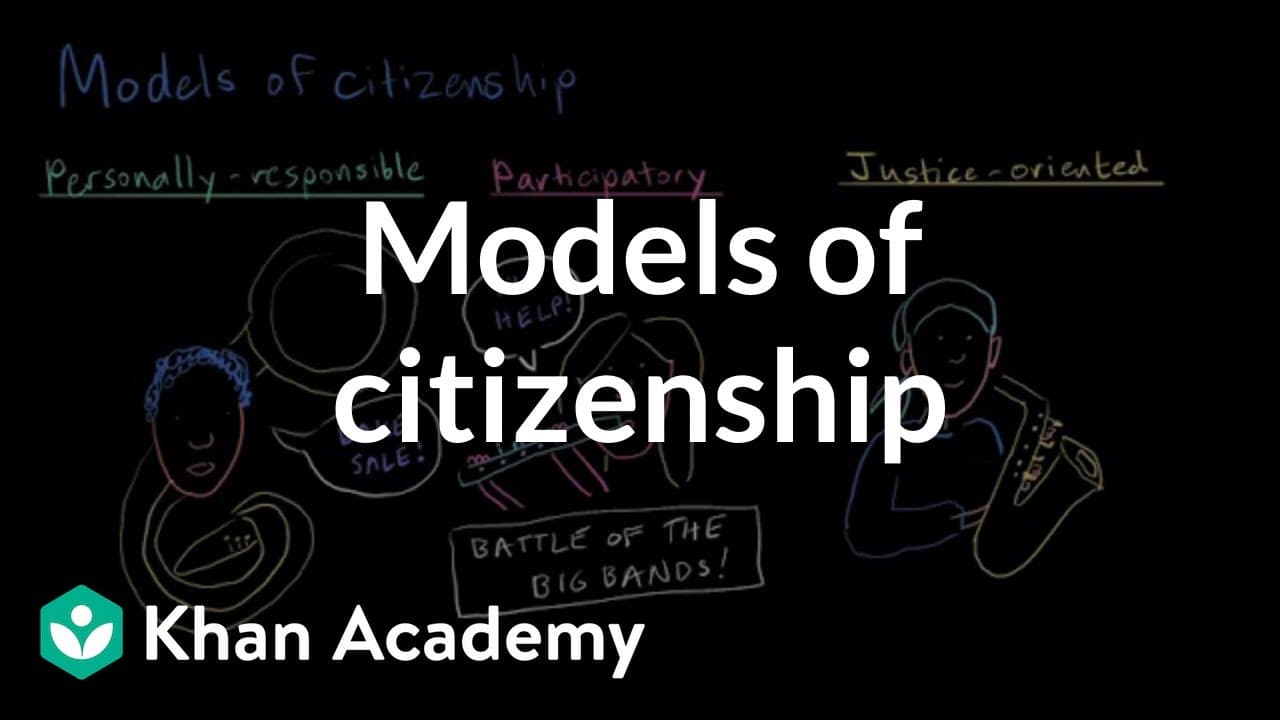
Good citizenship can be categorized into three models: personally-responsible citizens fulfill their obligations and act responsibly; participatory citizens engage in community action; and justice-oriented citizens focus on addressing social issues and their root causes. Each model plays a vital role in community improvement, allowing individuals to adopt different approaches based on their values and causes.
Transcript
- [Instructor] What do you think it means to be a good citizen? What does a good citizen do? Take a minute to you imagine your idea of a good citizen. What characteristics does that person have? What actions does that person take that contribute to their status as an active and virtuous citizen? I encourage you to pause the video here and write dow... Read More
Key Insights
- 👋 Good citizenship encompasses various actions and characteristics, including obeying laws, treating others with kindness, volunteering, being politically active, organizing community responses, and advocating for change.
- ❓ Personally-responsible citizenship focuses on individual actions and responsibilities within the community.
- ❓ Participatory citizenship emphasizes collective action and community organizing to address problems.
- 👨⚖️ Justice-oriented citizenship aims to tackle social issues and address the root causes of injustice.
- 💦 Understanding different models of citizenship helps individuals communicate effectively and work together to improve their communities.
- 😨 There is no one-size-fits-all approach to good citizenship, and individuals can adopt elements from multiple models based on their preferences and causes they care about.
- 👨🏫 Families, schools, and social groups may promote specific models of citizenship, which can influence individuals' perspectives and actions.
Install to Summarize YouTube Videos and Get Transcripts
Explore YouTube Video Summarizer or Get YouTube Transcript Extractor
Questions & Answers
Q: What are the characteristics of a personally-responsible citizen?
A personally-responsible citizen pays taxes, votes, obeys the law, volunteers, and fulfills their personal obligations. They are honest, hardworking, and focus on individual actions rather than changing society on a larger scale.
Q: How does participatory citizenship differ from the personally-responsible model?
Participatory citizens believe in working collectively with others to address community problems. They create groups, advocate for causes, and organize events or initiatives within established systems and organizations.
Q: What sets the justice-oriented citizen apart from the other models?
Justice-oriented citizens are interested in addressing social issues and the root causes of injustice. They seek to change society's underlying structures by understanding why problems occur and finding long-term solutions rather than just addressing the immediate challenges.
Q: Can an individual practice multiple models of citizenship?
Yes, an individual can practice elements of all three models. There is flexibility in choosing approaches to different issues or adopting a combination that aligns with personal values and goals.
Summary & Key Takeaways
-
Good citizenship can take various forms, including obeying the law, treating others kindly, volunteering, being politically active, and advocating for change.
-
There are three models of good citizenship: personally-responsible citizens fulfill their obligations and act responsibly, participatory citizens engage in community action and organizing, and justice-oriented citizens focus on addressing social issues and larger structures of injustice.
-
All three models have their merits and contribute to their communities in different ways.
Read in Other Languages (beta)
Share This Summary 📚
Summarize YouTube Videos and Get Video Transcripts with 1-Click
Try YouTube Summary with ChatGPT & Claude or YouTube Transcript Generator
Explore More Summaries from Khan Academy 📚



Summarize YouTube Videos and Get Video Transcripts with 1-Click
Try YouTube Summary with ChatGPT & Claude or YouTube Transcript Generator