What Are Polysaccharides and Their Functions?
TL;DR
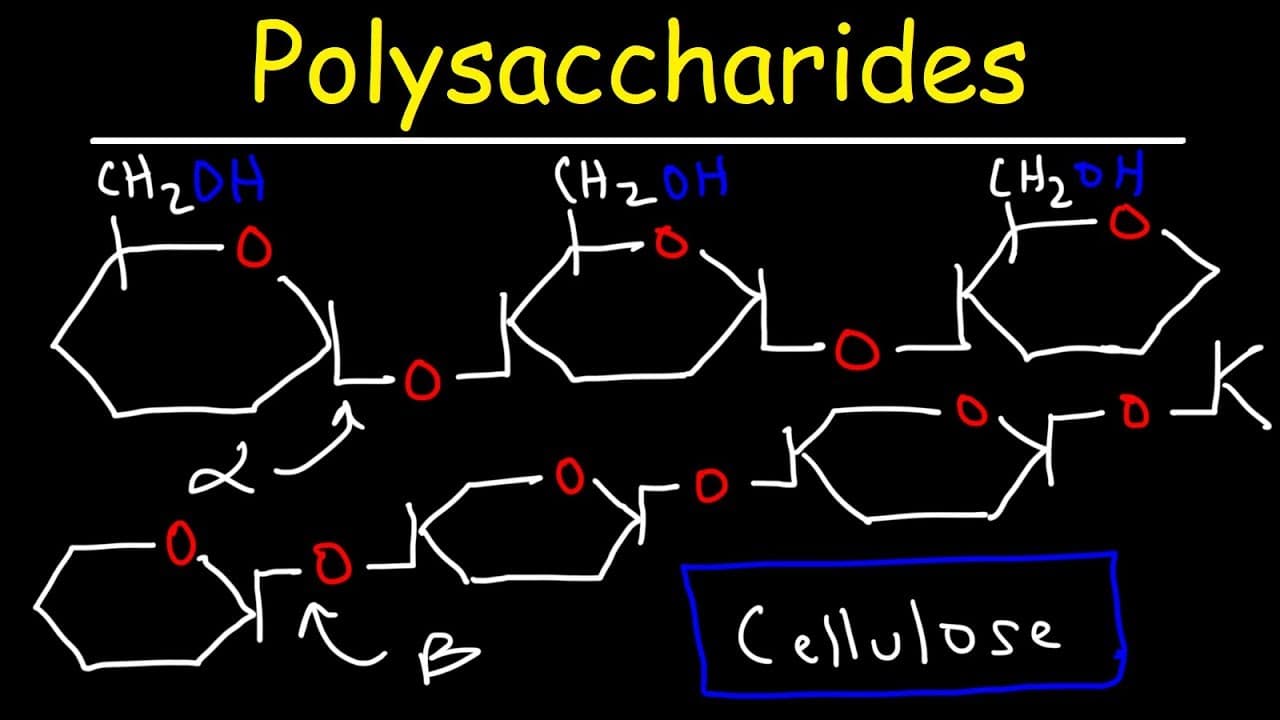
Polysaccharides like starch, glycogen, cellulose, and chitin are made of many sugar units. Starch, found in plants, stores energy and consists of amylose and amylopectin, while glycogen serves a similar role in animals. Cellulose provides structural support in plants through beta 1-4 glycosidic bonds, and chitin serves a similar function in insects.
Transcript
in this video we're going to talk about polysaccharides if we think back a monosaccharide is basically one sugar unit a disaccharide has two sugar units or two monomers a polysaccharide the word poly means many so it's made up of many sugar units or many monomers the first type of polysaccharide that we're going to talk about is starch now starch i... Read More
Key Insights
- 🇦🇪 Polysaccharides are composed of many sugar units or monomers.
- 🌱 Starch is a plant polysaccharide that stores energy, consisting of amylose and amylopectin.
- ❓ Glycogen is the animal equivalent of starch and is highly branched in structure.
- 🌱 Cellulose is a plant polysaccharide that provides structural support through long fibers.
- 🛟 Chitin, found in insects, is similar to cellulose and also serves a structural function.
- 🔤 Amylose consists of glucose monomers connected by alpha 1 4 glycosidic bonds.
- 🔤 Amylopectin contains branch structures in addition to the straight chain and has both alpha 1 4 and alpha 1 6 glycosidic bonds.
Install to Summarize YouTube Videos and Get Transcripts
Explore YouTube Video Summarizer or Get YouTube Transcript Extractor
Questions & Answers
Q: What is the main function of starch?
Starch serves as an energy storage polysaccharide in plants. It is found in potatoes and consists of amylose and amylopectin.
Q: How does amylose differ from amylopectin?
Amylose is a straight chain of glucose monomers connected by alpha 1 4 glycosidic bonds. Amylopectin, on the other hand, contains branch structures along with the straight chain.
Q: What is the difference between glycogen and starch?
Glycogen is the animal equivalent of starch and is highly branched in structure. Both contain alpha 1 4 glycosidic bonds, but glycogen also has alpha 1 6 glycosidic bonds responsible for branching.
Q: What is the role of cellulose in plants?
Unlike starch and glycogen, cellulose serves as a structural support polysaccharide in plants. It forms long fibers through beta 1 4 glycosidic bonds between glucose units.
Summary & Key Takeaways
-
Polysaccharides are made up of many sugar units or monomers. Starch is a plant polysaccharide that stores energy, consisting of amylose (straight chain) and amylopectin (branched structure).
-
Glycogen is a highly branched animal starch. Cellulose, found in plants, provides structural support through long fibers and forms beta 1 4 glycosidic bonds. Chitin, found in insects, also serves a structural role.
Read in Other Languages (beta)
Share This Summary 📚
Summarize YouTube Videos and Get Video Transcripts with 1-Click
Try YouTube Summary with ChatGPT & Claude or YouTube Transcript Generator
Explore More Summaries from The Organic Chemistry Tutor 📚



Summarize YouTube Videos and Get Video Transcripts with 1-Click
Try YouTube Summary with ChatGPT & Claude or YouTube Transcript Generator