How Do Birds Keep Their Legs Warm in Cold Weather?
TL;DR
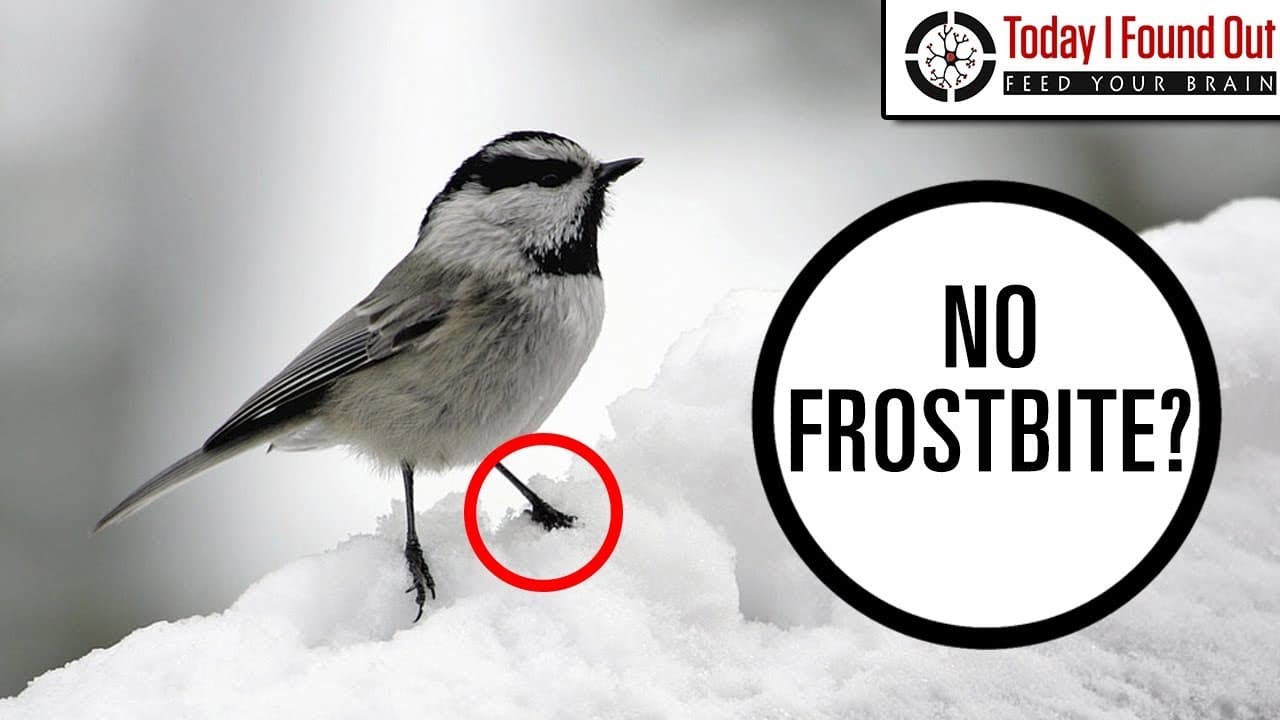
Birds keep their legs warm by pulling them close to their bodies, fluffing their feathers for insulation, and storing body fat as a barrier against cold. Ducks and other birds with exposed feet use a counter current exchange system to prevent heat loss, allowing them to submerge their feet in icy water for extended periods without freezing.
Transcript
How a bird reacts to the cold depends on what kind of a bird it is and there are a variety of methods they use to keep their legs warm, from the mundane to the much more fascinating. For starters, many birds will simply pull their legs and feet close to their centre of mass one at a time, keeping them warm with their feathers and body heat and off... Read More
Key Insights
- 🦿 Birds use various methods, such as pulling their legs close to their body, fluffing up feathers, and fat storage, to keep their legs warm in the cold.
- 🥵 Some birds huddle together to share body heat and keep warm.
- 🦶 Birds with exposed feet, like ducks, have a counter current exchange system that allows them to submerge their feet in cold water for extended periods without consequence.
- 🥶 Body fat plays a crucial role in providing insulation and protection against the cold.
- 😪 Birds can shiver their flight muscles to generate body heat but this can be physically tiring and limit their ability to fly.
- 🥵 The rough, scaly skin on bird legs helps limit heat loss.
- 🥵 Birds can control blood flow to their extremities, including their feet, to regulate heat.
Install to Summarize YouTube Videos and Get Transcripts
Explore YouTube Video Summarizer or Get YouTube Transcript Extractor
Questions & Answers
Q: How do birds keep their legs warm in the cold?
Birds keep their legs warm by pulling them close to their body, using their feathers and body heat to provide insulation. They may also crouch down and cover their feet with their plumage.
Q: What is the role of body fat in keeping birds warm?
Some birds gorge themselves before winter to build up a layer of fat. This body fat acts as insulation and helps shield the birds from cold weather.
Q: How do birds with exposed feet, like ducks, protect themselves from freezing temperatures?
Birds with exposed feet have a counter current exchange system, where arteries and veins are aligned to facilitate heat exchange. This system helps regulate blood flow and maintain a sustainable temperature in the feet, minimizing heat loss.
Q: Can birds get frostbite despite their methods of keeping their feet warm?
Yes, birds, including ducks, can get frostbite and even die from the cold in harsh winters. If a bird is exposed to a warm environment before being abruptly put into freezing temperatures, their feet may struggle to adapt and frostbite can occur.
Summary & Key Takeaways
-
Birds keep their legs warm by pulling them close to their body, covering them with their feathers, and fluffing up their feathers to trap air and create insulation.
-
Some birds build up body fat before winter to provide extra insulation and protection from the cold.
-
Birds with exposed feet, like ducks, use a counter current exchange system to submerge their feet in cold water without consequence by regulating blood flow and minimizing heat loss.
Read in Other Languages (beta)
Share This Summary 📚
Summarize YouTube Videos and Get Video Transcripts with 1-Click
Try YouTube Summary with ChatGPT & Claude or YouTube Transcript Generator
Explore More Summaries from Today I Found Out 📚






Summarize YouTube Videos and Get Video Transcripts with 1-Click
Try YouTube Summary with ChatGPT & Claude or YouTube Transcript Generator