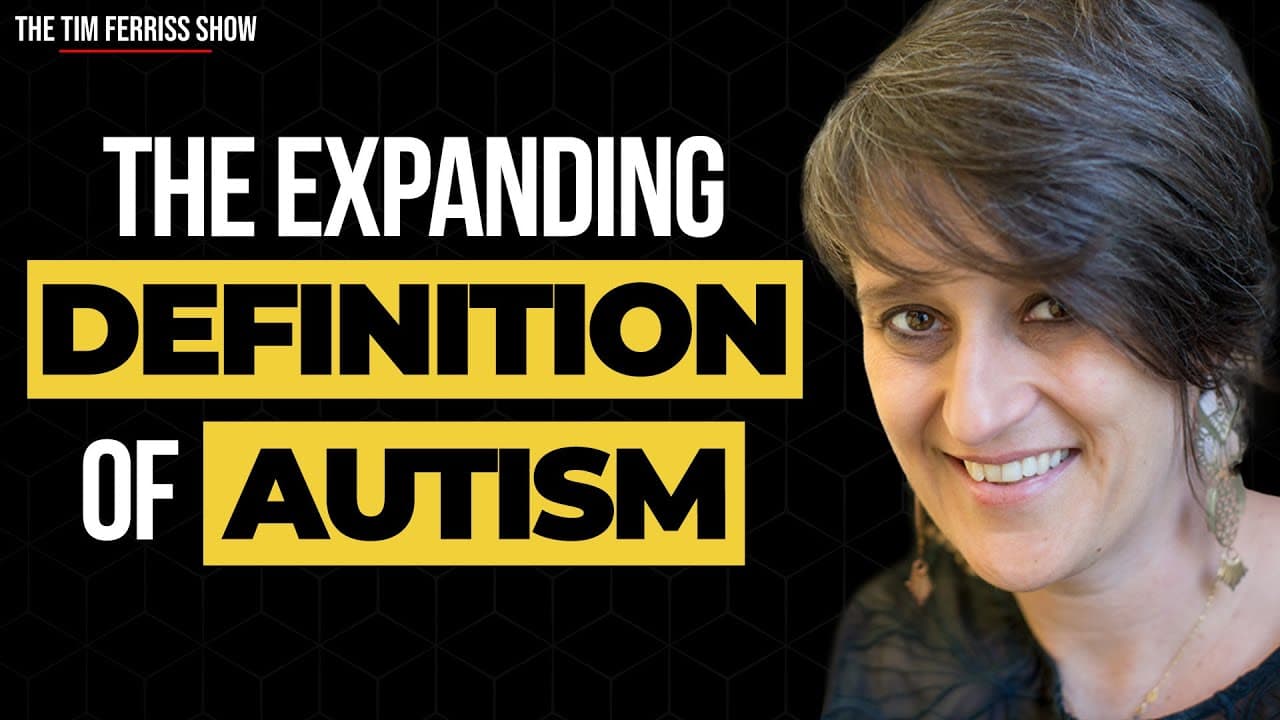
The Expanding Definition of Autism | Dr. Gül Dölen | The Tim Ferriss Show
TL;DR
The definition of autism expanded from a narrowly defined disease into a spectrum encompassing a much wider range of conditions. Dr. Gül Dölen says autism once had five or six implicated genes and an estimated heritability score of about 0.96, but that estimate fell as diagnostic criteria broadened. She explains how this complicates research and why fmr1 remains a promising starting point. Read on for the specific genetic and therapeutic implications.
Transcript
foreign so when I first started studying autism you know 20 years ago it was very narrowly defined as a disease there was only five or six different genes that had been implicated in causing autism it was incredibly highly inherited so you know if we can give a heritability score for different diseases and different inheritance patterns hair color ... Read More
Key Insights
- 😘 Autism was once considered highly heritable, but the expanded definition has led to lower heritability estimates.
- 👨🔬 The expanded definition includes conditions beyond classical autism, such as ADHD and social anxiety, making diagnosis and research challenging.
- ❓ Researchers have focused on early identified genes like fmr1 since it regulates a significant portion of other autism-related genes.
Install to Summarize YouTube Videos and Get Transcripts
Explore YouTube Video Summarizer or Get YouTube Transcript Extractor
Questions & Answers
Q: How has the definition of autism expanded?
Autism was narrowly defined 20 years ago, requiring impairments in social behavior, locomotor stereotypes, and other developmental criteria. The diagnostic definition later expanded into a spectrum that included many more presentations, potentially extending to conditions resembling ADHD with social anxiety.
Q: How did the expanded definition affect autism heritability estimates?
Under the narrower definition, autism had an estimated heritability score of about 0.96, making it highly heritable. Dr. Dölen says the estimate dropped after the definition expanded and more conditions were included.
Q: How did autism’s estimated heritability compare with other conditions?
Dr. Dölen contrasts autism’s former score of about 0.96 with depression and anxiety, which hovered around 0.5. She also uses hair and eye color as examples near a score of one and cervical cancer as an example closer to zero.
Q: Why does Dr. Gül Dölen find the broader autism definition challenging?
She believes the broader category may combine classical autism with conditions that do not constitute one unified disease. This makes it harder to identify what causes a particular subset and which patients may respond to a targeted therapy.
Q: How many genes were initially implicated in causing autism?
When Dr. Dölen began studying autism 20 years ago, only five or six genes had been implicated. She contrasts that early picture with the approximately one thousand genes now associated with autism.
Q: Why does Dr. Dölen focus on fmr1 in autism research?
She focuses on fmr1 because it was among the early identified genes and has long been known as a cause of autism. She also describes it as a central node connecting a substantial share of other implicated autism genes.
Q: What relationship does fmr1 have to other autism genes?
The protein encoded by fmr1 regulates roughly 25 percent of the other genes implicated in autism. Dr. Dölen therefore considers it a useful place to start when trying to understand the condition.
Q: How could narrower patient categories help autism therapy research?
Dr. Dölen argues that epidemiologists need to define categories that capture the appropriate subset of patients. Clearer groupings could exclude patients unlikely to respond when a therapy targets autism defined in one specific way.
Summary & Key Takeaways
-
Autism was initially considered a narrowly defined disease with a few genetic causes and high heritability.
-
The diagnostic criteria for autism expanded, incorporating a spectrum of conditions, leading to a decrease in heritability estimates.
-
The broadened definition now includes conditions like ADHD and social anxiety, making it difficult to identify the specific causes of autism.
Read in Other Languages (beta)
Share This Summary 📚
Summarize YouTube Videos and Get Video Transcripts with 1-Click
Try YouTube Summary with ChatGPT & Claude or YouTube Transcript Generator
Explore More Summaries from Tim Ferriss 📚




Summarize YouTube Videos and Get Video Transcripts with 1-Click
Try YouTube Summary with ChatGPT & Claude or YouTube Transcript Generator