Fei-Fei Li, Stanford - Stanford Medicine Big Data | Precision Health 2016
TL;DR
Researchers discuss the use of AI technology in healthcare to improve patient care and quality of life.
Transcript
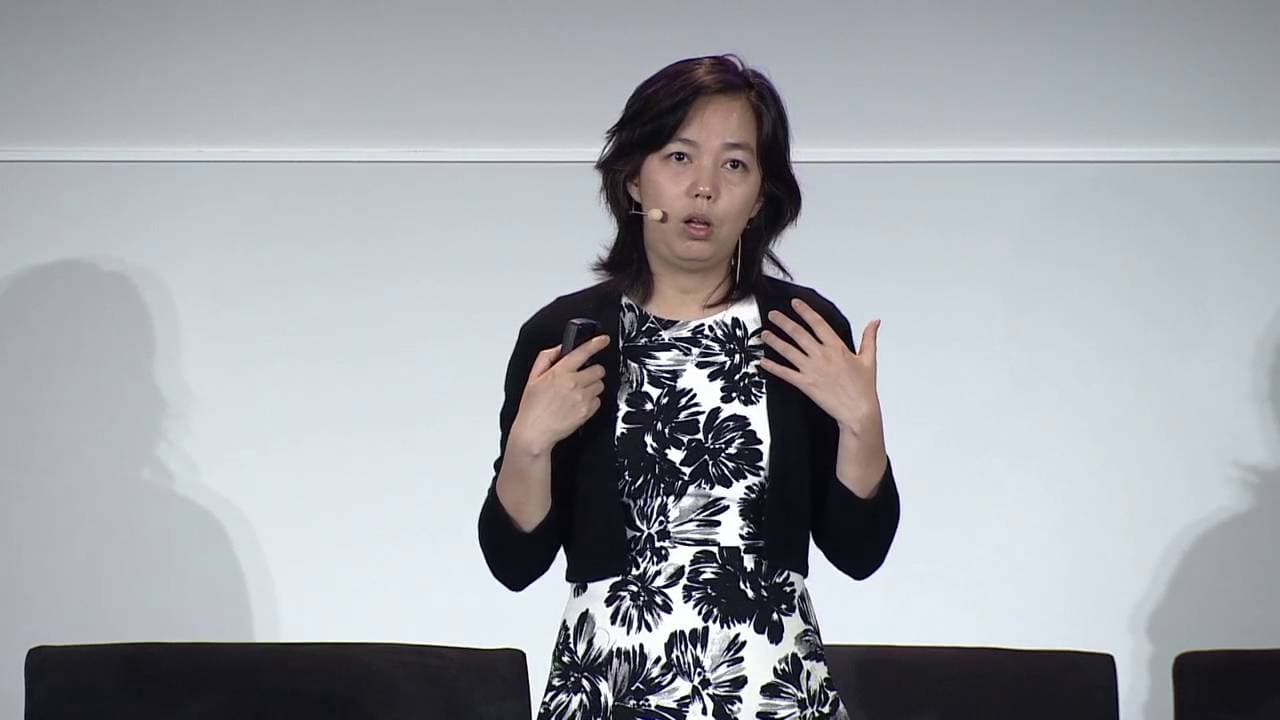
good morning everyone thank you for being here so I actually feel inadequate to be in this audience I know very little about medicine so I'm here to learn and interact with you so yes my talk title is guardian angels towards AI assisted care let me first acknowledge dr. Arnold Milstein he's my long-term collaborator in this project or in this colle... Read More
Key Insights
- 😨 The speaker's motivation for getting into medicine and collaborating with AI technology is to improve the quality of care and quality of life for patients.
- 😇 The "guardian angels" hypothesis proposes using AI technology to better the workflow of healthcare.
- 💻 Computer vision technology can analyze visual data and help monitor patient behavior and assess their living conditions.
- 🧑🦽 AI technology has the potential to address the challenges of current healthcare practices, such as expensive and subjective manual observation.
- 🤗 Ongoing projects in AI-assisted healthcare include monitoring hand hygiene, assessing patient conditions in ICUs, and evaluating senior living situations.
- ⌛ AI technology can provide real-time, continuous, and objective monitoring, improving the accuracy and cost-effectiveness of healthcare.
- 👶 The collaboration between medicine and AI technology is a new and exciting area with great potential for improving healthcare.
Install to Summarize YouTube Videos and Get Transcripts
Explore YouTube Video Summarizer or Get YouTube Transcript Extractor
Questions & Answers
Q: How can AI technology assist in improving patient care?
AI technology can assist in improving patient care by continuously monitoring patient behavior, such as eating and sleeping patterns, movement changes, and early signs of dementia. This information can help clinicians make better assessments and provide appropriate care.
Q: What are some challenges in current healthcare practices that AI technology can address?
Current healthcare practices often rely on manual observation and assessment, which can be expensive, subjective, and error-prone. AI technology can provide real-time, continuous, and objective monitoring of patients, improving the accuracy and cost-effectiveness of healthcare.
Q: How can computer vision technology be applied in healthcare?
Computer vision technology can be used to analyze visual data, such as detecting objects and recognizing activities. It can help in tracking patient behavior, understanding environmental conditions, and even generating sentences to communicate with patients who may not be physically present.
Q: What are some ongoing projects in AI-assisted healthcare?
Some ongoing projects include monitoring hand hygiene in hospitals, assessing patient conditions in ICUs, and evaluating the living situations of seniors. These projects aim to improve patient care, reduce hospital-acquired infections, and provide better assessments for clinicians.
Summary & Key Takeaways
-
The speaker shares their motivation for getting into medicine and collaborating with AI technology to improve the quality of care and quality of life for senior citizens and hospital patients.
-
They introduce the "guardian angels" hypothesis, which proposes the use of artificial intelligence technology to better the workflow of healthcare.
-
The speaker discusses the various needs that clinicians and patients have, and the potential for computer vision technology to monitor and understand patient behavior in order to improve care.
Read in Other Languages (beta)
Share This Summary 📚
Summarize YouTube Videos and Get Video Transcripts with 1-Click
Try YouTube Summary with ChatGPT & Claude or YouTube Transcript Generator
Explore More Summaries from Stanford 📚





Summarize YouTube Videos and Get Video Transcripts with 1-Click
Try YouTube Summary with ChatGPT & Claude or YouTube Transcript Generator