What Is Personal Identity According to Hume and Parfit?
TL;DR
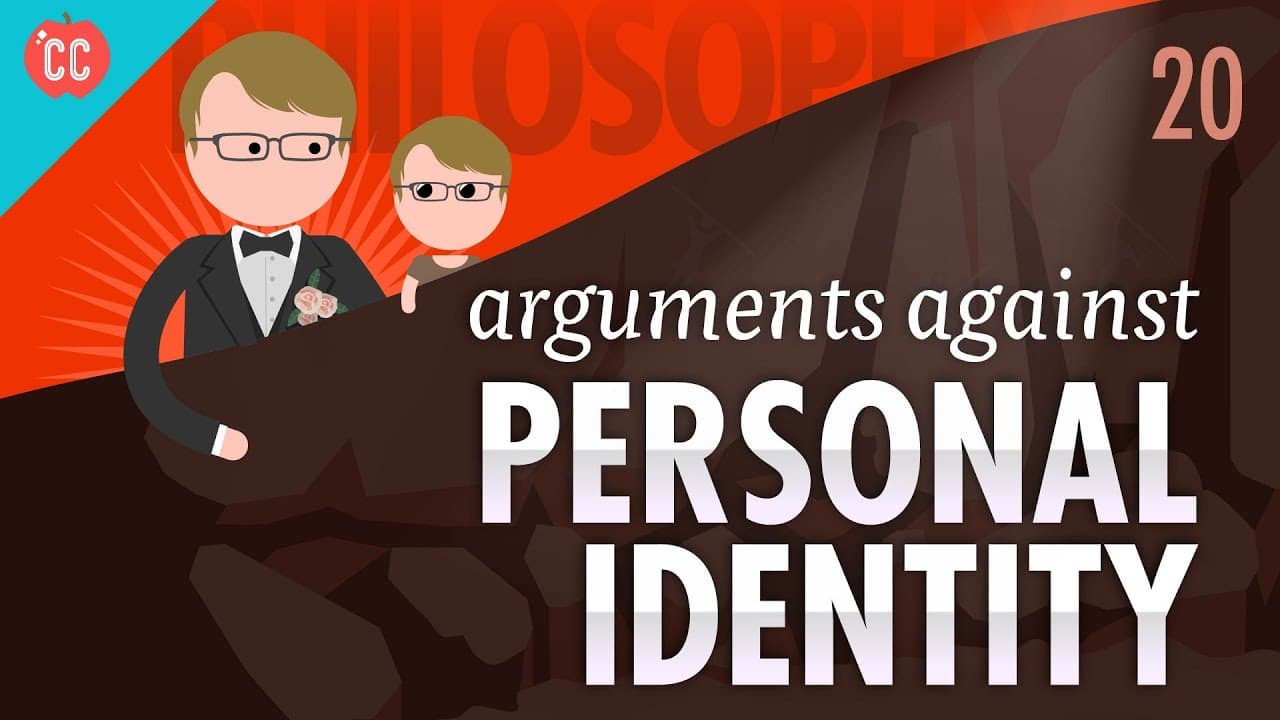
Personal identity is not a constant self but a collection of changing impressions, according to David Hume's bundle theory. Derek Parfit expands this idea by introducing psychological connectedness, suggesting that while our identities evolve over time, our relationships and memories sustain a sense of continuity. These theories challenge the notions of personal responsibility and the nature of commitments throughout life.
Transcript
Crash Course Philosophy is brought to you by Squarespace. Squarespace: share your passion with the world. In your day-to-day life, you probably assume a whole bunch of different identities. You might be a sister to your brother, a daughter to your parents, a colleague to your co-worker. A mentor to the kids you teach. Or you might think of your ide... Read More
Key Insights
- David Hume argued that the concept of a permanent self is an illusion, suggesting that our identity is not constant over time.
- Hume's bundle theory posits that the self is merely a collection of impressions and experiences without a single underlying entity.
- Derek Parfit expanded on Hume's ideas, introducing the notion of psychological connectedness as the key to understanding personal identity.
- Parfit's thought experiment involving a teleportation machine raises questions about the continuity of self and personal identity.
- Parfit suggests that while we change over time, psychological connections to our past selves allow us to maintain a sense of identity.
- The implications of these theories challenge traditional views on personal responsibility, promises, and obligations over time.
- Parfit's theory suggests that marriage vows and long-term commitments could be seen as ongoing reaffirmations rather than fixed promises.
- The exploration of personal identity has practical implications for understanding relationships and personal growth over time.
Install to Summarize YouTube Videos and Get Transcripts
Explore YouTube Video Summarizer or Get YouTube Transcript Extractor
Questions & Answers
Q: What is Hume's argument about personal identity?
David Hume argued that the concept of a permanent self is an illusion. He believed that what we consider to be our identity is actually a bundle of impressions and experiences that change over time. According to Hume, there is no single, constant self that persists from birth to death.
Q: How does Parfit's theory differ from Hume's?
Derek Parfit built on Hume's ideas by introducing the concept of psychological connectedness. While agreeing that there is no permanent self, Parfit suggested that our sense of identity is maintained through connections to our past experiences and memories, allowing us to feel like the same person over time despite changes.
Q: What is the significance of the teleportation thought experiment?
The teleportation thought experiment, proposed by Parfit, raises questions about the continuity of self and personal identity. It challenges the idea of whether a person who is re-created atom by atom on Mars is the same person as the one who existed on Earth, thereby questioning the nature of identity and existence.
Q: How do these theories affect our understanding of personal responsibility?
Hume's and Parfit's theories suggest that personal responsibility may not be as straightforward as traditionally thought. If our identity changes over time, the degree of responsibility for past actions could depend on the psychological connection to the person who committed those actions, rather than a fixed sense of self.
Q: What implications do these theories have for marriage vows?
Parfit's theory implies that marriage vows, like other long-term commitments, might be seen as ongoing reaffirmations rather than fixed promises. As individuals change over time, the commitment to a partner could be viewed as a continuous choice, reflecting the evolving nature of personal identity and relationships.
Q: How can these insights be applied to personal growth?
Understanding that identity is not fixed can encourage personal growth by allowing individuals to embrace change and new experiences. By recognizing that we are not bound by past selves, we can adapt and evolve, fostering a more flexible and dynamic approach to personal development.
Q: What role does psychological connectedness play in identity?
Psychological connectedness, as proposed by Parfit, plays a crucial role in maintaining a sense of identity over time. It suggests that while we may not be the same person throughout our lives, the connections to our past experiences and memories allow us to feel like a coherent self, despite changes.
Q: Why is it important to understand these philosophical theories?
Understanding these philosophical theories is important because they offer insights into the nature of self and identity, challenging traditional views and providing new frameworks for thinking about personal responsibility, relationships, and personal growth. They encourage a deeper exploration of what it means to be human.
Summary & Key Takeaways
-
David Hume's bundle theory challenges the notion of a permanent self, proposing that identity is a collection of changing impressions. This view suggests that the self is not a constant entity but rather an illusion created by our minds.
-
Derek Parfit's theory of psychological connectedness builds on Hume's ideas, suggesting that while we may not be the same person over time, our identities are maintained through connections to past experiences and memories.
-
These philosophical insights have practical implications for understanding personal responsibility and relationships, suggesting that commitments and promises may need to be viewed as ongoing rather than fixed over a lifetime.
Read in Other Languages (beta)
Share This Summary 📚
Summarize YouTube Videos and Get Video Transcripts with 1-Click
Try YouTube Summary with ChatGPT & Claude or YouTube Transcript Generator
Explore More Summaries from CrashCourse 📚




Summarize YouTube Videos and Get Video Transcripts with 1-Click
Try YouTube Summary with ChatGPT & Claude or YouTube Transcript Generator