The “myth” of the boiling frog
TL;DR
Humans are like frogs in slowly heating water, oblivious to the increasing temperature. With global temperatures rising, we must reduce greenhouse gas emissions to prevent catastrophic effects.
Transcript
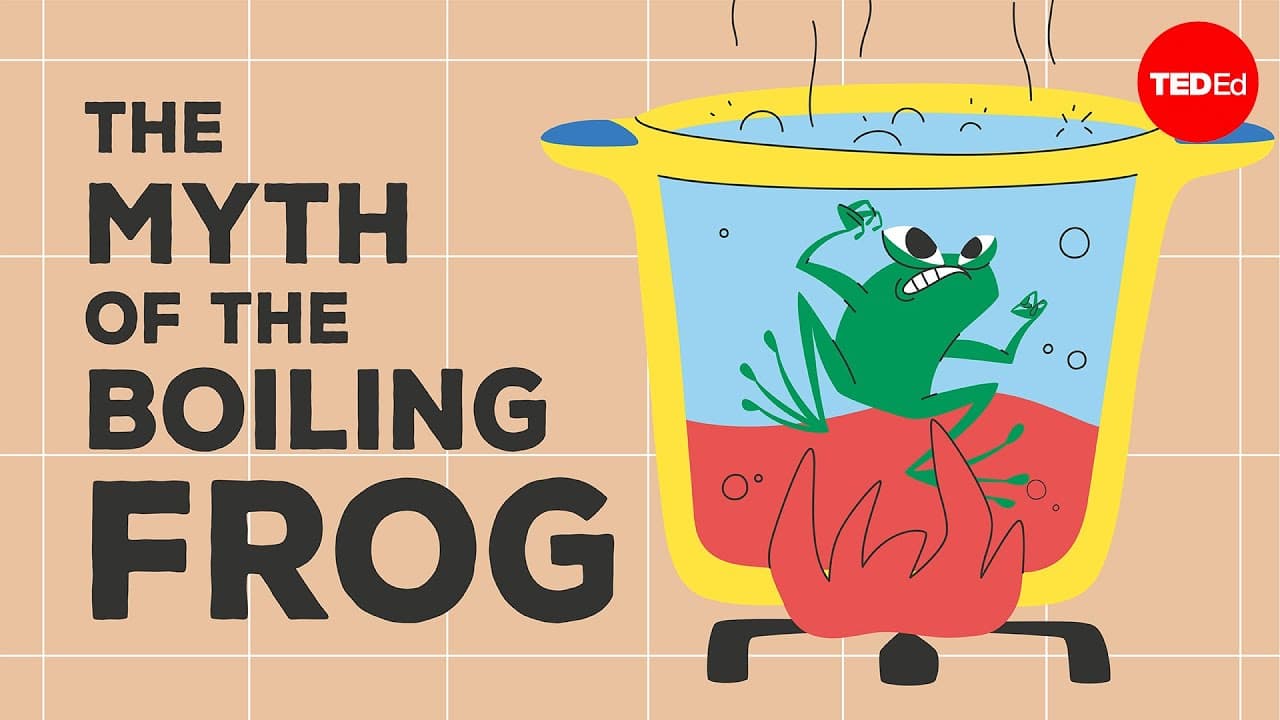
Two frogs are minding their own business in the swamp when WHAM— they’re kidnapped. They come to in a kitchen, captives of a menacing chef. He boils up a pot of water and lobs one of the frogs in. But it’s having none of this. The second its toes hit the scalding water it jumps right out the window. The chef refills the pot, but this time he doe... Read More
Key Insights
- 💀 The frog parable may not be scientifically accurate, but it serves as an analogy for how humans sometimes fail to recognize the gradual dangers of climate change.
- 🌐 Global average temperatures have already increased by 1 degree Celsius since 1850, with significant regional variations.
- 🫢 The burning of fossil fuels is the primary driver of climate change, as it releases greenhouse gases that trap heat in the atmosphere.
- 🫢 If we continue emitting greenhouse gases at the current rate, temperatures are projected to rise by 4 degrees by 2100, leading to severe and irreversible consequences.
- 🫢 Mitigating climate change requires transitioning to clean energy sources and reducing greenhouse gas emissions to net zero.
- ℹ️ Carbon removal technologies can help offset emissions, but they are not a substitute for reducing emissions at the source.
- 😑 Preventing the most severe impacts of climate change requires keeping global temperatures within 1.5 degrees above pre-industrial levels.
Install to Summarize YouTube Videos and Get Transcripts
Explore YouTube Video Summarizer or Get YouTube Transcript Extractor
Questions & Answers
Q: How do frogs behave in slowly heating water?
Contrary to the popular parable, frogs are actually sensitive to slowly heating water and would jump out to safety before it gets too hot.
Q: What causes the increase in global temperatures?
The burning of fossil fuels releases carbon dioxide and methane, which trap heat in the atmosphere, preventing it from escaping into space.
Q: What are the potential impacts of a 4-degree increase in temperatures?
A 4-degree increase would lead to much warmer Arctic nights and hotter days in places like Mumbai, causing severe disruptions to ecosystems, agriculture, and human health.
Q: How can we mitigate the effects of climate change?
We must reduce greenhouse gas emissions to net zero by transitioning to clean energy sources. Additionally, we can employ carbon removal technologies to extract carbon dioxide from the atmosphere.
Summary & Key Takeaways
-
Two frogs are kidnapped and placed in a pot of water: one escapes when the heat is turned on, while the other remains oblivious until it's too late.
-
Global average temperatures have already increased by 1 degree Celsius since 1850, with some regions experiencing even greater warming.
-
Burning fossil fuels releases greenhouse gases, preventing heat from escaping into space and causing our planet to warm. Scientists predict a 4-degree increase in temperatures by 2100.
Read in Other Languages (beta)
Share This Summary 📚
Summarize YouTube Videos and Get Video Transcripts with 1-Click
Try YouTube Summary with ChatGPT & Claude or YouTube Transcript Generator
Explore More Summaries from TED-Ed 📚






Summarize YouTube Videos and Get Video Transcripts with 1-Click
Try YouTube Summary with ChatGPT & Claude or YouTube Transcript Generator