How to Host Your Astro Website on Amazon Amplify
TL;DR
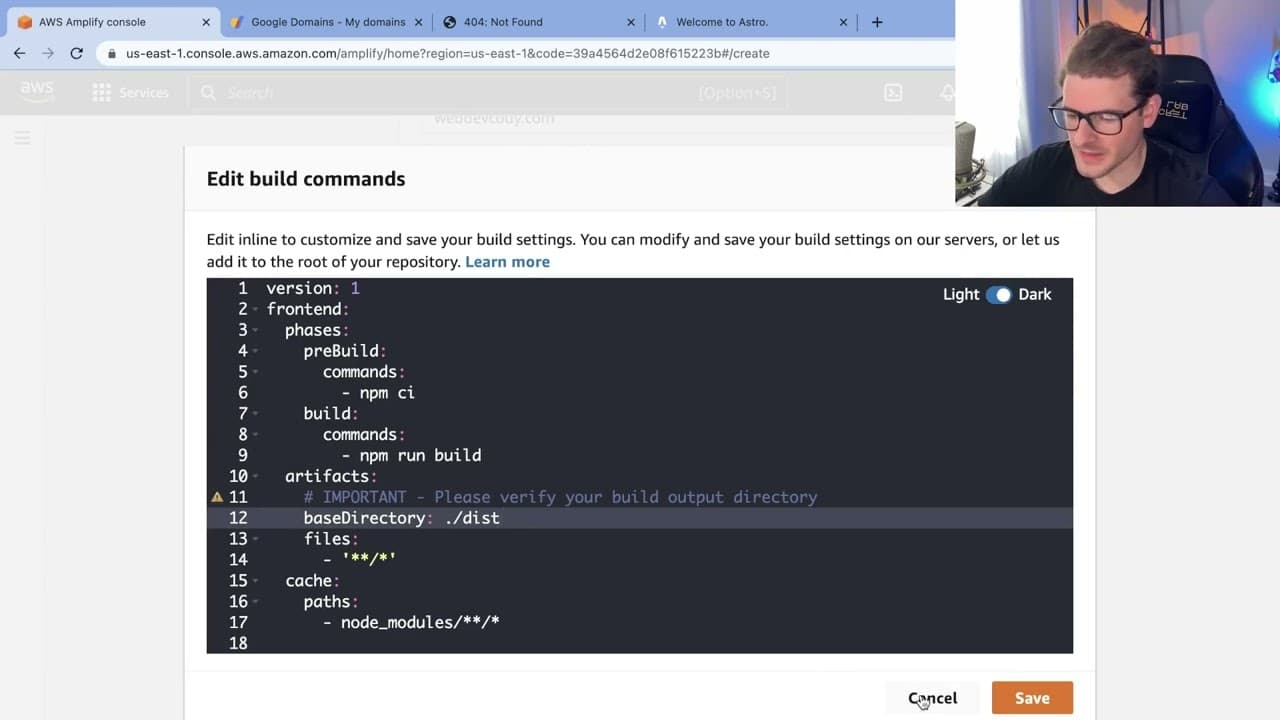
To host your Astro website on Amazon Amplify, first create your project with 'Astro create' and build it using 'npm run build.' Next, set up a new app in Amplify, connect your GitHub repository, and adjust the build settings to use the 'dist' folder. Finally, configure your custom domain and HTTPS to ensure smooth access.
Transcript
so a couple of days ago I decided to give Astro a try and honestly I haven't put enough time into it to even give you a solid opinion on it I was trying to build out basically a really simple uh personal website for my YouTube channel and I decided to just try Astro instead of my usual T3 stack stuff because I just need some static content right As... Read More
Key Insights
- 🐎 Astro is particularly effective for creating static sites, making it suitable for personal projects that prioritize speed and performance.
- 😄 The framework's file-based routing system resembles that of Next.js, easing the transition for developers familiar with that environment.
- 👨💻 The author emphasizes Astro's reduced coding requirements, which simplifies the development process and promotes cleaner code organization.
- 🍻 Deploying a site using Amazon Amplify involves linking repositories and configuring domains, but it can require careful setup and adjustment.
- 😀 The author faced challenges with custom domain configurations, showcasing the complexities involved in managing HTTPS and DNS settings.
- 😶🌫️ Monitoring costs when using cloud services like AWS is crucial, particularly for projects just starting that may face unexpected expenses.
- ❓ The author is keen to learn and share more about Astro, indicating a commitment to exploring its full potential and functionalities.
Install to Summarize YouTube Videos and Get Transcripts
Explore YouTube Video Summarizer or Get YouTube Transcript Extractor
Questions & Answers
Q: What are the main reasons the author chose to use Astro for their project?
The author decided to utilize Astro due to its efficiency in handling static content and minimizing bundle sizes, which is crucial for a personal website where quick loading times are desirable. Astro's capability to also manage some dynamic content made it an appealing choice for those looking to streamline their coding process further.
Q: How does the author describe the setup and coding experience with Astro?
The coding experience with Astro was likened to using Next.js, particularly due to the file-based routing feature. The author noted that Astro's syntax is more reminiscent of Vue.js, with styles integrated within the components, promoting a cleaner codebase. They appreciated how Astro requires less code overall, facilitating faster development.
Q: What steps did the author take to deploy their Astro site using Amazon Amplify?
To deploy the Astro site, the author ran an npm run build to compile the site into a dist folder. They then used Amazon Amplify to host the web app, connecting their GitHub repository and configuring standard build settings to accurately identify the output directory. They also set up HTTPS and managed domain configurations for the deployment.
Q: What challenges did the author face while setting up their custom domain and HTTPS?
While setting up their custom domain through Google Domains, the author encountered a challenge because Google does not allow for directly pointing base domains to Amplify. This required setting up domain forwarding as a workaround. Additionally, configuring SSL certificates and ensuring proper DNS records was part of the process that required careful attention to detail.
Q: Does the author express concerns regarding the potential costs associated with using Amazon Amplify?
Yes, the author highlighted their awareness of cost management strategies while using Amazon Amplify. They stressed the importance of monitoring metrics like bandwidth and build minutes, especially as their site scales and potentially attracts traffic. They encouraged others to be proactive in checking Amazon's billing system to avoid unpleasant surprises.
Q: What future plans does the author have regarding their exploration with Astro, according to the video?
The author plans to delve deeper into Astro and its capabilities in future content. They indicated that their current experimentation only scratched the surface and expressed a desire to explore and implement more features after the initial setup is complete. They also mentioned the intent to share these insights with their audience through additional videos.
Summary & Key Takeaways
-
The author recently experimented with Astro for creating a personal website for their YouTube channel, drawn by its strengths in managing static content and minimizing bundle sizes.
-
They described the setup process, including using the "Astro create" command, as well as comparisons to Next.js in terms of file-based routing and clean syntax for easier coding.
-
The deployment to Amazon Amplify was discussed, highlighting its cost-effectiveness and the necessity of configuring HTTPS and connecting a custom domain for seamless access.
Read in Other Languages (beta)
Share This Summary 📚
Summarize YouTube Videos and Get Video Transcripts with 1-Click
Try YouTube Summary with ChatGPT & Claude or YouTube Transcript Generator
Explore More Summaries from Web Dev Cody 📚

Summarize YouTube Videos and Get Video Transcripts with 1-Click
Try YouTube Summary with ChatGPT & Claude or YouTube Transcript Generator