Why Do People Eat Whale Poop?
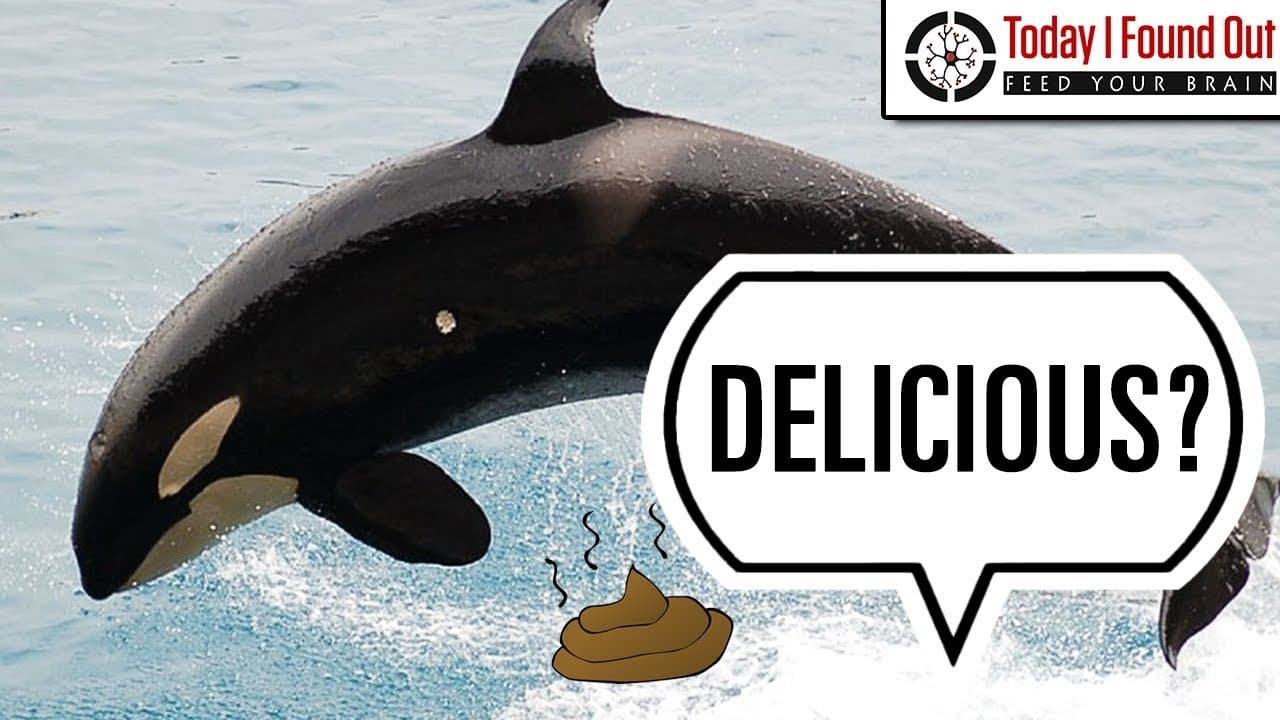
TL;DR
People eat ambergris because it has long been treated as a flavoring, delicacy, aphrodisiac, and medicinal substance despite originating as sperm-whale excrement. King Charles II’s favorite meal was reportedly eggs and ambergris, while wine merchants added a few grains to claret. Aging in seawater transforms the dark, fecal-smelling mass into a gray, waxy substance with an earthy, piney, or tobacco-like scent. Read on to discover how this unusual material forms and changes.
Transcript
Some refer to the rock-like substance as “floating gold” because of its hue and value. (For reference, 175 pound, 79 kg, lump of it was recently found floating off the coast of Qurayat, netting the fishermen who found it a cool $3 million when they sold it at auction.) Others call it “ambergris,” derived from the Old French “ambre gris,” meaning “g... Read More
Key Insights
- 🤮 Ambergris is a highly valued substance due to its rarity and unique scent, often mistaken for whale vomit.
- 💊 It has been used for centuries in perfumes, medicines, and even consumed as a delicacy by some individuals.
- 💁 The production of ambergris occurs within sperm whales when indigestible squid beaks form a mass that is eventually expelled.
- 😒 The legal status of ambergris is complex, with some countries banning its use while others have unclear regulations and minimal enforcement.
- 👨🔬 Ambergris hunters actively search for the substance and engage in competitive actions to acquire it.
- 🥺 The market for ambergris encourages the protection of sperm whales, as their increased population leads to more ambergris being available.
Install to Summarize YouTube Videos and Get Transcripts
Explore YouTube Video Summarizer or Get YouTube Transcript Extractor
Questions & Answers
Q: Why do people eat whale poop?
People have consumed ambergris, a substance expelled by sperm whales, as food, flavoring, an aphrodisiac, and medicine. King Henry V and King Charles II included it in meals, while some wine merchants added a few grains to claret for flavor.
Q: What is ambergris?
Ambergris is a rare, hard, lumpy sperm-whale emission found floating in oceans or washed onto beaches. It is often mistakenly called whale vomit, but the transcript describes it as closer to whale excrement.
Q: Why is ambergris called “floating gold”?
Some people call ambergris “floating gold” because of its hue and value. A 175-pound, or 79-kilogram, lump found off Qurayat sold at auction for $3 million.
Q: How is ambergris formed inside a sperm whale?
Ambergris begins when indigestible squid beaks pass into a sperm whale’s intestines instead of being vomited. The beaks form a tangled mass saturated with feces, while a fatty, bile-like substance surrounds their sharp points and helps the mass move through the whale.
Q: What happens to ambergris after the whale expels it?
Fresh ambergris is dark, viscous, and smells like fecal matter. Microbes, sunlight, air, saltwater, and waves gradually turn it gray and waxy and remove the fecal smell, though pieces of squid beak remain embedded in it.
Q: What does aged ambergris smell like?
Aged ambergris no longer smells like fecal matter. Its scent has been described as earthy, piney, and tobacco-like.
Q: How has ambergris been used throughout history?
Humans have used ambergris for centuries in perfumes, medicines, foods, incense, and scented products. Ancient Egyptians used it in incense, Chinese people used it as an aphrodisiac, Persians used it as medicine for heart problems, and Turks used it in cooking.
Q: When was ambergris identified as coming from sperm whales?
Boston physician Zabdiel Boylston reported in 1724 that ambergris came from sperm whales. He supported the claim with a whaler’s account of finding 25 pounds of it in a killed whale’s gut, and the squid beaks embedded in ambergris offered another clue.
Summary & Key Takeaways
-
Ambergris is a rare and valuable substance found floating in oceans and washed up on beaches worldwide, often referred to as "floating gold" due to its value.
-
It is derived from whale excrement, particularly sperm whales, and has been used for centuries in perfumes, medicines, foods, and even cocktails.
-
The production of ambergris occurs when a sperm whale consumes squid, and their indigestible beaks form a solid mass that is eventually expelled along with partially digested matter.
Read in Other Languages (beta)
Share This Summary 📚
Summarize YouTube Videos and Get Video Transcripts with 1-Click
Try YouTube Summary with ChatGPT & Claude or YouTube Transcript Generator
Explore More Summaries from Today I Found Out 📚






Summarize YouTube Videos and Get Video Transcripts with 1-Click
Try YouTube Summary with ChatGPT & Claude or YouTube Transcript Generator