How to Convert Units of Measure Using Ratios
TL;DR
To convert units of measure, use ratio tables and multiplication or division based on known conversion factors. For example, to convert hours to weeks, multiply by 1/168, and to convert yards to miles, divide by 1,760 yards per mile. Understanding these ratios simplifies conversions across various units.
Transcript
- [Instructor] We're told to complete the ratio table to convert the units of measure from hours to weeks, or weeks to hours. So we see here, they've told us already that there's 168 hours for every one week. One way to think about it is the ratio of hours for every week is 168 to one, and then they calculate, well if we have 1,176 hours, how many ... Read More
Key Insights
- 🥳 Ratio tables are useful for converting units of measure by using conversion factors.
- ⌛ Converting hours to weeks involves multiplying the number of hours by the conversion factor (168 hours per week).
- 😀 To convert yards to miles, divide the number of yards by the ratio of yards to miles.
- 🦶 Converting millimeters to feet requires dividing the number of millimeters by the conversion factor (3 feet per yard).
Install to Summarize YouTube Videos and Get Transcripts
Explore YouTube Video Summarizer or Get YouTube Transcript Extractor
Questions & Answers
Q: How can we convert hours to weeks using a ratio table?
To convert hours to weeks using a ratio table, we multiply the number of hours by the conversion factor, which is 168 (hours per week). For example, if we have 1,176 hours, we would multiply it by 7 to get 7 weeks.
Q: What is the process for converting yards to miles using a given ratio?
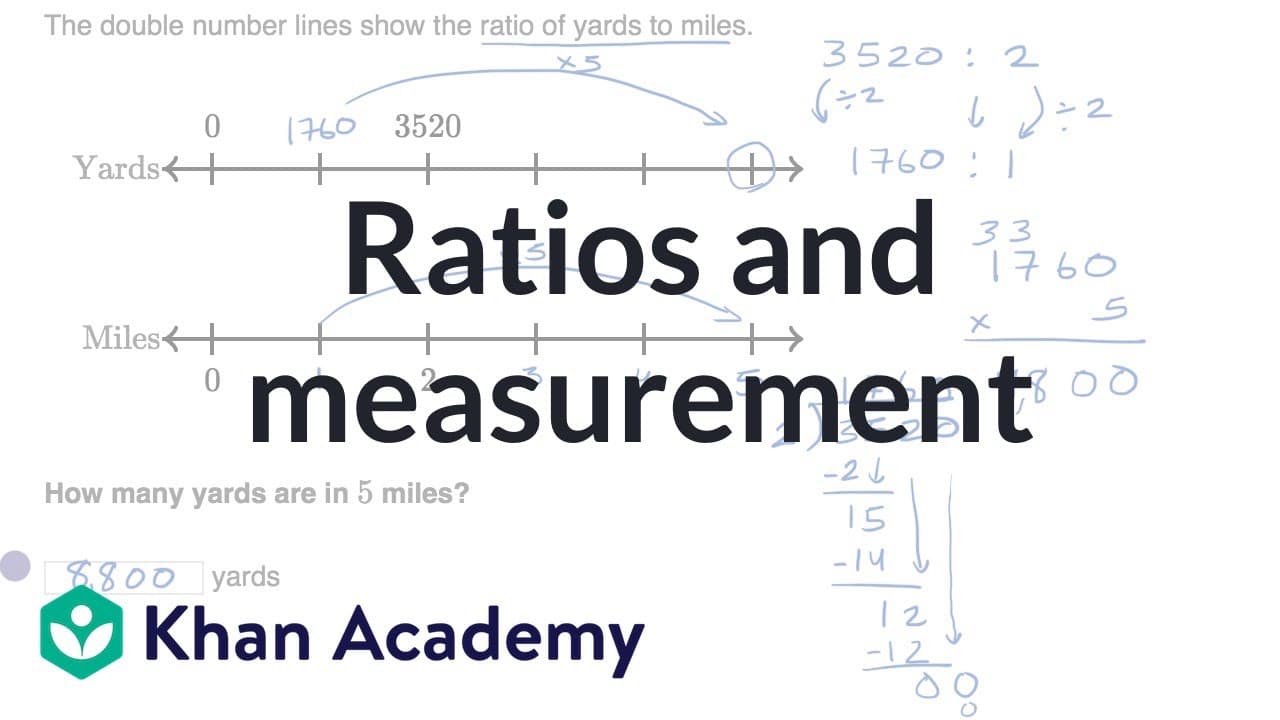
To convert yards to miles using a given ratio, we need to divide the number of yards by the number of yards per mile. For example, if the ratio is 3,520 yards to 2 miles, we would divide 3,520 by 2 to get 1,760 yards per mile.
Q: How do we convert millimeters to feet using a conversion factor?
To convert millimeters to feet using a conversion factor, we divide the number of millimeters by the conversion factor. For example, if there are 914.4 millimeters in a yard and 3 feet in a yard, we divide 914.4 by 3 to get 304.8 millimeters per foot.
Q: How can we convert dollars per pound to dollars per ounce?
To convert dollars per pound to dollars per ounce, we divide the number of dollars per pound by the number of ounces per pound. For example, if it's $12 per pound of confetti (16 ounces), we divide 12 by 16 to get $0.75 per ounce.
Summary & Key Takeaways
-
The video demonstrates how to use ratio tables to convert units of measure, specifically hours to weeks and vice versa, by multiplying or dividing by a conversion factor.
-
Another example shows how to convert yards to miles using a given ratio, and how to determine the number of yards in a certain number of miles.
-
The video also explains how to convert millimeters to feet by using a conversion factor and simplifying the ratio.
-
Lastly, the video demonstrates converting dollars per pound to dollars per ounce, using division to determine the conversion factor.
Read in Other Languages (beta)
Share This Summary 📚
Summarize YouTube Videos and Get Video Transcripts with 1-Click
Try YouTube Summary with ChatGPT & Claude or YouTube Transcript Generator
Explore More Summaries from Khan Academy 📚



Summarize YouTube Videos and Get Video Transcripts with 1-Click
Try YouTube Summary with ChatGPT & Claude or YouTube Transcript Generator