What Are International IP Laws and Their Impact?
TL;DR
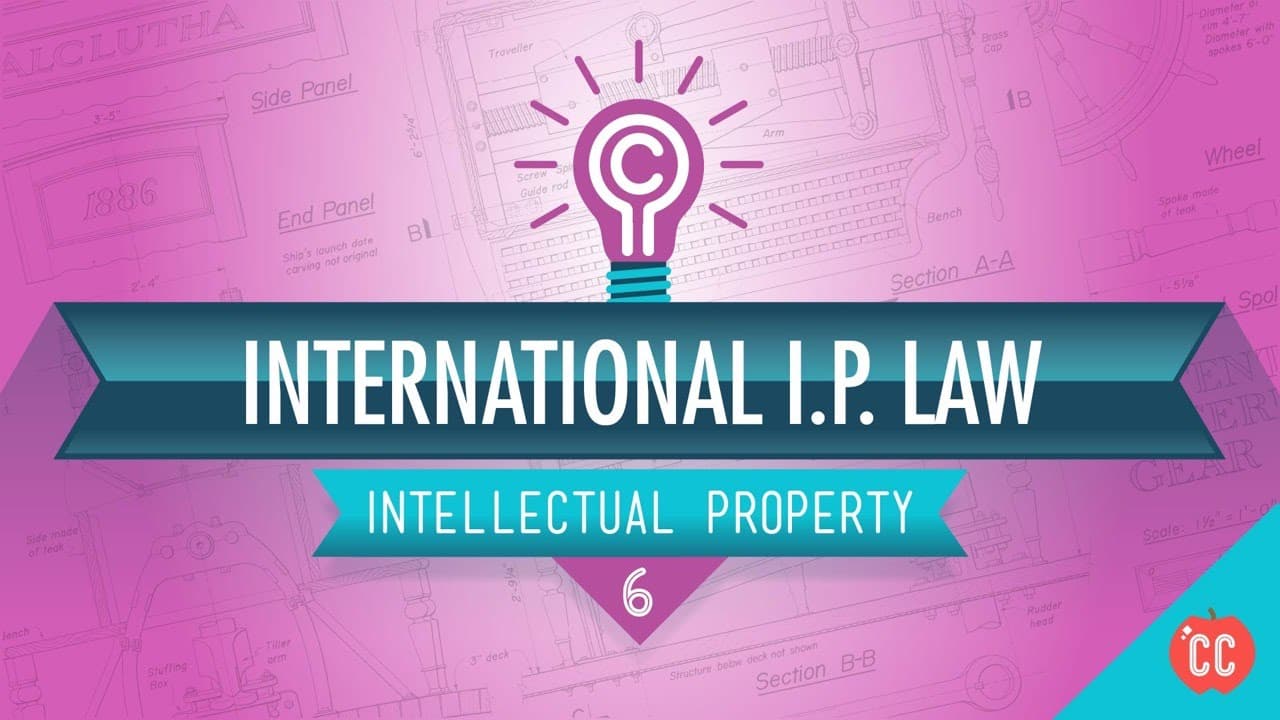
International IP laws are established through treaties and are territorial, meaning each country creates its own laws applicable only within its borders. Key treaties like the Berne Convention and TRIPS set minimum standards to protect copyright, patents, and trademarks, promoting national treatment. However, tensions exist between developed nations seeking strong protections and developing countries needing access to technology.
Transcript
Hi, I'm Stan Muller, and this is Crash Course Intellectual Property. Today, we're talking about international intellectual property law, and the first thing I'm gonna tell you is that there aren't really any international intellectual property rights. IP rights are territorial. They're created by each country's national law, and typically apply onl... Read More
Key Insights
- International IP rights are not universal; they are territorial, created by each nation's laws and apply only within that country.
- International treaties, like the Berne Convention and TRIPS Agreement, establish minimum standards for IP laws globally, promoting consistency.
- The principle of national treatment in IP law ensures foreign authors and inventors receive protection equal to that of nationals.
- Developed nations advocate for strong IP rights to protect investments, while developing countries seek access to technology for modernization.
- The Berne Convention addresses copyright issues but lacks enforcement mechanisms, leading to the creation of the TRIPS Agreement for stronger enforcement.
- The Paris Convention governs international patent laws but offers limited enforcement, with TRIPS setting minimum patent standards.
- Geographical indications, protected under TRIPS, have been a contentious point between the US and EU, affecting product labeling.
- The complexity of international IP treaties complicates legal reform, as changes require renegotiation of multiple international agreements.
Install to Summarize YouTube Videos and Get Transcripts
Explore YouTube Video Summarizer or Get YouTube Transcript Extractor
Questions & Answers
Q: What is the principle of national treatment in international IP law?
The principle of national treatment in international IP law requires countries to provide foreign authors and inventors with protection that is no less favorable than that granted to their own nationals. This principle is akin to an international IP golden rule, ensuring equal treatment across borders for IP rights.
Q: How do international treaties influence IP laws?
International treaties like the Berne Convention and TRIPS Agreement establish minimum standards for IP laws, promoting consistency across countries. These treaties set baseline protections for copyrights, patents, and trademarks, ensuring that member countries provide a certain level of IP protection while allowing for higher standards if desired.
Q: What are the challenges faced by developing nations regarding IP rights?
Developing nations often face challenges with strong IP rights, as they seek access to advanced technology and knowledge for modernization. They view stringent IP laws as barriers that limit access through high royalties and licensing fees, impacting their ability to compete in the global market and develop economically.
Q: Why was the TRIPS Agreement created?
The TRIPS Agreement was created to address the enforcement shortcomings of earlier treaties like the Berne and Paris Conventions. It incorporates many of their provisions while adding stronger enforcement mechanisms through the World Trade Organization's dispute settlement body, ensuring compliance and setting minimum standards for IP protection globally.
Q: What is the significance of geographical indications in IP law?
Geographical indications protect the use of names associated with specific regions for products, such as Champagne or Parma ham. Under TRIPS, these indications prevent misleading use of such names for products not originating from those regions, ensuring authenticity and protecting the economic interests of producers in those areas.
Q: How do international IP treaties impact legal reform?
International IP treaties complicate legal reform because changes to national IP laws often require renegotiation of multiple international agreements. This complexity makes it challenging to adapt IP laws to evolving global needs, as any reform must align with existing treaty obligations, hindering flexibility and responsiveness.
Q: What role does the Paris Convention play in international patent law?
The Paris Convention governs international patent law by establishing principles like national treatment for inventors, ensuring foreign inventors receive the same protections as domestic ones. However, it lacks enforcement mechanisms, leading to the TRIPS Agreement, which sets minimum standards for patent protection and includes pharmaceuticals and biotechnology.
Q: Why is international IP law considered complex?
International IP law is complex due to the multitude of treaties, agreements, and protocols that establish varying standards and protections across countries. This complexity arises from the need to balance national interests, global trade, and technological advancements, making it challenging to navigate and reform IP laws effectively.
Summary & Key Takeaways
-
International IP law is governed by treaties rather than universal rights, with each country establishing its own IP laws that apply territorially. Treaties like the Berne Convention and TRIPS set minimum standards to ensure consistency and protect foreign authors and inventors.
-
Developed countries push for strong IP rights to safeguard investments, while developing nations seek access to technology and knowledge. The Berne Convention and Paris Convention address copyrights and patents, but lack enforcement, leading to the creation of the TRIPS Agreement.
-
Geographical indications are protected under TRIPS, creating tensions between regions like the US and EU. The multitude of IP treaties complicates legal reform, as changes require renegotiation of international agreements, challenging the balance between exclusive rights and public access.
Read in Other Languages (beta)
Share This Summary 📚
Summarize YouTube Videos and Get Video Transcripts with 1-Click
Try YouTube Summary with ChatGPT & Claude or YouTube Transcript Generator
Explore More Summaries from CrashCourse 📚




Summarize YouTube Videos and Get Video Transcripts with 1-Click
Try YouTube Summary with ChatGPT & Claude or YouTube Transcript Generator