How to Build Elite Sales Performance Habits
TL;DR
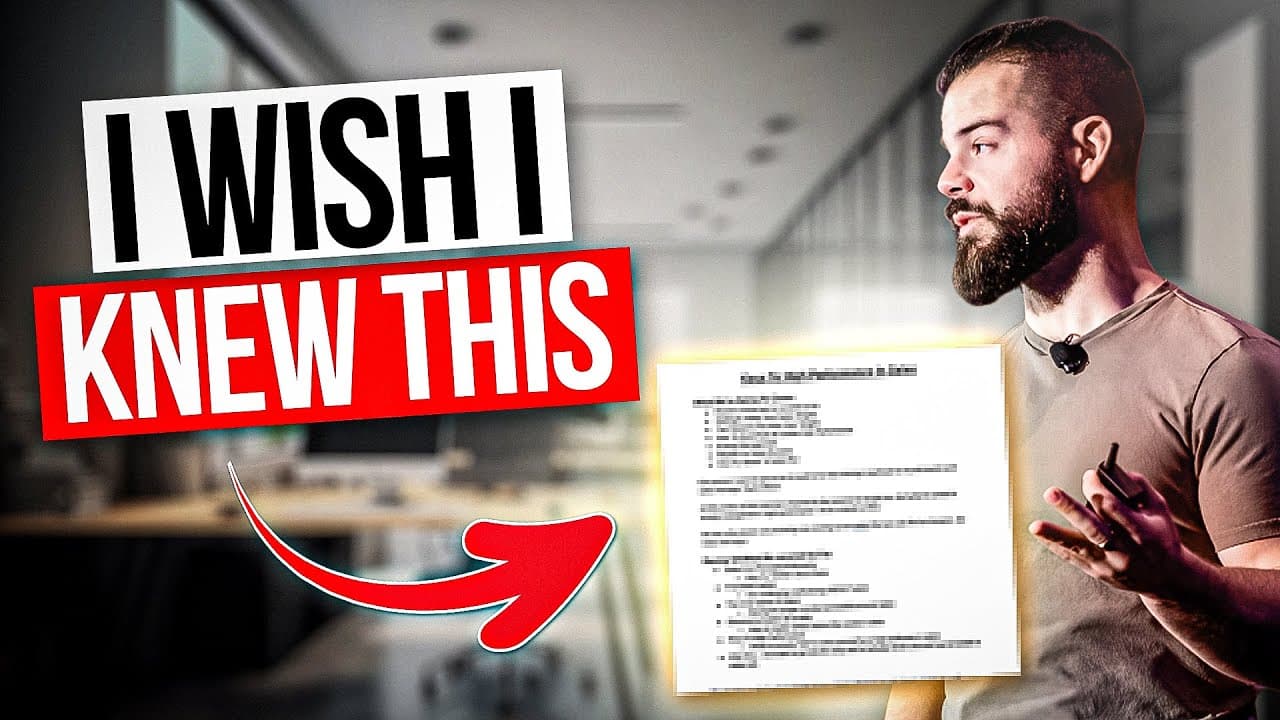
Set weekly sales projections by reverse engineering desired results into measurable inputs, then hedge those inputs above the minimum outcome. Track scheduled consultations, show rates, offer rates, closes, cash, outbound activity, and follow-up so missed projections reveal whether the problem is inaccurate planning, insufficient volume, or weak sales skill.
Transcript
in this video we're going to talk about Keys the high performance and sales so really the high performance sales habits that really took me from an average-ish sales person to one of the best people in the industry and I will tell you like watch this video to the end because even if you don't know the words to say or you're not a master at the word... Read More
Key Insights
- • High sales performance is built on habits, rituals, and daily standards, not only scripts or polished language. Consistently applying these foundations can allow a salesperson with mediocre wording to outperform someone who knows the right phrases but lacks disciplined execution.
- • A projection is a bare minimum performance standard, while a goal represents a higher aspiration. Both should be reverse engineered, but the projected result is protected by planning activity for a larger target, such as pursuing 13 units to secure 10.
- • Weekly sales planning is completed at the end of each week for the following week. The projection includes inputs such as lead generation, outbound messages, follow-up, and calls, plus outputs such as closes and collected cash.
- • Reverse engineering works by connecting desired closes to each preceding stage of the sales process. Scheduled consultations, show rates, offer rates, and offer-to-close rates reveal the activity volume required to manufacture a specified result.
- • Projection accuracy creates accountability and control because salespeople repeatedly compare promised results with actual performance. Consistently doing what was projected builds certainty, and the transcript identifies certainty as an important quality in selling and high-performing sales teams.
- • A missed projection is diagnostic evidence rather than an unexplained failure. Tracking the complete funnel shows whether the cause was an unrealistic forecast, insufficient consultation volume, weak closing ability, low attendance, or inadequate outbound and follow-up activity.
- • Unscheduled sales time is an opportunity for revenue-producing activity. When a prospect does not attend a call, a strong salesperson uses the available time for outbound outreach or follow-up instead of automatically extending lunch, walking, or consuming a podcast.
- • Effective projections are set near the boundary of reliable performance and should be achieved about 75–80% of the time. Missing 20–25% indicates the standard remains challenging, while always succeeding or continually failing calls for recalibration.
Install to Summarize YouTube Videos and Get Transcripts
Explore YouTube Video Summarizer or Get YouTube Transcript Extractor
Questions & Answers
Q: How do elite salespeople plan their weekly results?
Elite salespeople set projections at the end of each week for the following week. They specify expected outputs, including closes and cash, and calculate the inputs needed to produce them. Those inputs can include lead generation, outbound activity, follow-up, scheduled consultations, and completed calls. This process connects daily behavior to the final sales result and creates a clear basis for accountability.
Q: What is the difference between a sales goal and a projection?
A sales goal represents a salesperson's highest aspiration, while a projection represents the bare minimum result they commit to producing. Both are reverse engineered, but the projection is hedged through higher planned activity. For example, a salesperson projecting 10 units may organize behavior around achieving 13 units, creating extra capacity to absorb missed calls or conversion variability.
Q: How do you reverse engineer a sales projection?
Start with the desired number of closes, then work backward through the conversion stages. Calculate how many offers are required based on the offer-to-close rate, how many attended consultations are needed based on the offer rate, and how many appointments must be scheduled based on the show rate. The resulting activity requirements become the salesperson's operational plan.
Q: What sales metrics should be tracked for accurate projections?
The framework tracks both leading and lagging indicators. Leading inputs include lead generation, outbound outreach, follow-up, scheduled consultations, and calls taken. Conversion measures include show rate, offer rate, and offer-to-close rate. Final outputs include closed units and cash. Together, these numbers show how activity moves through the sales process and where performance breaks down.
Q: Why should sales projections be hedged above the minimum target?
Hedging gives the salesperson enough planned activity to protect the minimum committed outcome. If the projection is 10 units, behavior may be designed to support 13 units. This buffer accounts for prospects who do not attend, offers that do not close, and other conversion losses. The higher working target makes the minimum projection more dependable without changing the underlying commitment.
Q: What should a salesperson do when a prospect misses a call?
A salesperson should use the newly available time to create another selling opportunity. The two primary activities described are outbound outreach to people not yet contacted and follow-up with people already contacted. A short restorative break may be reasonable, but repeatedly converting missed appointments into extended lunch, walks, or podcast time reduces productive volume and weakens results.
Q: How can missed sales projections reveal performance problems?
A missed projection can identify whether the problem lies in planning, volume, or skill. Accurate funnel tracking may show that assumptions about attendance or conversion were unrealistic, that too few live consultations occurred, or that the closing percentage was weak. It can also reveal insufficient outbound or follow-up effort, allowing the salesperson to adjust the specific deficient input or conversion stage.
Q: How often should a challenging sales projection be achieved?
A well-calibrated projection should be achieved about 75–80% of the time, meaning it may be missed 20–25% of the time. Achieving every projection suggests the standard may not be stretching performance enough. Missing continually indicates a problem with expectations, execution, volume, or ability. The aim is to operate near the edge of repeatable performance while maintaining accountability.
Summary & Key Takeaways
-
Elite sales performance depends on habits, rituals, and daily standards as much as scripts or persuasive language. A salesperson with only moderate command of sales wording can still outperform a skilled script user by consistently managing activity, accountability, energy, and preparation while treating unused selling time as an opportunity to create conversations.
-
The framework distinguishes aspirational goals from projections, which represent minimum performance standards. Salespeople set projections at the end of each week for the following week, covering both inputs and outputs. Desired closes are reverse engineered through scheduled consultations, attendance rates, offer rates, closing rates, outbound activity, follow-up, and expected cash.
-
Projections should be demanding enough that they are achieved roughly 75–80% of the time. Constant success suggests the standard is too low, while repeated failure signals a planning, volume, or skill problem. Reviewing the conversion chain makes the source of a miss visible and helps salespeople adjust specific behavior instead of guessing.
Read in Other Languages (beta)
Share This Summary 📚
Summarize YouTube Videos and Get Video Transcripts with 1-Click
Try YouTube Summary with ChatGPT & Claude or YouTube Transcript Generator
Explore More Summaries from Cole Gordon 📚


Summarize YouTube Videos and Get Video Transcripts with 1-Click
Try YouTube Summary with ChatGPT & Claude or YouTube Transcript Generator