How Parents and Teens Approach Online Safety
TL;DR
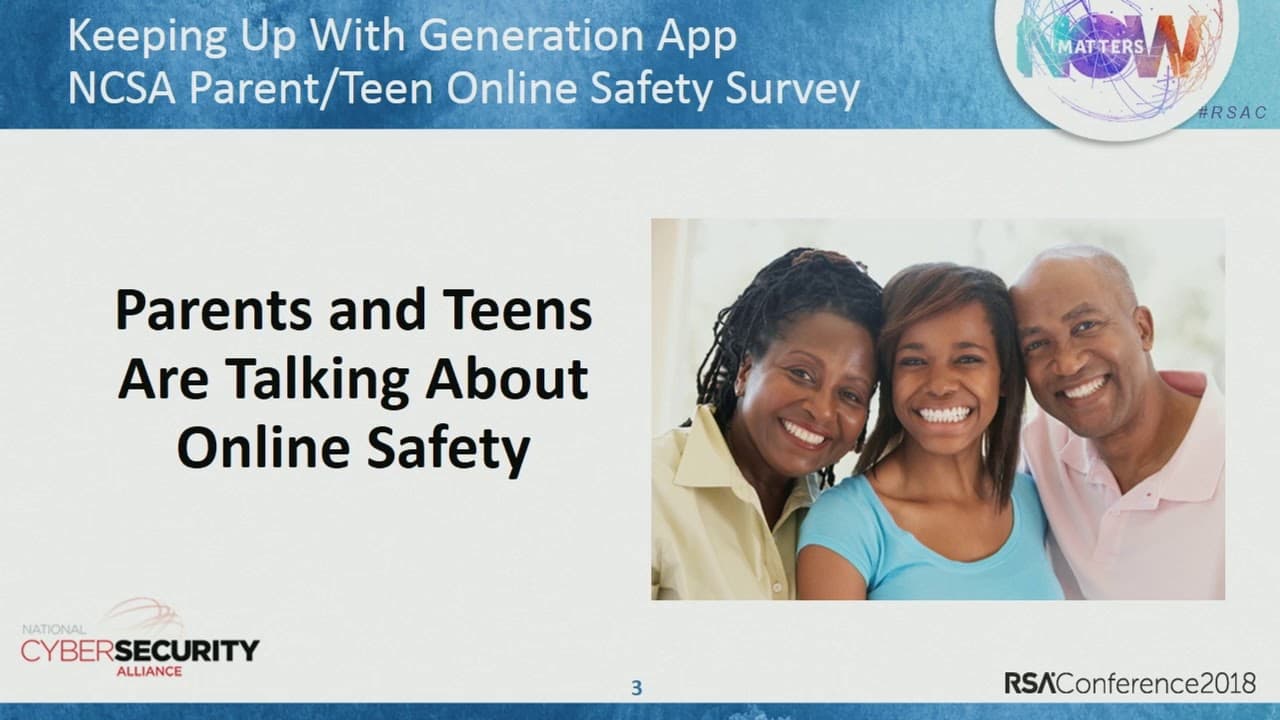
Parents and teens are discussing internet use, appropriate behavior, and what information should be shared, but they report these conversations at different rates. The research identifies identity theft, unauthorized account access, device security, and deceptive messages as major concerns, supporting a family approach based on communication, curiosity, privacy awareness, and practical security habits.
Transcript
Good morning, everybody. Uh, welcome to San Francisco. Welcome to rainy San Francisco. It's so unusual that we get, um, a morning of rain like this, and so for all of us locals, we're pretty happy about it. Um, thank you for making the journey. Uh, my name is Jennifer Van Otta. Um, I'm an active communi-community member in San Francisco. I'm a phil... Read More
Key Insights
- Parents and teens are discussing online safety, with 80% of parents and 68% of teens reporting conversations about internet and phone use. The difference suggests that adults and young people may not always recognize or remember the same family discussions in the same way.
- Appropriate online behavior is a common family topic, with 77% of parents and 64% of teens reporting discussions about what conduct is acceptable. These conversations address how family members should behave toward other people while using phones, apps, and internet services.
- Information sharing is the most frequently reported discussion area, with 83% of parents and 74% of teens saying they have talked about what should be shared through phones, screens, or apps. The research therefore connects online safety with both content decisions and access controls.
- Parents' leading privacy concern is that another person may share their child's private information online. The presentation notes that some information may be private because a parent wants it protected, while other information may be something the teenager wants hidden from peers or parents.
- Teens' leading access concern is unauthorized entry into their accounts, reported by 65% of teens. The presentation suggests that this concern can include outside intruders as well as parents looking through a teenager's phone without permission.
- Identity theft can describe different forms of misuse, including unauthorized account access, account takeover, impersonating someone through posts, and creating an entirely new account in another person's name. The presentation argues that adults and teens may interpret the term differently based on their experiences.
- Device security is a prominent concern for teens, including preventing access when a screen is left unattended and recovering access after a forgotten password or a compromise. This concern treats physical control of a device and control of account credentials as closely connected issues.
- Recognizing fake emails, social media posts, and text messages is an emerging concern linked to catfishing, fake news, and deceptive accounts. The presentation reports 30% for this concern in the prior year's research and predicts greater interest in identifying and avoiding false content.
Install to Summarize YouTube Videos and Get Transcripts
Explore YouTube Video Summarizer or Get YouTube Transcript Extractor
Questions & Answers
Q: How often do parents and teens discuss online safety?
The research found that 80% of parents and 68% of teens reported discussing internet and phone use. Conversations about appropriate behavior were reported by 77% of parents and 64% of teens. Discussions about what information should be shared were even more common, reported by 83% of parents and 74% of teens.
Q: Why do parents and teens report different conversation rates?
The presentation does not establish a definitive cause for the difference, but it illustrates that parents and teenagers may perceive or remember conversations differently. Parents consistently reported online safety discussions at higher rates than teens across internet use, appropriate behavior, and information sharing. The speaker's exchange with his 16-year-old humorously demonstrates how a teenager may not register a parent's discussion in the same way.
Q: What online privacy issue concerns parents most?
Parents are especially concerned that someone will share their child's private information online. The presentation explains that the information may be something the parent wants the teenager to keep private, or something the teenager wants protected from peers or parents. Separate social media accounts with different levels of adult visibility illustrate the complexity of privacy within families.
Q: What online account issue concerns teens most?
Unauthorized access to accounts is a major concern for teens, with 65% reporting fear that someone could enter an account without permission. The presentation says this may include an outsider gaining access, but it can also include a parent examining a teenager's phone. For teens, online safety therefore includes both cybersecurity and personal boundaries around access.
Q: What does identity theft mean in the research?
Identity theft covers several distinct situations in the presentation. It can mean gaining access to an existing account, taking over an account and posting while posing as its owner, or creating a new account in another person's name. The speaker also distinguishes stealing payment information for purchases from stealing personal details to open unknown financial accounts.
Q: How can families address device security concerns?
The presentation identifies device security as a leading concern for teens and frames it around controlling access. Relevant situations include preventing someone from opening a device when its screen is left unattended, restoring access after forgetting a password, and responding when someone else compromises the device or account. Family discussions can address both physical access and account access.
Q: Why is identifying fake online content becoming important?
Fake emails, social media posts, and text messages are becoming a larger concern because deception can appear in several forms, including catfishing, fake news, and misleading accounts. The speaker says people want practical ways to identify, prevent, and avoid forwarding or retweeting false material without having to conduct an intensive investigation of every individual item.
Q: What approach should parents take when discussing technology?
The family education approach described in the introduction is optimistic about technology and emphasizes communication. Parents are encouraged to be curious rather than furious when talking with their children. The goal is not simply to fear connected devices, but to help families thrive while discussing privacy, appropriate conduct, information sharing, account access, and security concerns openly.
Summary & Key Takeaways
-
The National Cybersecurity Alliance surveyed more than 800 adults and more than 800 teens about their attitudes, concerns, knowledge, and perceived responsibilities regarding online safety. The research, sponsored in part by Microsoft and conducted for the second consecutive year, reports a margin of error of about three and a half percentage points.
-
Parents and teens both reported discussing internet and phone use, appropriate online behavior, and what information should be shared. However, parents consistently reported these conversations more often than teens. The findings suggest that families are communicating about online security, although parents and teenagers may perceive or remember the same conversations differently.
-
The leading concerns include identity theft, unauthorized account access, device security, and recognizing fake emails, social media posts, and text messages. The presentation also distinguishes account takeover from the creation of fraudulent new accounts and predicts that concern about deceptive content will increase as families become more aware of it.
Read in Other Languages (beta)
Share This Summary 📚
Summarize YouTube Videos and Get Video Transcripts with 1-Click
Try YouTube Summary with ChatGPT & Claude or YouTube Transcript Generator
Explore More Summaries from RSAC Cybersecurity 📚




Summarize YouTube Videos and Get Video Transcripts with 1-Click
Try YouTube Summary with ChatGPT & Claude or YouTube Transcript Generator