How Should You Make Difficult Decisions? | Mel Robbins
TL;DR
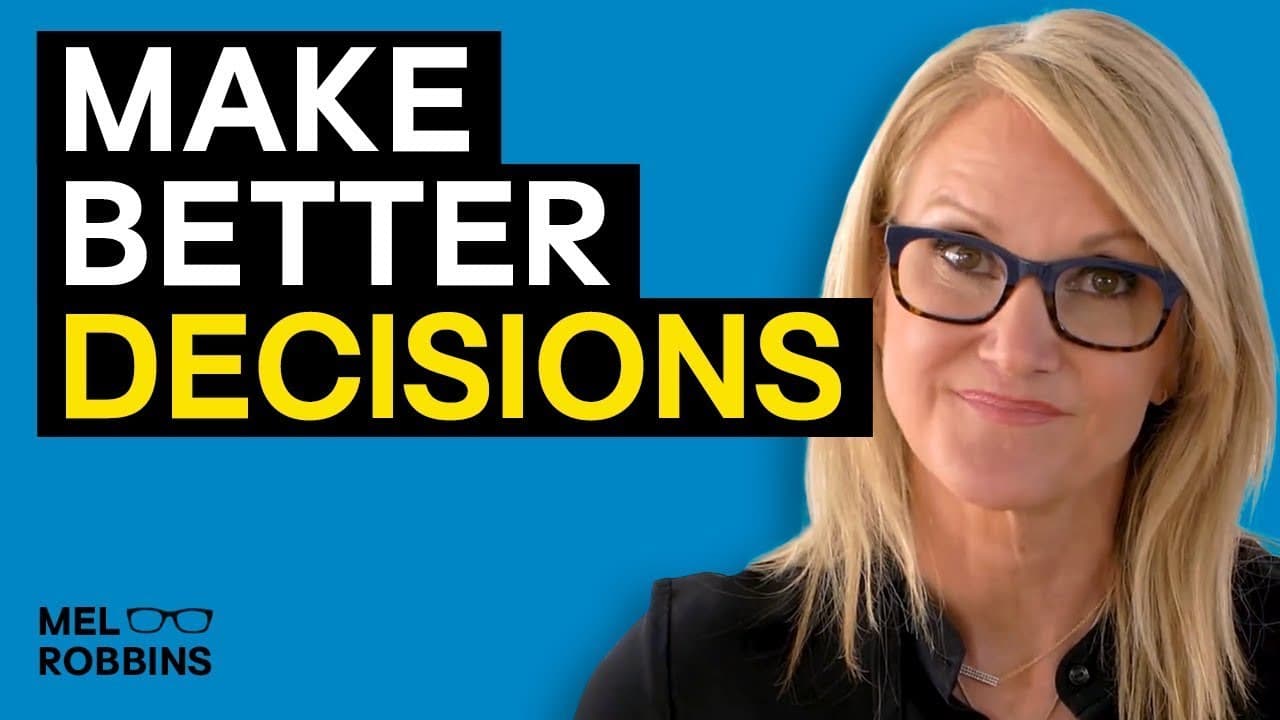
Mel Robbins recommends testing whether a decision expands your future and possibilities or shrinks, silences, or inhibits you. Although 95 percent of decisions are driven by feelings in the moment, you can act without feeling ready, motivated, confident, or courageous. Expansive choices may be uncomfortable initially but support what is true for you over the long term. Read on for the practical decision test and ways to act despite fear.
Transcript
you don't make decisions with your goals you don't make decisions with your prefrontal cortex you don't make decisions with logic do you know how we make decisions I didn't invent this a neuroscientist by the name of damasio who does his research in Brazil who gave an incredible Ted Talk and wrote about this forever and ever and ever we make decisi... Read More
Key Insights
- 😨 Facing fear and making decisions from a place of growth and possibility is essential for personal transformation.
- 🥺 Trusting your intuition and emotions can lead to better decision-making and fulfillment.
- 🍃 Mourning the life you're leaving behind during transitional periods is a normal part of the growth process.
- 😨 Radical confidence involves acknowledging fear and using it as a catalyst for positive change.
- 🥺 Making decisions based on feelings and personal values can lead to a more meaningful and authentic life.
- 🤪 Your ego often tries to protect you from discomfort, but facing fear head-on is necessary for personal growth.
- 👋 Assessing whether a decision expands or shrinks your life can help clarify the best course of action.
Install to Summarize YouTube Videos and Get Transcripts
Explore YouTube Video Summarizer or Get YouTube Transcript Extractor
Questions & Answers
Q: How should I make a difficult decision?
Ask whether the choice expands your future and possibilities or shrinks, silences, or inhibits you. Choose the expansive option even when it feels terrifying, and reject the shrinking option even when it feels easy or safe.
Q: Should I make decisions with my head or my heart?
Mel Robbins recommends making the core decision with your heart and soul while using your brain for tasks such as math and reviewing a contract’s fine print. Check the choice inwardly by asking whether it opens possibilities and raises your voice or keeps things closed and silences you.
Q: Why can feelings lead to poor decisions?
The transcript says 95 percent of decisions are based on how you feel in the moment. Immediate feelings can make you avoid getting up, making a cold call, completing another set of reps, having a hard conversation, or ending a draining relationship.
Q: What is the expand-versus-shrink decision test?
A decision is a yes if it expands you, your future, or the possibilities in your life. It is a no if it shrinks, silences, or inhibits you, regardless of how easy or safe that option feels.
Q: What if the right decision feels frightening or uncomfortable?
Make the decision even if it involves moving, changing jobs or relationships, having a difficult conversation, or starting something new. The short-term effect may be terrifying, but the long-term effect of a heart-and-soul decision is living for what is true for you rather than what feels safe in the moment.
Q: Can I take action if I do not feel ready or motivated?
Yes. Robbins says you may never feel ready, motivated, confident, or courageous, but you can still push yourself forward one five-second decision at a time.
Q: How do confidence and courage develop through decision-making?
They develop as you repeatedly see yourself taking action, speaking even when your voice shakes, and choosing movement over excessive thinking. Over time, those actions build the skills of confidence and courage.
Q: Why is it easier to make decisions for someone else?
When deciding for a friend, you tend to consider multiple perspectives and outcomes, which can produce a better decision. When the same situation affects you personally, emotion can make it harder to remain objective.
Summary & Key Takeaways
-
Decisions are primarily driven by feelings, with 95% of decisions being based on how we feel in the moment. This can lead to missed opportunities and unhappiness.
-
By harnessing radical confidence and making decisions from a place of growth and expansion, we can create positive change in our lives.
-
Making decisions with the heart and soul, rather than solely relying on logic, allows us to tap into our true desires and create a fulfilling life.
Read in Other Languages (beta)
Share This Summary 📚
Summarize YouTube Videos and Get Video Transcripts with 1-Click
Try YouTube Summary with ChatGPT & Claude or YouTube Transcript Generator
Explore More Summaries from Mel Robbins 📚

Summarize YouTube Videos and Get Video Transcripts with 1-Click
Try YouTube Summary with ChatGPT & Claude or YouTube Transcript Generator