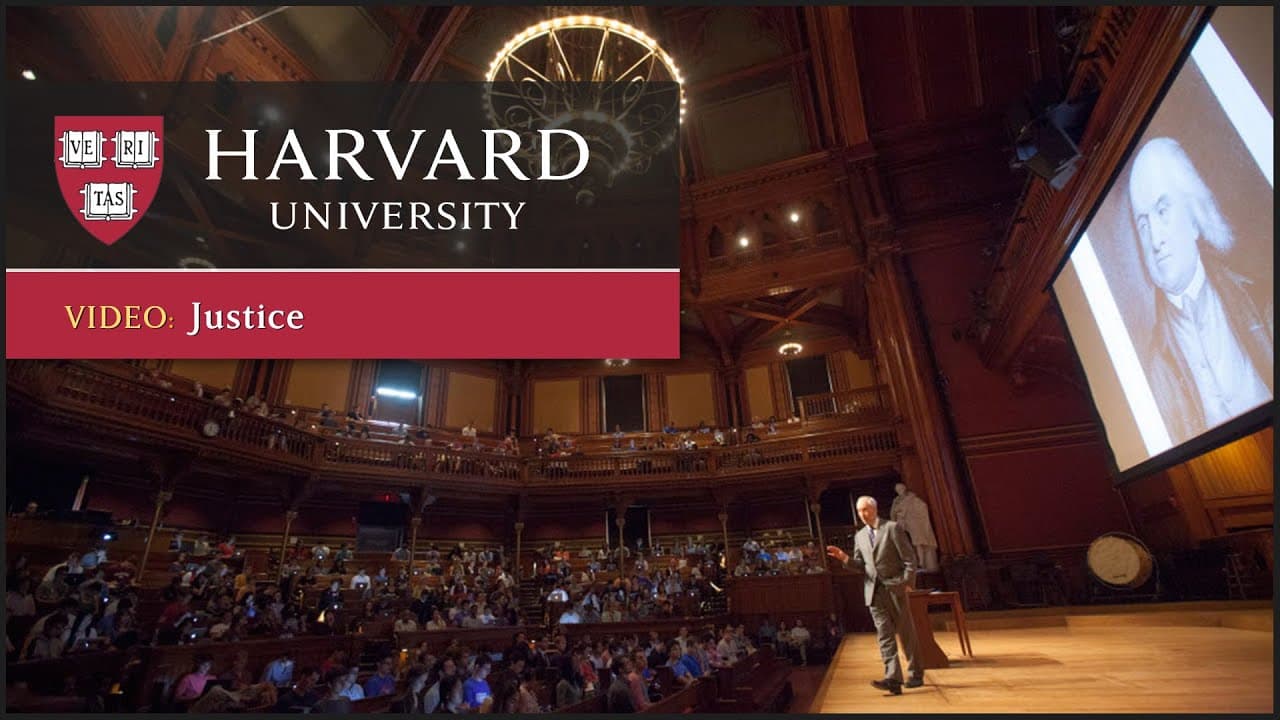
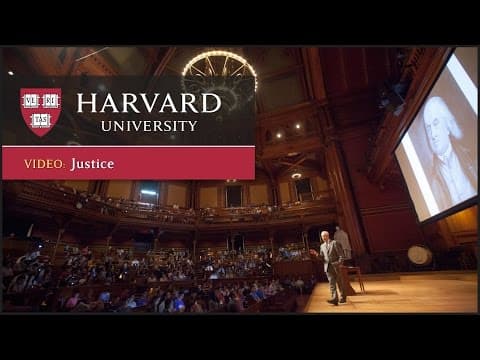
Justice: What's The Right Thing To Do? Episode 02: "PUTTING A PRICE TAG ON LIFE"
Transcript
Read and summarize the transcript of this video on Glasp Reader (beta).
Install to Summarize YouTube Videos and Get Transcripts
Explore YouTube Video Summarizer or Get YouTube Transcript Extractor
Summary
This video explores the philosophy of utilitarianism, specifically the ideas of Jeremy Bentham and John Stuart Mill. It discusses the principle of maximizing utility and the concept of cost-benefit analysis. It also examines objections to utilitarianism, such as the concern for individual and minority rights, and the difficulty of quantifying all values and preferences. John Stuart Mill tries to address these objections by arguing for the distinction between higher and lower pleasures, as well as the importance of justice grounded in utility.
Questions & Answers
Q: What is the main idea of Bentham's version of utilitarianism?
The main idea is to maximize the general welfare or the collective happiness by maximizing utility, which is the overall balance of pleasure over pain.
Q: How does Bentham arrive at the principle of maximizing utility?
Bentham argues that we are all governed by pain and pleasure, so any moral system needs to take them into account. The best way to do this is by maximizing utility, which is the greatest good for the greatest number.
Q: How does Bentham define a community?
Bentham defines a community as the sum of the individuals who comprise it. He believes that in deciding the best policy or law, citizens and legislators should ask themselves if it maximizes the balance of happiness over suffering.
Q: Give an example of cost-benefit analysis discussed in the video.
The example given is a study commissioned by Philip Morris, a tobacco company, on the costs and benefits of smoking in the Czech Republic. The study found that there is a net public finance gain of $147 million due to various tax revenues and savings in healthcare, pensions, and housing costs.
Q: What objection is raised against cost-benefit analysis?
The objection is that by placing a dollar value on human life, cost-benefit analysis fails to take into account the value of life itself and the emotional losses experienced by families.
Q: What is the Ford Pinto case an example of?
The Ford Pinto case is an example of cost-benefit analysis being used to determine whether it is worth spending money to improve the safety of a car. The cost of making the car safer was calculated, as well as the benefits in terms of lives saved and costs avoided. The decision was not to install the safety device based on the cost-benefit analysis.
Q: How does the video address the objection regarding the effect on minority rights?
The video presents a debate between those who argue that the majority's preferences should prevail and those who argue that minority rights should be protected. It raises the question of whether minority rights should be traded off for the greater good or whether certain rights should be considered sacred and not easily traded off.
Q: How does John Stuart Mill attempt to address the objection about distinguishing higher and lower pleasures?
Mill argues that the test for distinguishing higher pleasures is whether someone who has experienced both would prefer one over the other. He claims that once people have been educated and cultivated, they will naturally prefer the higher pleasures.
Q: What is the objection to Mill's argument about distinguishing higher and lower pleasures?
The objection is that people's preferences can be influenced by cultural conventions and pressure, and that preferences can change over time. It is argued that the distinction between higher and lower pleasures is not objective and can vary from society to society.
Q: How does Mill address the objection about individual rights?
Mill argues that while he disputes theories of justice not grounded in utility, justice grounded in utility is the most sacred and binding part of morality. He believes that respecting individual rights is important for the long-term interests and progress of society as a whole.
Takeaways
Utilitarianism, as discussed in this video, is a moral philosophy that aims to maximize the general welfare or collective happiness by maximizing utility. It involves cost-benefit analysis, where the costs and benefits of different actions are measured using a common measure of value, often in monetary terms. However, there are objections to utilitarianism, including concerns about individual and minority rights, and the difficulty of quantifying all values and preferences. John Stuart Mill tries to address these objections by arguing for the distinction between higher and lower pleasures and the importance of justice grounded in utility. Overall, the video explores the complexities and limitations of utilitarianism and encourages critical thinking about its application in moral and policy decisions.
Read in Other Languages (beta)
Share This Summary 📚
Summarize YouTube Videos and Get Video Transcripts with 1-Click
Try YouTube Summary with ChatGPT & Claude or YouTube Transcript Generator
Explore More Summaries from Harvard University 📚

Summarize YouTube Videos and Get Video Transcripts with 1-Click
Try YouTube Summary with ChatGPT & Claude or YouTube Transcript Generator