What Made Alexander the Great Truly Great?
TL;DR
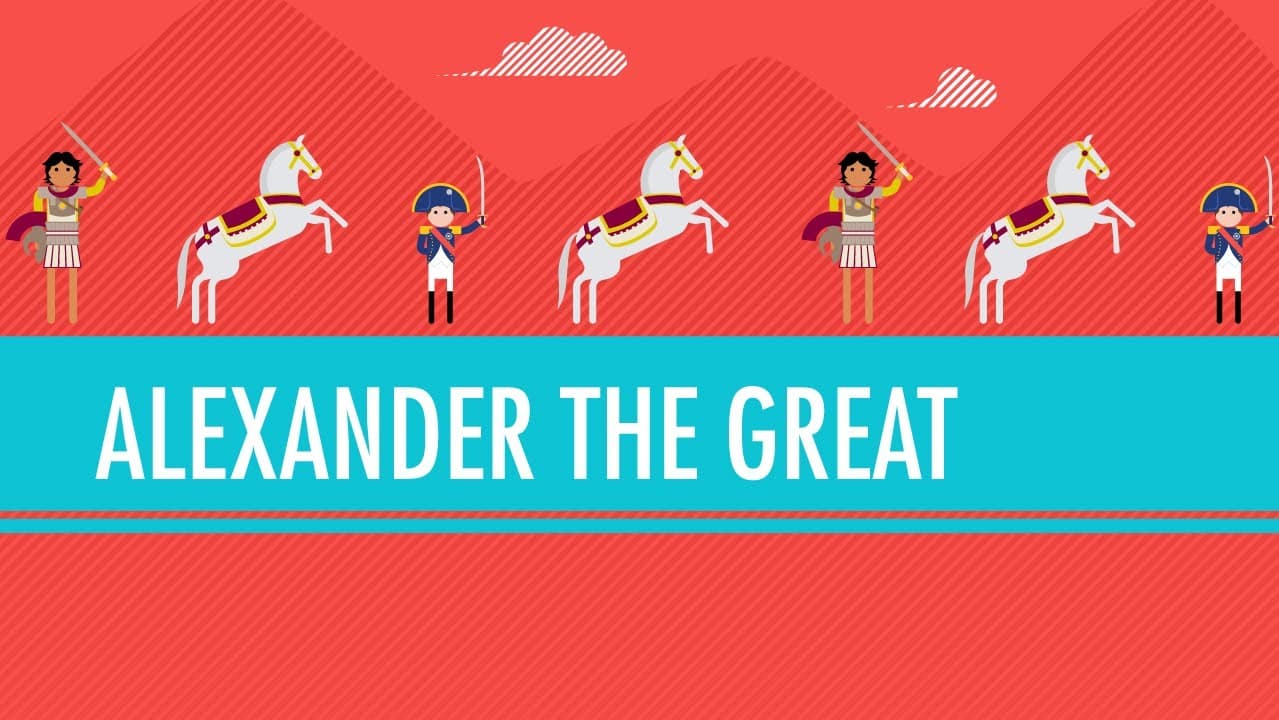
Alexander the Great is considered great for his unprecedented military conquests, but his empire quickly fragmented after his death due to a lack of institutional stability. His legacy includes the spread of Greek culture and language, and the concept of greatness may be more about societal admiration and perception than actual accomplishments.
Transcript
Hi there my name’s John Green; this is Crash Course World History, and today we’re gonna talk about Alexander the Great, but to do that we’re going to begin by talking about ideals of masculinity and heroism and Kim Kardashian and the Situation. Mr Green, Mr Green, Mr. Green! Which Situation? Oh, Me from the Past, I forgot you wanted to go to Colum... Read More
Key Insights
- Alexander the Great's accomplishments include vast territorial conquests, yet his empire lacked institutional stability, leading to its division after his death.
- The concept of 'Greatness' in history often centers on men, marginalizing women's contributions, as seen in the lack of female figures labeled 'the Great.'
- Alexander's legacy includes spreading Greek language and culture, influencing regions far beyond his empire's borders.
- The idea of 'Greatness' may be more about societal perception and emulation, as seen in figures like Napoleon idolizing Alexander.
- Alexander's life was mythologized posthumously, with tales of his military prowess and personal life enhancing his legendary status.
- Alexander's empire-building was more about conquest than governance, leading to the rise of Hellenistic Kingdoms that outlasted his rule.
- The video critiques the historical obsession with 'Great Men,' suggesting that history is shaped by a broader range of people and events.
- Cultural figures like Kim Kardashian are compared to historical figures in terms of fame and societal impact, questioning modern ideals of 'Greatness.'
Install to Summarize YouTube Videos and Get Transcripts
Explore YouTube Video Summarizer or Get YouTube Transcript Extractor
Questions & Answers
Q: What were Alexander the Great's key accomplishments?
Alexander the Great's key accomplishments include the unprecedented expansion of his empire, conquering the Persian Empire, and spreading Greek culture across the territories he conquered. His military prowess was noted for never losing a battle, and he established cities that became cultural and economic hubs, like Alexandria in Egypt.
Q: How does the video address gender bias in historical narratives?
The video highlights gender bias by pointing out that historical narratives often focus on 'Great Men,' marginalizing women's contributions. It notes the lack of female figures labeled 'the Great' and emphasizes the need to acknowledge women's roles in history, advocating for a more inclusive understanding of historical impact.
Q: What impact did Alexander the Great have after his death?
After his death, Alexander the Great's impact was seen in the spread of Greek culture and language, influencing regions far beyond his empire's original borders. His legacy inspired future leaders like Napoleon, and his cities became centers of learning and commerce, facilitating cultural and economic exchanges across the ancient world.
Q: Why is Alexander's 'Greatness' considered a societal construct?
Alexander's 'Greatness' is seen as a societal construct because it was shaped by historical narratives and emulation by figures like Napoleon. The video suggests that 'Greatness' is often a reflection of societal values and perceptions, rather than solely based on individual accomplishments or impact.
Q: How does the video compare modern figures to historical ones?
The video compares modern figures like Kim Kardashian to historical ones like Alexander, questioning the criteria for 'Greatness.' It suggests that societal fascination with fame and celebrity parallels historical admiration of figures like Alexander, prompting reflection on what qualities are truly worth celebrating.
Q: What criticisms does the video offer about traditional historical narratives?
The video criticizes traditional historical narratives for focusing on 'Great Men,' suggesting they overlook the broader range of people and events that shape history. It challenges the notion that history is made by celebrated individuals, advocating for a more inclusive and nuanced understanding of historical impact.
Q: What role did Alexander's mythologized life play in his legacy?
Alexander's mythologized life, filled with embellished tales of military prowess and personal exploits, played a significant role in his enduring legacy. These stories, often written posthumously, enhanced his legendary status and inspired emulation by future leaders, contributing to the perception of his 'Greatness' across generations.
Q: How did Alexander's conquests influence cultural exchanges?
Alexander's conquests facilitated cultural exchanges by spreading Greek language and culture across the territories he conquered. This created a more interconnected world, allowing for increased trade and communication, and laid the groundwork for the Hellenistic period, characterized by the blending of Greek and local cultures.
Summary & Key Takeaways
-
The video delves into the life of Alexander the Great, examining his military conquests and the subsequent fragmentation of his empire posthumously.
-
It challenges the traditional notion of 'Greatness' in history, highlighting gender bias and the societal construction of historical fame.
-
Through anecdotes and comparisons, the video questions the validity of historical and modern figures' 'Greatness,' encouraging a broader understanding of historical impact.
Read in Other Languages (beta)
Share This Summary 📚
Summarize YouTube Videos and Get Video Transcripts with 1-Click
Try YouTube Summary with ChatGPT & Claude or YouTube Transcript Generator
Explore More Summaries from CrashCourse 📚


Summarize YouTube Videos and Get Video Transcripts with 1-Click
Try YouTube Summary with ChatGPT & Claude or YouTube Transcript Generator