English Google SEO office-hours from October 2, 2020

TL;DR
John Mueller explains how site owners can diagnose ranking and traffic changes by examining specific pages and queries rather than relying on aggregate metrics alone. In this October 2, 2020 Google SEO office-hours session, he also addresses mobile-first indexing, redesign-related ranking drops, multilingual canonical tags, backlinks, breadcrumbs, fragments, and AMP. Read on for practical answers across these SEO topics.
Transcript
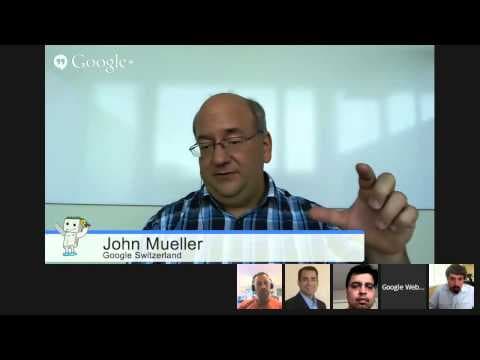
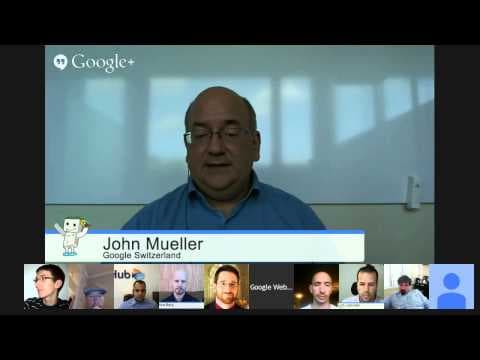
JOHN MUELLER: All right, welcome, everyone, to today's Google SEO Office Hours Hangout. It's not Hangout anymore. I guess the Hangout part we'll have to drop at some point, but Google SEO Office Hours, I guess. I'm John Mueller. I am a search advocate here at Google in Switzerland. And part of what we do are these Hangouts, office hours, I guess, s... Read More
Key Insights
- John Mueller emphasizes the importance of understanding changes in Google Search Console data, suggesting a deep dive into specific examples to interpret impressions and clicks.
- For medical-related queries, Google's algorithms prioritize authoritative sites, and improving site expertise, authority, and trust can help in rankings.
- Mobile-first indexing uses mobile versions for ranking, regardless of user traffic source, highlighting the importance of mobile optimization.
- A site redesign may lead to a re-evaluation of site quality by Google's algorithms, potentially affecting rankings.
- Breadcrumbs structured data can enhance search result displays but do not directly impact SEO rankings.
- Canonical tags should point to themselves for multilingual sites to ensure proper indexing of all language versions.
- Backlinks remain a significant factor in rankings, but overall site quality and relevance are crucial for top positions.
- AMP pages can improve mobile speed, but regular HTML pages may suffice if they achieve similar performance and are not reliant on AMP-specific features.
Install to Summarize YouTube Videos and Get Transcripts
Explore YouTube Video Summarizer or Get YouTube Transcript Extractor
Questions & Answers
Q: How should changes in Google Search Console performance data be interpreted?
Drill down into specific pages and queries to identify where impressions, clicks, or rankings changed. Higher impressions with a lower average position can mean that more people are searching or that the site is appearing for different, more competitive queries.
Q: Why can impressions double while clicks remain unchanged?
The site may be appearing more often for competitive queries without yet ranking high enough to attract additional clicks. It may also be showing for queries that do not match what users want, as when the Webmaster Central blog in Canada ranked for the word “Google.”
Q: What should a site owner do after identifying newly competitive queries?
First decide whether those queries align with the site’s business goals. If they do, improve the website’s overall quality; if they do not, help Google understand the content and its intended relevance more clearly.
Q: Can a site redesign cause rankings to drop?
A redesign may cause Google’s algorithms to reevaluate the site’s quality. Check for technical changes involving internal linking or JavaScript implementation, and make sure the redesigned site preserves high-quality content.
Q: How does mobile-first indexing affect a desktop-focused site?
Under mobile-first indexing, Google uses the mobile version for ranking regardless of where the site’s traffic comes from. A desktop-focused site should therefore keep its mobile version equivalent to the desktop site or use a responsive design.
Q: Do breadcrumb structured data improve SEO rankings?
Breadcrumb structured data can improve how a breadcrumb trail appears in search results, but it does not directly increase rankings. HTML breadcrumbs can still support internal linking, crawling, and user navigation.
Q: How should canonical tags work on a multilingual website?
Each language version should use a canonical tag pointing to itself so that every version can be indexed separately. Hreflang annotations can identify the language versions through either the page head or a sitemap.
Q: Are backlinks still important for Google rankings?
Backlinks remain a significant ranking factor, but they are not the only consideration. Site quality, relevance, and content also matter, so having more backlinks does not by itself guarantee a higher position.
Summary & Key Takeaways
-
John Mueller discusses various aspects of SEO, including changes in Google Search Console data, emphasizing the need to analyze specific examples to understand impressions and clicks better.
-
The session covers the importance of mobile-first indexing, where mobile versions are used for ranking regardless of user traffic source, highlighting the need for mobile optimization.
-
Backlinks continue to be a significant factor in rankings, but overall site quality and relevance are crucial for securing top positions in search results.
Read in Other Languages (beta)
Share This Summary 📚
Summarize YouTube Videos and Get Video Transcripts with 1-Click
Try YouTube Summary with ChatGPT & Claude or YouTube Transcript Generator
Explore More Summaries from Google Search Central 📚

Summarize YouTube Videos and Get Video Transcripts with 1-Click
Try YouTube Summary with ChatGPT & Claude or YouTube Transcript Generator