What Is a Lever and How Does It Multiply Force?
TL;DR
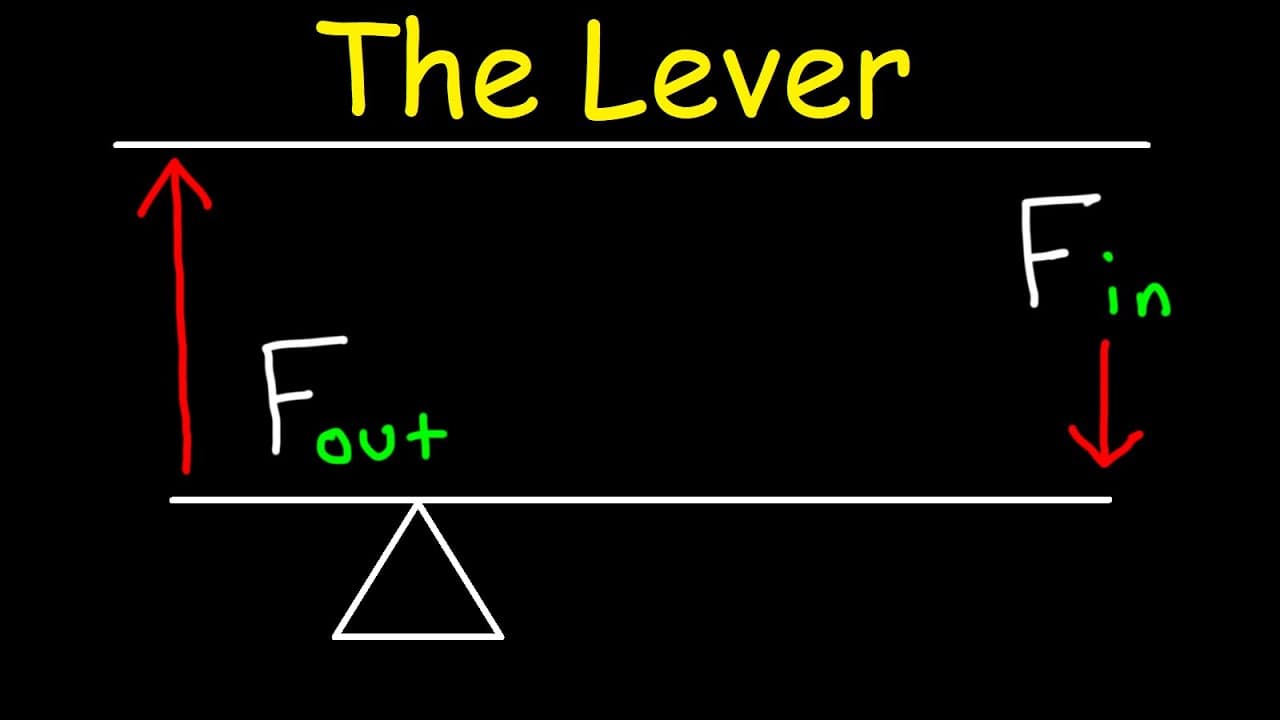
A lever is a simple machine that allows you to multiply your input force, making it easier to perform work. The mechanical advantage of a lever depends on the position of the fulcrum; placing it closer to the edge increases the advantage, allowing an output force greater than the input. However, this means you'll need to apply the force over a longer distance.
Transcript
in this video we're going to talk about simple machines specifically the lever the lever is a simple machine that allows you to perform the same work with less effort it allows you to multiply the force that you apply now the lever is balanced at the fulcrum and the location of the fulcrum determines the mechanical advantage of the system the mecha... Read More
Key Insights
- 💦 Levers are a type of simple machine that can multiply force and make work easier.
- 🦾 The mechanical advantage of a lever is determined by the position of the fulcrum.
- 🦾 Using the formula of output force divided by input force, you can calculate the mechanical advantage of a lever system.
- 😚 Placing the fulcrum closer to the edge of one side of the lever increases the mechanical advantage.
- 🎰 There are other types of simple machines, such as ramps, screws, and pulleys, that can also multiply force.
- 💦 Although levers make work easier, you need to apply the force over a longer distance.
- 🙃 The torque is the same on both sides of the lever when the fulcrum is balanced.
Install to Summarize YouTube Videos and Get Transcripts
Explore YouTube Video Summarizer or Get YouTube Transcript Extractor
Questions & Answers
Q: How does a lever allow you to perform work with less effort?
Levers provide a mechanical advantage by multiplying the force you apply. By changing the position of the fulcrum, you can increase the output force while using less input force.
Q: What determines the mechanical advantage of a lever system?
The location of the fulcrum determines the mechanical advantage. Placing the fulcrum closer to the edge of one side of the lever increases the mechanical advantage.
Q: Are levers the only type of simple machine?
No, there are other simple machines such as ramps, screws, pulleys, and more. Each of these machines can also multiply force and make work easier.
Q: What is the trade-off when using levers?
Although levers allow you to use less force, you need to apply that force over a longer distance. This means you have to trade-off between force and distance when using levers.
Summary & Key Takeaways
-
Levers are a type of simple machine that allows you to multiply the force you apply, making work easier.
-
The location of the fulcrum determines the mechanical advantage of the lever system.
-
The mechanical advantage of a lever is equal to the output force divided by the input force.
Read in Other Languages (beta)
Share This Summary 📚
Summarize YouTube Videos and Get Video Transcripts with 1-Click
Try YouTube Summary with ChatGPT & Claude or YouTube Transcript Generator
Explore More Summaries from The Organic Chemistry Tutor 📚




Summarize YouTube Videos and Get Video Transcripts with 1-Click
Try YouTube Summary with ChatGPT & Claude or YouTube Transcript Generator