What Are the Types of Cyclones and Their Impacts?
TL;DR
Cyclones fall into two main types: mid-latitude cyclones (also called wave or extratropical cyclones), which form along the polar front where warm tropical air battles cold polar air, and smaller but intensely windy tropical cyclones that form over warm oceans. Mid-latitude cyclones can span 1,000 kilometers and last a week or more, while the 1970 Bhola tropical cyclone, with 240 km/h winds, became the deadliest in history. Read on to see how fronts and air masses drive the weather around you.
Transcript
On the evening of November 12, 1970 the Bhola cyclone barreled up the Bay of Bengal. There were sustained winds of 240 kilometers per hour and a storm surge, or flooding that raised the sea level, up to 10.4 meters -- that’s 34 feet! The damaging wind and flooding were devastating, and as of 2021 the Bhola cyclone is the deadliest tropical cyclone... Read More
Key Insights
- 🌀 The Bhola cyclone was the deadliest tropical cyclone in history, killing hundreds of thousands of people and contributing to the creation of Bangladesh.
- 🌐 Weather systems can be sudden and catastrophic or gradual and persistent, impacting both individual locations and global circulation patterns.
- 💁 Mid-latitude cyclones form along the polar front, where warm and cold air masses collide, while tropical hurricanes form over warm ocean waters.
- ❓ The destruction of natural buffers like mangroves increases the vulnerability of coastal areas to hurricanes.
- 🇧🇩 The accuracy of hurricane predictions is limited, and evacuation efforts in densely populated areas like Bangladesh pose significant challenges.
- 🖐️ Our choices about where to live and how to build communities play a crucial role in our exposure to weather hazards.
- 🧑🏭 Weather patterns and their effects are influenced by a complex interplay of geographical, environmental, and human factors.
Install to Summarize YouTube Videos and Get Transcripts
Explore YouTube Video Summarizer or Get YouTube Transcript Extractor
Questions & Answers
Q: What are the different types of cyclones?
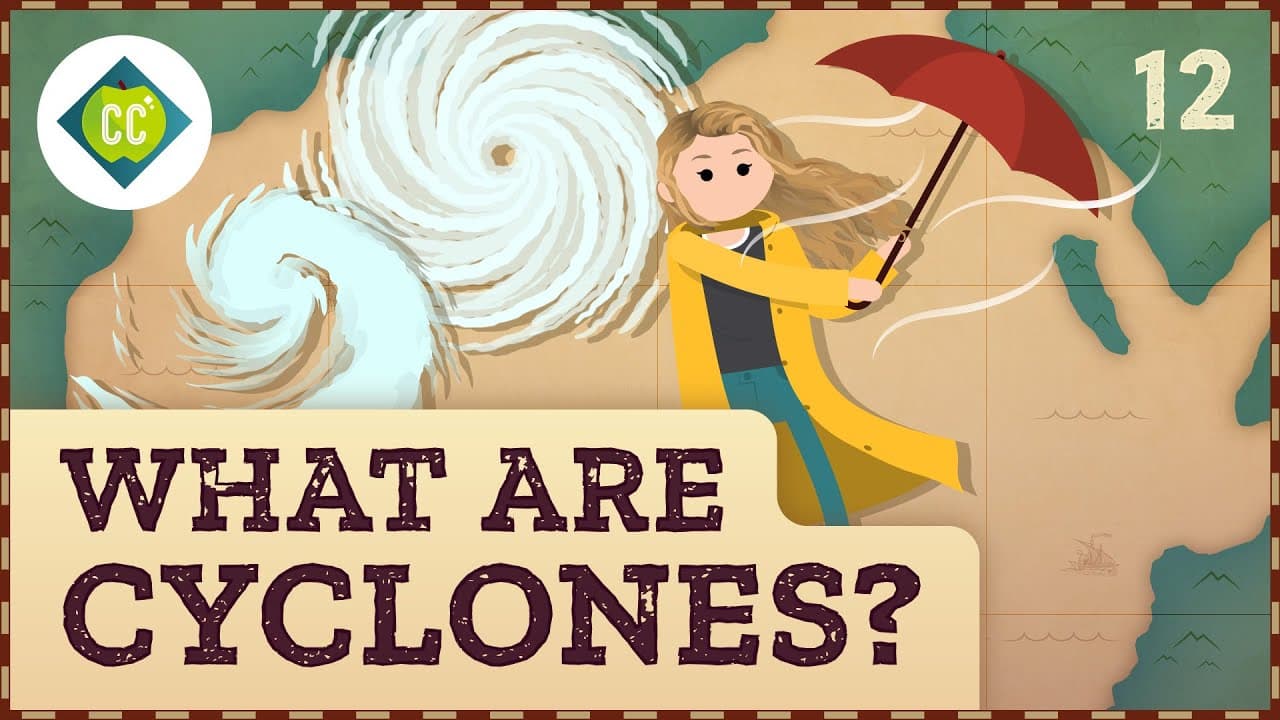
There are two main types. Mid-latitude cyclones (also called wave or extratropical cyclones) are huge circular weather systems that form along the polar front and can span 1,000 kilometers or more. Tropical cyclones are relatively smaller but extremely windy storms that form over warm ocean waters, like the Bhola cyclone.
Q: How powerful was the Bhola cyclone and how many people did it kill?
The Bhola cyclone struck the Bay of Bengal on the evening of November 12, 1970, with sustained winds of 240 kilometers per hour and a storm surge that raised the sea level up to 10.4 meters (34 feet). As of 2021 it is the deadliest tropical cyclone in history, killing an estimated 300,000 to 500,000 people.
Q: How did the Bhola cyclone contribute to the creation of Bangladesh?
The cyclone's devastating winds and flooding, combined with the abysmal response of the then-West Pakistan government, became a factor in the war of liberation. That war ultimately led to the creation of Bangladesh, so a single weather system helped create an entirely new country.
Q: What factors contribute to the formation of mid-latitude cyclones?
Mid-latitude cyclones form along the polar front, a band of low pressure that sits between the subtropical high pressure to the south and the polar high to the north. There, warm, moist air from the tropics clashes with cold air from the poles, and this battle between air masses drives the storm. Uneven insolation, with tropical regions receiving two and a half times more energy than the poles, sets up the temperature differences behind them.
Q: What is an air mass and how does it affect the weather?
An air mass is a vast body of air with similar temperature and humidity that forms over a region, such as warm, humid air over tropical oceans or cold, dry air over the interior of northern Canada. As air masses move, they carry their temperature and moisture with them. When different air masses meet in the mid-latitudes, they don't mix and instead collide along fronts, producing much of the region's storms and precipitation.
Q: How do warm and cold fronts differ in their effects on weather?
A cold front acts like a snow plow, hugging the surface and flinging warm air upward, bringing shifting winds, dropping temperatures, lowering pressure, and heavy rain from thunderstorms with cumulus and cumulonimbus clouds. A warm front slides over the denser cold air like a thick blanket and is much less sudden and violent, beginning with high cirrus clouds, then altostratus, then stratus clouds that bring drizzly rain.
Q: What causes tropical cyclones to form?
Tropical cyclones form over warm ocean waters and, unlike the large circular mid-latitude cyclones, are relatively small but extremely windy storms. The Bhola cyclone is an example of this type, showing how compact tropical systems can still produce catastrophic winds and storm surge.
Q: Where do mid-latitudes fall and why is their weather so unpredictable?
The mid-latitudes are roughly everything between 35 and 55 degrees north and south latitude, including places like South Dakota, New Zealand's South Island, and Scotland. Their weather is predictably unpredictable because these regions get frequent clashes between warm and cold air masses, so a bright sunny day can suddenly turn overcast and then clear up again.
Summary & Key Takeaways
-
The Bhola cyclone in 1970 was the deadliest tropical cyclone in history, causing massive destruction and leading to the creation of Bangladesh.
-
Weather systems can be sudden and powerful, like the Bhola cyclone, or gradual and persistent, impacting our daily weather patterns.
-
Understanding how different weather systems form and their effects is crucial in the study of physical geography.
Read in Other Languages (beta)
Share This Summary 📚
Summarize YouTube Videos and Get Video Transcripts with 1-Click
Try YouTube Summary with ChatGPT & Claude or YouTube Transcript Generator
Explore More Summaries from CrashCourse 📚

Summarize YouTube Videos and Get Video Transcripts with 1-Click
Try YouTube Summary with ChatGPT & Claude or YouTube Transcript Generator