How to Launch a Men's Hair Styling Brand Fast
TL;DR
Start with one hero hair-styling product for men, sized at 150–200 ml, priced near ₹295, and designed to last at least one month. Target India’s top consumer segment, position the product around creating different looks and identities, launch through quick commerce, and use AI-assisted formulation and outsourced manufacturing to reach the market within 25–30 days.
Transcript
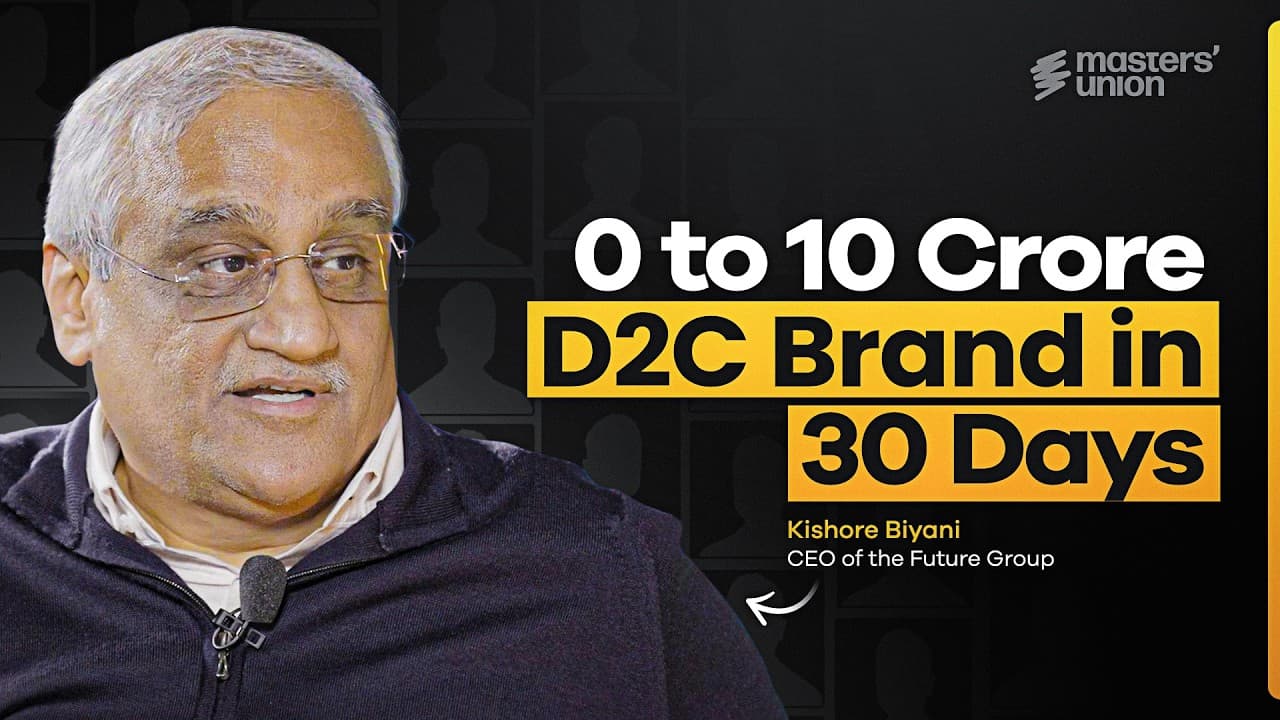
Today we're going to do a small experiment, okay? We're actually going to build a live brand along with sir in real time. Where would you recommend that we focus on? Let's do hair. And do you think that's large enough of a market? Huge. I don't believe in India 2, India 3 as a market. That doesn't mean business. Top 10% of India accounts for 74% of... Read More
Key Insights
- Men’s hair styling is presented as a major white-space opportunity because the discussion identifies relatively few established brands in the category. The opportunity centers on helping men create distinct looks, rather than introducing another product focused primarily on hair growth.
- India 1 is defined as the consumer group with domestic help at home, whether part time or full time. The discussion estimates this group at around 12 crore people and identifies approximately 5 crore men as the initial addressable audience for the proposed brand.
- India’s top 10% is described as accounting for 74% of packaged-goods consumption and 85% of beauty-product consumption. This concentration supports targeting consumers with established purchasing power instead of building the initial strategy around lower-income mass-market segments.
- The proposed hero product is a 150–200 ml men’s hair-styling product designed to last for at least one month. Its exact size should be finalized after studying the amount used per application, keeping product duration and everyday convenience central to the decision.
- The recommended price is approximately ₹295 because it is high enough to represent a meaningful styling purchase but accessible enough to encourage trial. When used once daily for a month, the discussion frames the expense as roughly ₹10 for each day of styling.
- The brand proposition is built around multiple identities because younger consumers describe themselves through several roles and interests. A styling product can support that behavior by enabling different looks, giving the brand a content and campaign platform beyond functional product performance.
- Celebrity selection is presented as a branding decision based on persona, energy, and recognizable cultural associations. The examples connect Ranveer Singh with energy and Ranbir Kapoor with characters experiencing uncertainty, showing how a public personality can shape a brand’s name, identity, and story.
- Quick commerce is recommended as the first distribution channel for the brand’s initial 100 days. AI-assisted formulation and accessible manufacturing are described as ways to shorten development, with the proposed product moving from concept to launch within approximately 25–30 days.
Install to Summarize YouTube Videos and Get Transcripts
Explore YouTube Video Summarizer or Get YouTube Transcript Extractor
Questions & Answers
Q: Why choose men’s hair styling for a new D2C brand?
Men’s hair styling is selected because the discussion identifies it as a large market with relatively few prominent brands, creating a potential white space. The opportunity is framed around styling rather than hair growth. Younger men are described as increasingly conscious of their hair and interested in changing their appearance, making multiple looks and self-expression the proposed brand’s central consumer benefits.
Q: Who is the target customer for the hair-styling brand?
The proposed target customer belongs to India 1, defined in the discussion as anyone with part-time or full-time domestic help at home. This segment is estimated at around 12 crore people, including approximately 5 crore men. Women may also purchase the product for men, but the initial product and positioning remain specifically focused on male hair styling.
Q: Why does the strategy prioritize India 1 consumers?
The strategy prioritizes India 1 because consumer spending is described as highly concentrated. According to the discussion, India’s top 10% accounts for 74% of packaged-goods consumption and 85% of beauty-product consumption. The argument is that mass population size does not automatically translate into an attractive business market, so the brand should begin with consumers who already buy packaged beauty products.
Q: What product size and price should the brand launch?
The proposed product should contain approximately 150–200 ml and last for at least one month. The final size should follow research into consumption per application. A price near ₹295 is recommended because it can encourage consumers to try a new styling habit. At one use per day over a month, the discussion expresses the cost as roughly ₹10 per day.
Q: Why should the brand begin with one hero SKU?
The brand should begin with one hero SKU to establish a clear entry product before expanding the range. The discussion proposes a 150–200 ml styling product as that initial item, while noting that additional products can be developed later depending on the brand created. Concentrating on one SKU also keeps the early proposition focused on daily styling, changing looks, and forming a new consumer habit.
Q: How should the hair-styling brand position itself?
The brand should position itself around the ability to create different looks and identities rather than only describing the product as a gel or emphasizing hair growth. Younger consumers are portrayed as presenting several identities, such as student, photographer, or trekker. The campaign can connect those roles with changing hairstyles, making personal expression and visible appreciation the core emotional benefits.
Q: How should a celebrity be chosen for the brand?
A celebrity should be chosen according to the persona and cultural meaning that support the brand’s intended identity. The discussion links Ranveer Singh with high energy and uses Ranbir Kapoor’s frequently indecisive film characters to inspire the name Flux Theory. For the proposed hair brand, Kartik Aaryan is suggested, showing that celebrity selection should influence the brand story and campaign rather than function only as endorsement.
Q: How can the product launch within 25–30 days?
The proposed timeline relies on treating formulation and manufacturing as relatively accessible parts of the process. The discussion states that formulation can be done with AI and describes manufacturing as the easiest piece. With a focused hero product, a defined ₹295 price, clear positioning, and quick commerce as the first distribution channel, the product is presented as launchable within approximately 25–30 days.
Summary & Key Takeaways
-
The proposed brand focuses on men’s hair styling because the category is described as a large white space with relatively few memorable brands. The central consumer benefit is not hair growth, but the ability to create different styles and receive appreciation, reflecting how younger consumers present multiple identities through their appearance.
-
The target audience is India 1, defined in the discussion as roughly 12 crore people who have domestic help, including about 5 crore men. The proposed hero product contains 150–200 ml, lasts at least one month, and costs about ₹295, making the expense roughly ₹10 per day when used once daily.
-
The brand should begin with one hero SKU, build aspiration through content, and connect its identity to a suitable celebrity persona. Quick commerce is recommended as the first distribution channel. Formulation can be accelerated with AI, while manufacturing is treated as relatively straightforward, enabling a proposed launch within 25–30 days.
Read in Other Languages (beta)
Share This Summary 📚
Summarize YouTube Videos and Get Video Transcripts with 1-Click
Try YouTube Summary with ChatGPT & Claude or YouTube Transcript Generator
Explore More Summaries from Masters' Union 📚
Summarize YouTube Videos and Get Video Transcripts with 1-Click
Try YouTube Summary with ChatGPT & Claude or YouTube Transcript Generator