English Google Webmaster Central office-hours hangout
TL;DR
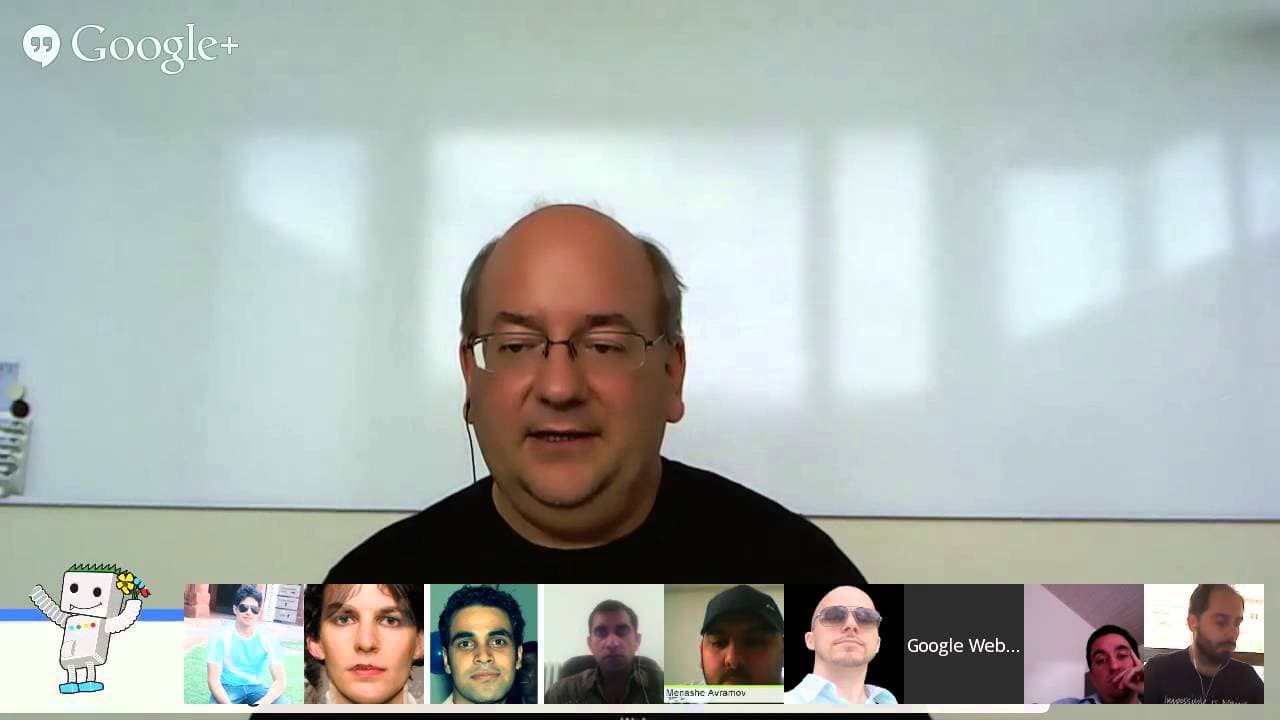
John Mueller addresses various webmaster questions in a Google Hangout session.
Transcript
JOHN MUELLER: Yes, OK, welcome everyone, to today's Google Webmaster Central Office Hours Hangouts. My name is John Mueller. I am a webmaster trends analyst at Google in Switzerland, so I work together with a Web Search engineering team and together with webmasters like you all, to try to make sure that information is flowing in both directions. We... Read More
Key Insights
- Doorway pages are flagged when they offer minimal unique content and are primarily keyword-focused, potentially being seen as low-quality.
- Content duplication across multiple regions is common and not penalized if managed with hreflang annotations.
- Google algorithms treat Panda and Penguin separately, focusing on different signals without interdependence.
- Site links are generally based on site structure and are not directly affected by manual penalties or algorithmic demotions.
- Google's algorithm updates, personalization, and web changes contribute to fluctuations in search rankings.
- Google recommends using 'no index' for low-quality pages to prevent them from being indexed and affecting site quality.
- User-generated content on forums can impact site quality; mechanisms to filter high-quality content for indexing are advised.
- Multilingual content should ideally be on separate URLs to avoid confusion in language recognition and indexing.
Install to Summarize YouTube Videos and Get Transcripts
Explore YouTube Video Summarizer or Get YouTube Transcript Extractor
Questions & Answers
Q: What are doorway pages and how can they affect my website?
Doorway pages are pages with minimal unique content, created primarily to rank for specific keywords. They can be flagged as low-quality by Google, affecting the overall ranking of your website. To avoid this, ensure each page offers substantial unique content and provides real value to users.
Q: How does Google handle multilingual websites with similar content?
Google recognizes that multilingual websites can have similar content across regions. Using hreflang annotations helps Google understand which content is intended for which region, preventing issues with content duplication and ensuring users see the most relevant version of the page.
Q: Do Panda and Penguin algorithms work together to assess site trust?
No, Panda and Penguin are separate algorithms that focus on different signals. Panda assesses site quality, while Penguin addresses web spam issues. They operate independently to prevent cyclical dependencies and ensure a comprehensive evaluation of a site's quality and trustworthiness.
Q: Can site links be affected by manual penalties or algorithmic demotions?
Site links are primarily based on how Google understands the structure of a website. They are typically shown when a site ranks number one for specific queries. Manual penalties or algorithmic demotions do not directly affect site links, but if a site no longer ranks high, site links may not appear.
Q: Why do search rankings fluctuate, and how can I achieve consistency?
Search rankings fluctuate due to Google's frequent algorithm updates, web changes, and personalization factors. Consistent rankings are unlikely, as the web is dynamic and user behavior varies. Focus on providing high-quality content and a good user experience to maintain favorable rankings.
Q: How should low-quality pages be managed to prevent them from affecting site quality?
Low-quality pages should be marked with a 'no index' tag to prevent them from being indexed by Google. This ensures that they do not impact the overall quality assessment of your site by Google's algorithms, allowing you to maintain a higher site quality score.
Q: How can user-generated content on forums impact my site's quality?
User-generated content can affect site quality if it is predominantly low-quality. Implementing mechanisms to identify and index only high-quality content can help maintain a positive quality assessment. Consider using 'no index' on low-quality posts to prevent them from being indexed.
Q: What is the best approach for handling multilingual content on a single page?
Multilingual content should ideally be placed on separate URLs to avoid confusion in language recognition and indexing. If multiple languages must be on one page, ensure the primary language is clear, but note that this can complicate Google's ability to rank the page appropriately for language-specific queries.
Summary & Key Takeaways
-
John Mueller discusses the implications of doorway pages, emphasizing the need for unique content to avoid being labeled as low-quality. Pages focusing on keywords with minimal content can be flagged.
-
Google's algorithms, Panda and Penguin, operate independently, focusing on different aspects of web quality and spam. They do not rely on each other for data, preventing cyclical dependencies.
-
For multilingual websites, hreflang annotations help manage content duplication across regions, ensuring appropriate content is served to users based on their location.
Read in Other Languages (beta)
Share This Summary 📚
Summarize YouTube Videos and Get Video Transcripts with 1-Click
Try YouTube Summary with ChatGPT & Claude or YouTube Transcript Generator
Explore More Summaries from Google Search Central 📚



Summarize YouTube Videos and Get Video Transcripts with 1-Click
Try YouTube Summary with ChatGPT & Claude or YouTube Transcript Generator