How to Compose Music for Video Games
TL;DR
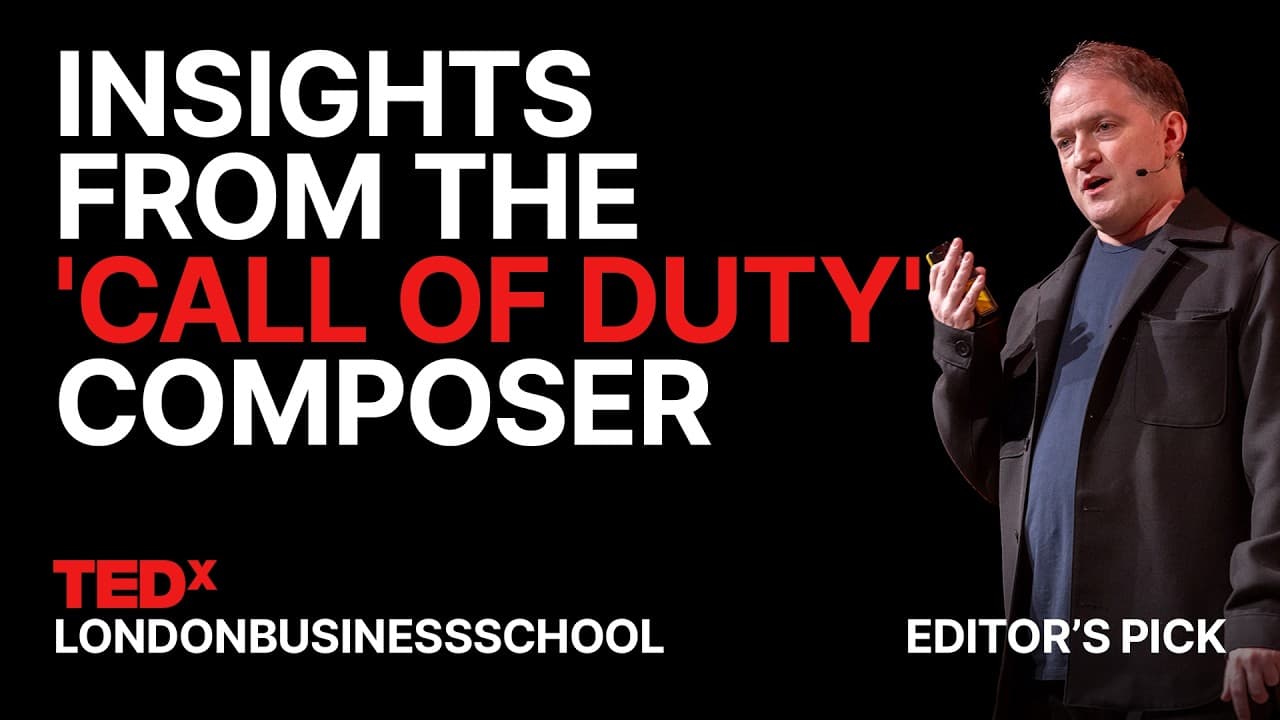
Video game music composition offers unique challenges and opportunities, allowing for storytelling within an interactive medium. Composers must create dynamic, adaptable scores that enhance player experience. Despite its potential, music education lacks focus on technology, limiting access to these skills. Free tools now enable professional-quality music production, advocating for their inclusion in education.
Transcript
The space I want to take you in today is an unusual one I think. For some people it will be very familiar and some people it'll be completely unfamiliar. For some people, well, they may even have a viewpoint on it - something like this. This the opinion of my year 10 English teacher Vividly remembered. And I think most people who play, or, and even... Read More
Key Insights
- Video games are a significant art form, allowing for storytelling over extended durations, unlike films.
- Composers face the challenge of creating non-linear music that adapts to player actions.
- Dynamic music in games emerged around 2000-2005, enabling real-time adaptation to gameplay.
- The UK game industry is worth GBP 7 billion, yet music education is underfunded and outdated.
- Music education often emphasizes theory over practical application, hindering creativity.
- Technological tools for music creation are now accessible and affordable, yet underutilized in schools.
- Video game music can be produced using free software and minimal equipment, demonstrating its accessibility.
- Integrating music technology in education can bridge the gap between traditional music theory and modern production.
Install to Summarize YouTube Videos and Get Transcripts
Explore YouTube Video Summarizer or Get YouTube Transcript Extractor
Questions & Answers
Q: How does video game music differ from film music?
Video game music differs from film music in its need to be non-linear and adaptable to player actions. While film scores are linear and follow a set narrative, video game music must respond dynamically to the player's choices, creating an interactive and immersive experience that enhances storytelling within the game.
Q: Why is music education important for the video game industry?
Music education is crucial for the video game industry as it equips future composers with the skills needed to create dynamic and interactive scores. However, current music education often lacks focus on technology, limiting access to these essential skills. Integrating music technology in education can foster creativity and prepare students for careers in the rapidly evolving industry.
Q: What challenges do composers face in creating video game music?
Composers face the challenge of creating music that adapts to the non-linear nature of video games. They must develop scores that can dynamically change based on player actions, maintaining an emotional connection and enhancing storytelling. This requires innovative approaches to composition and a deep understanding of both music and game mechanics.
Q: How has video game music evolved over the years?
Video game music has evolved from simple, memory-constrained compositions to complex, dynamic scores. Initially limited to 'bleeps and bloops,' it now features fully orchestrated, adaptive music that enhances player experience. This evolution was marked by technological advancements, particularly the ability to create real-time, interactive music around 2000-2005.
Q: What role does technology play in modern music education?
Technology plays a crucial role in modern music education by providing tools for students to create and produce music relevant to today's industry standards. Despite this, many schools lack access to music technology, hindering students' ability to learn and apply these skills. Emphasizing technology in education can bridge the gap between traditional theory and contemporary practice.
Q: How can free software impact music production in education?
Free software can democratize music production in education by providing students with accessible tools to create professional-quality music. This can inspire creativity and innovation, allowing students to explore contemporary music production without financial barriers. Incorporating these tools into curricula can modernize music education and prepare students for careers in the digital music landscape.
Q: What is the significance of dynamic music in video games?
Dynamic music in video games is significant as it enhances the interactive experience by adapting to player actions. This creates a more immersive and emotionally engaging environment, allowing music to support storytelling in real-time. Dynamic music challenges composers to innovate, crafting scores that respond fluidly to the game's narrative and player's journey.
Q: Why is there a crisis in music education according to Stephen Barton?
Stephen Barton identifies a crisis in music education due to underfunding and an outdated focus on theory over practical application. This limits students' access to music technology, hindering their ability to engage with contemporary music production. Barton advocates for integrating free, accessible tools in education to prepare students for the modern music industry.
Summary & Key Takeaways
-
Video game music composition is uniquely challenging due to its non-linear nature. Composers must create adaptable scores that enhance storytelling and player engagement. Despite the industry's growth, music education lacks focus on technology, limiting access to these skills. Advocating for the inclusion of free, accessible tools in education could revolutionize music learning.
-
The evolution of video game music from simple 'bleeps and bloops' to dynamic, interactive scores highlights the medium's storytelling potential. Composers must navigate player agency and create music that adapts in real-time. The accessibility of music production tools presents an opportunity to modernize music education, integrating technology to inspire future composers.
-
Stephen Barton emphasizes the importance of video game music as an art form, showcasing its ability to tell emotional stories. Despite the industry's economic impact, music education remains underfunded and outdated. By utilizing free software, Barton demonstrates the potential for professional-level music production, advocating for its inclusion in educational curricula.
Read in Other Languages (beta)
Share This Summary 📚
Summarize YouTube Videos and Get Video Transcripts with 1-Click
Try YouTube Summary with ChatGPT & Claude or YouTube Transcript Generator
Explore More Summaries from TEDx Talks 📚




Summarize YouTube Videos and Get Video Transcripts with 1-Click
Try YouTube Summary with ChatGPT & Claude or YouTube Transcript Generator