What Are the Best Microbes for Biodegrading Plastics?
TL;DR
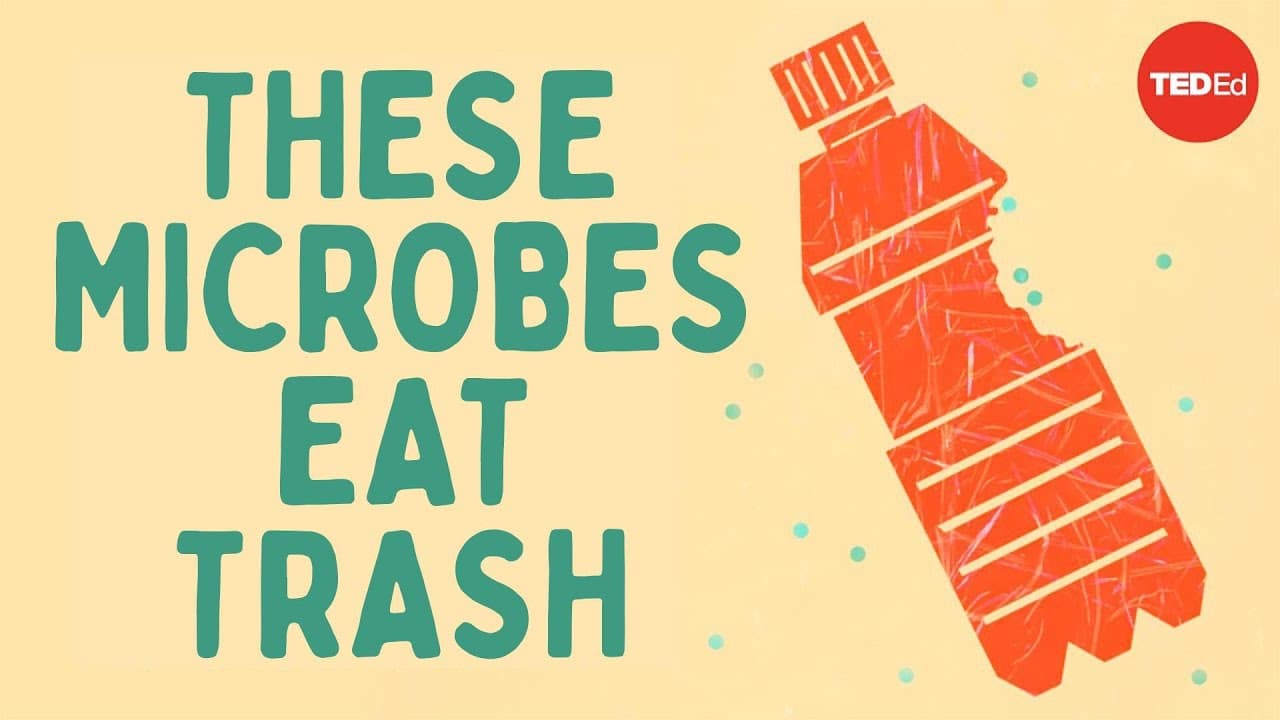
Most microbes cannot degrade plastics, which are resistant to biological breakdown due to their complex chemical structures. Researchers have found specific bacteria like Ideonella sakaiensis that can break down PET plastic, but solutions for other types like PE and PP are still needed. Tackling plastic pollution requires rethinking plastic production, improving current recycling methods, and developing more biodegradable polymers.
Transcript
At this very moment, almost everything around you is being eaten. Invisible to the naked eye, organisms called microbes swarm every surface. Hordes of bacteria, archaea, and fungi have evolved to produce powerful enzymes that break down tough organic material into digestible nutrients. But there’s one particularly widespread type of material t... Read More
Key Insights
- 🔬Microbes have evolved to biodegrade various organic materials, but most cannot break down plastics, which have only been around since the 1950s.
- 🌍Each year, humanity produces 400 million tons of plastic waste, with only 10% being recycled, 60% incinerated or sent to landfills, and 30% leaking into the environment.
- 🌊Approximately 10 million tons of plastic waste end up in the ocean each year, polluting the food chain in the form of microplastic fragments.
- 🔬Researchers have discovered microbes like Ideonella sakaiensis 201-F6 and cutinases that can break down PET plastics at relatively low and high temperatures, respectively. ⏰Even with improved enzymes, it still takes weeks to degrade PET plastic, and there are currently no known microbes that can tolerate the high temperatures required to break down other common plastics like PE and PP.
- 💡The future of PET recycling looks promising, but more research and development is needed to find solutions for other types of plastics.
- 🌎We need to rethink our relationship with plastics, make better use of existing materials, and design environmentally friendly polymers that can be easily biologically degraded.
- 🚫To effectively address plastic pollution, we must reduce plastic production and rely not only on microbes but also on other strategies and technologies.
Install to Summarize YouTube Videos and Get Transcripts
Explore YouTube Video Summarizer or Get YouTube Transcript Extractor
Questions & Answers
Q: How do microbes contribute to the breakdown of plastics?
Microbes, such as Ideonella sakaiensis, produce enzymes that can break down specific types of plastics, like PET, but the process is slow and requires controlled conditions.
Q: What are the environmental impacts of plastic waste?
Plastic waste pollutes natural ecosystems, especially when it enters the ocean as microplastic fragments, disrupting the food chain and causing long-term harm to marine life.
Q: How are scientists trying to solve the plastic waste problem?
Scientists are searching for microbes and enzymes that can tolerate higher temperatures to degrade plastics like PEs and PPs, and they are also focusing on developing environmentally friendly polymers that are easily biodegradable.
Q: What role can individuals play in reducing plastic waste?
Individuals can contribute by reducing plastic consumption, recycling properly, and supporting initiatives that promote the use of biodegradable and sustainable materials.
Q: Why is the biodegradation of plastics important?
Biodegradation offers a more sustainable solution to plastic waste compared to energy-intensive physical and chemical processes, reducing pollution and environmental harm caused by plastic accumulation.
Summary & Key Takeaways
-
Plastics are man-made polymers that most microbes cannot biologically degrade.
-
The production and disposal of plastic waste have detrimental effects on the environment, with millions of tons ending up in the ocean each year.
-
Researchers have identified certain microbes and enzymes that can break down specific types of plastics, but more solutions are needed to tackle the variety of plastic materials.
Read in Other Languages (beta)
Share This Summary 📚
Summarize YouTube Videos and Get Video Transcripts with 1-Click
Try YouTube Summary with ChatGPT & Claude or YouTube Transcript Generator
Explore More Summaries from TED-Ed 📚


Summarize YouTube Videos and Get Video Transcripts with 1-Click
Try YouTube Summary with ChatGPT & Claude or YouTube Transcript Generator