What Are Fossils and How Are They Formed?
TL;DR
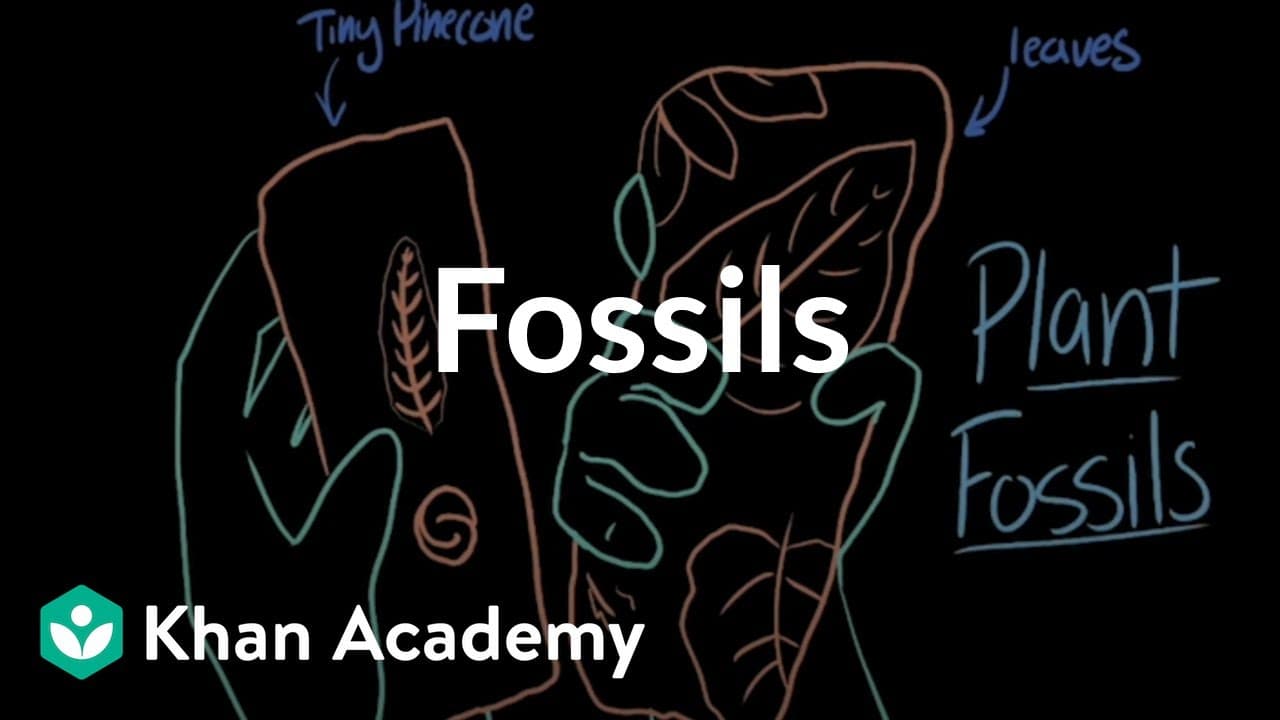
Fossils are the preserved remains or imprints of ancient organisms, primarily found in sedimentary rock. They form when remains are buried under layers of sediment, which eventually compresses into rock, preserving the shape of the organism. Scientists date fossils using layer analysis or radiometric dating to place them on Earth's Fossil Record, revealing the history of life through time.
Transcript
- [Narrator] When I was 12 years old, I went on vacation to Alaska with my family. While walking down one of the cold stone covered beaches, I spotted a large pile of rocks that seemed to have slid off the side of one of the hills that connected to the shore. These rocks caught my eye due to their peculiar outer rust color that contrasted with the ... Read More
Key Insights
- ☠️ Fossils are evidence of past life and can be made up of various materials such as bones, shells, or imprints.
- 👨🎤 Sedimentary rock, formed from compressed layers of sediment, is the main type of rock where fossils are found.
- 🧑🤝🧑 Fossils can be dated by examining the layers of sedimentary rock they are found in or using radiometric dating.
- 🤕 The age of a fossil can contribute to Earth's Fossil Record and provide insights into the history of life on Earth.
Install to Summarize YouTube Videos and Get Transcripts
Explore YouTube Video Summarizer or Get YouTube Transcript Extractor
Questions & Answers
Q: What are fossils and how are they formed?
Fossils are preserved evidence of organisms from the past. They are formed when remains or imprints of organisms are covered by sediment, which eventually turns into sedimentary rock, preserving the fossils.
Q: How are fossils dated?
Fossils can be dated using layer analysis or radiometric dating. Layer analysis involves determining the relative age of a fossil by analyzing the rock layers it is found in. Radiometric dating measures the decay of radioactive atoms in fossils to estimate their age.
Q: Why are fossils important?
Fossils serve as time machines, showing us the types of organisms that lived in the past and how life on Earth has changed. They contribute to Earth's Fossil Record, providing a big picture view of the history of life on Earth.
Q: Can anyone find fossils?
Yes, anyone with a keen eye and patience can find fossils. While major discoveries are often made by professional scientists, amateur fossil hunters can also make significant finds with some luck.
Summary & Key Takeaways
-
Fossils are preserved remains of organisms in the past, such as plants, bones, shells, or footprints, found in sedimentary rock layers.
-
Sedimentary rock is formed from compressed sediment, which consists of rocks, minerals, and organic matter, and gets deposited in layers over millions of years.
-
Fossils are formed when organisms' remains or imprints are covered by sediment and preserved as the sediment turns into rock.
Read in Other Languages (beta)
Share This Summary 📚
Summarize YouTube Videos and Get Video Transcripts with 1-Click
Try YouTube Summary with ChatGPT & Claude or YouTube Transcript Generator
Explore More Summaries from Khan Academy 📚



Summarize YouTube Videos and Get Video Transcripts with 1-Click
Try YouTube Summary with ChatGPT & Claude or YouTube Transcript Generator