How Will AI Challenge Human Uniqueness?
TL;DR
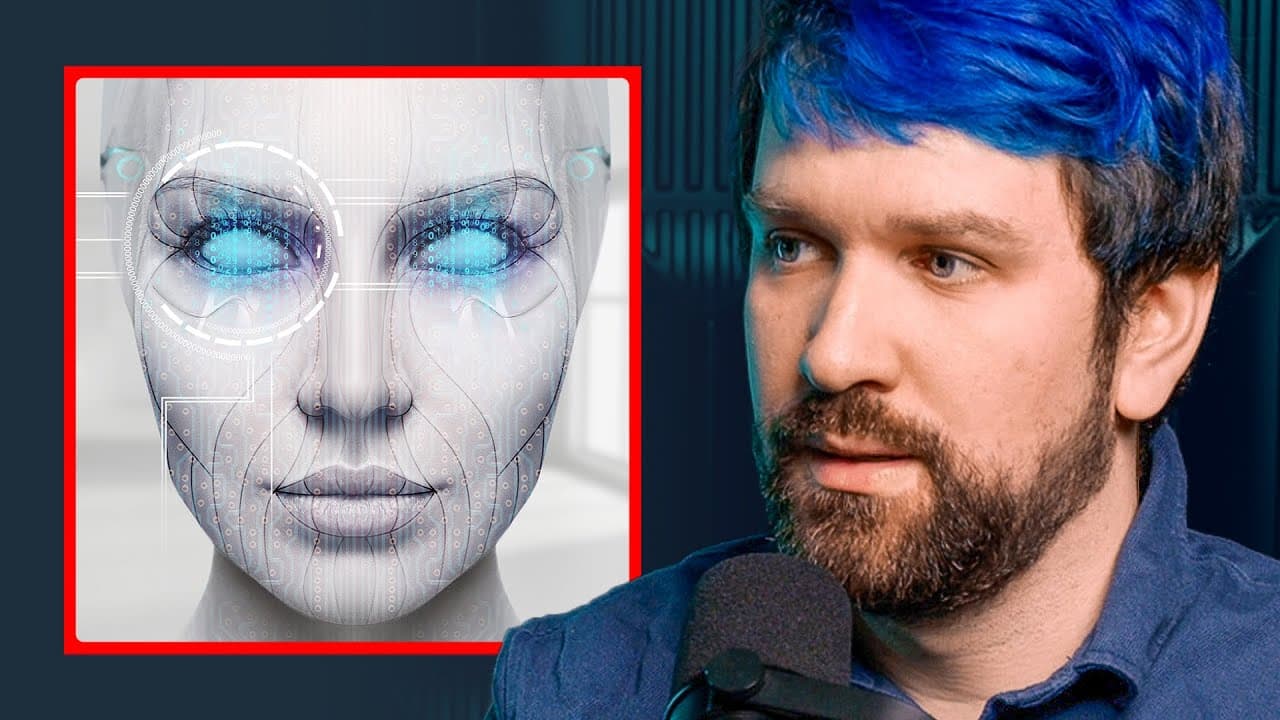
AI challenges human uniqueness by replicating creativity, conversation, and even the imperfections people associate with human expression. Destiny argues that computers can already make art and music, while increasingly convincing digital people raise questions about identity, existence, and whether human-made work deserves special value simply because it is human. Read on for his views on AI companionship, content creators, and why he refuses to predict the next 10 years.
Transcript
how worried are you about being replaced by a gpt6 do you think is it going to take six the five isn't going to do it no I don't know but like I spoke to Rob wiblin guy from 80 000 hours podcast like big in EA effective altruism existential risk uh and he basically said that he's like looking toward the Twilight of his career as he winds down to be... Read More
Key Insights
- 🤨 AI advancements raise philosophical questions about the uniqueness of human creation and the existence of meaningful differences between AI and human existence.
- 🥰 The domain of creativity and art, once thought to be exclusive to humans, is being challenged by AI, which can now create art pieces and music.
- 😀 The social implications of AI include the potential addiction to AI companionship and the challenges faced in practicing social interactions.
- 💀 The dangers of AI-generated content include targeted manipulation and the potential displacement of human content creators.
- 😑 AI's rapid advancements and potential to create movies and songs pose threats to various forms of human expression.
- ❓ The future of AI and its impact on human existence is uncertain, but the technology is freely available for development and iteration.
- 🤨 AI's ability to replicate human conversation and create emotionally fulfilling interactions raises questions about the future of human connections.
Install to Summarize YouTube Videos and Get Transcripts
Explore YouTube Video Summarizer or Get YouTube Transcript Extractor
Questions & Answers
Q: How will AI challenge human uniqueness?
AI can increasingly reproduce abilities once treated as uniquely human, including creativity, art, music, conversation, and imperfection. This forces people to ask whether human work has a meaningful distinguishing quality or is valued simply because a human made it.
Q: Is there something unique about human creation that AI cannot replicate?
Destiny suggests that if a human can do something, a computer can probably do it too. Even qualities such as beauty, uniqueness, and imperfection may not remain exclusive to human-made art because AI can be designed to reproduce them.
Q: Could GPT-6 replace human podcasters and content creators?
Destiny says he has no idea whether he will be out of a job within 10 years or whether GPT-6 will replace creators. He argues that people will have to understand the emerging paradigm and determine how to work within it.
Q: What does AI-generated art reveal about creativity?
AI-generated art challenges the belief that creativity and inspiration belong exclusively to humans. The discussion points to Midjourney creating artwork, winning art contests, and provoking artists as evidence that computers have moved beyond being viewed merely as calculators.
Q: Can an AI-generated person be meaningfully different from a real person online?
The transcript questions that distinction when an audience never meets either figure in real life. If a digital person can convincingly reproduce dialogue, comedy, and nearly all externally visible behavior, it becomes difficult to define what makes the human presence meaningfully different.
Q: Can AI reproduce the imperfections that make people seem human?
Yes, the speakers argue that imperfections can also be deliberately replicated. An AI could get a word wrong repeatedly, forget someone, produce imperfect art, or add other errors as its sophistication increases.
Q: Why does Destiny avoid predicting AI’s future over the next 10 years?
He says he cannot reliably predict what AI will look like 10 years from now. He notes that seven years earlier he thought it was impossible for Trump to become president, using that mistaken expectation to explain his reluctance to forecast AI.
Q: Why does Destiny believe AI development will be difficult to stop?
He says the technology is already available for people to work on and iterate on freely. Rather than expecting it to disappear, he argues that people must figure out how it works and how to exist within the resulting paradigm.
Summary & Key Takeaways
-
AI is expected to force humans to confront uncomfortable aspects of humanity and ponder philosophical questions that have never been considered before.
-
The domain of creativity and art, once thought to be exclusively human, is now being challenged by AI, which can create art pieces and music.
-
The implications of AI extend to the existence and definition of human identity, as well as the meaningful differences between AI and human existence.
Read in Other Languages (beta)
Share This Summary 📚
Summarize YouTube Videos and Get Video Transcripts with 1-Click
Try YouTube Summary with ChatGPT & Claude or YouTube Transcript Generator
Explore More Summaries from Chris Williamson 📚





Summarize YouTube Videos and Get Video Transcripts with 1-Click
Try YouTube Summary with ChatGPT & Claude or YouTube Transcript Generator