Where Is Portuguese Spoken in Asia?
TL;DR
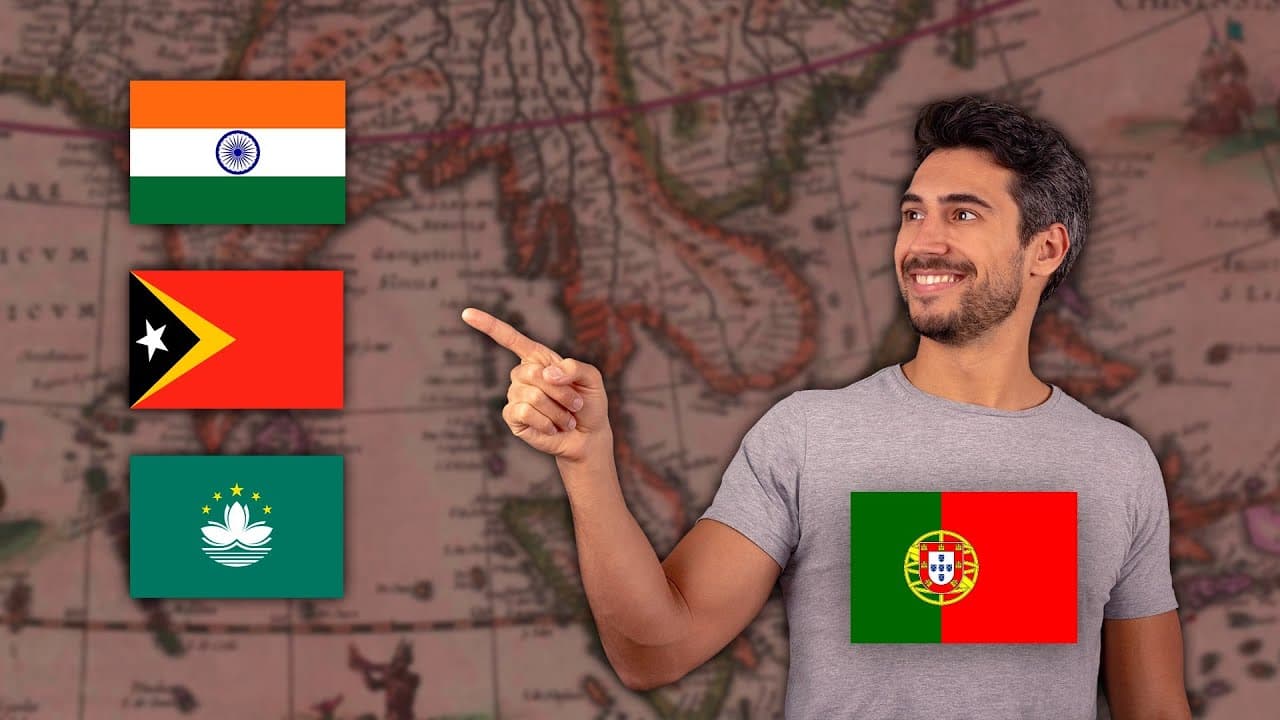
Portuguese is spoken in various Asian regions, notably Timor-Leste, Macau, and Goa. In Timor-Leste, Portuguese is an official language but spoken by only 25-30% of the population due to historical influences. In Macau, Portuguese is an official language but used by just 2.5% of the population. Goa, once a Portuguese colony, has few Portuguese speakers today.
Transcript
When we talk about the Portuguese language, there are countries that immediately come to mind: The first are Brazil in the Americas and Portugal in Europe, followed by the PALOP countries: Angola, Mozambique, Cape Verde, Guinea-Bissau and São Tomé and Príncipe. However, there is a continent that we rarely think about where Portuguese is also sp... Read More
Key Insights
- Portuguese is an official language in Timor-Leste, spoken by 25-30% of the population.
- Timor-Leste's history includes Portuguese colonization and Indonesian occupation, impacting language use.
- Macau, a former Portuguese colony, has Portuguese as an official language, spoken by 2.5% of the population.
- Macanese Patuá, a Portuguese-based creole, is critically endangered in Macau.
- Goa was a Portuguese colony until 1961, with a declining number of Portuguese speakers today.
- The Portuguese language in Goa was historically linked to the Catholic elite and the Inquisition.
- Portuguese pronunciation in Timor-Leste resembles that of Portuguese-speaking African countries.
- Goan Portuguese speakers have a pronunciation similar to that of Portugal.
Install to Summarize YouTube Videos and Get Transcripts
Explore YouTube Video Summarizer or Get YouTube Transcript Extractor
Questions & Answers
Q: How many people speak Portuguese in Timor-Leste?
In Timor-Leste, approximately 25-30% of the population speaks Portuguese. This is due to its status as an official language alongside Tetum, despite historical challenges such as the Indonesian occupation which banned Portuguese use and education. The language was reintroduced post-independence, but it remains a second language for most speakers.
Q: What is the status of Portuguese in Macau?
In Macau, Portuguese is one of three official languages, alongside Cantonese and Mandarin. However, it is spoken by only about 2.5% of the population. The language's presence is more prominent in educational institutions like the Portuguese School of Macau, but its everyday use is limited among the general populace.
Q: What is Macanese Patuá?
Macanese Patuá is a Portuguese-based creole language influenced by Cantonese and other Southeast Asian languages. Historically spoken by the Macanese community, it is now critically endangered, with few speakers remaining, mostly among the older generation. Efforts to preserve it include media content and cultural initiatives celebrating its unique linguistic heritage.
Q: How did Portuguese become a language in Goa?
Portuguese became prominent in Goa due to its colonization by Portugal from 1510 until 1961. It served as the main language for over 400 years, particularly among the Catholic elite. The language's use declined after Goa's annexation by India, but recent educational efforts aim to revive Portuguese learning in the region.
Q: What differentiates the Portuguese spoken in Timor-Leste?
The Portuguese spoken in Timor-Leste shares similarities with the Portuguese of African countries, featuring distinct phonetic characteristics. One notable trait is the pronunciation of the letter D between vowels as a 'flap T' sound, similar to certain African Portuguese accents. This reflects the diverse linguistic influences Timor-Leste has experienced.
Q: How has Portuguese pronunciation evolved in Goa?
Portuguese pronunciation in Goa is remarkably similar to that of Portugal, with minimal differences in grammar and vocabulary. This is due to the historical presence of Portuguese as the main language for over four centuries. However, the language's decline has led to some code-switching with English among speakers.
Q: What efforts are being made to promote Portuguese in Goa?
Efforts to promote Portuguese in Goa include the establishment of the Camões Institute in 2000, which supports Portuguese language education in schools and universities. These initiatives aim to revive interest and proficiency in Portuguese, despite the language's decline since Goa's integration into India.
Q: Why is Portuguese less spoken in Timor-Leste today?
Portuguese is less spoken in Timor-Leste today due to the historical Indonesian occupation, which banned its use and education, leading to a generational gap in language proficiency. Although reintroduced post-independence, Portuguese remains a second language for most, with Tetum being more widely spoken among the population.
Summary & Key Takeaways
-
Portuguese is spoken in Timor-Leste, Macau, and Goa, each with unique historical influences. In Timor-Leste, Portuguese is an official language but less commonly spoken due to past Indonesian occupation. Macau features Portuguese as an official language, though used by a small fraction of the population, and hosts the endangered creole, Macanese Patuá.
-
Goa, a former Portuguese colony, has few Portuguese speakers today, though the language was historically significant among the Catholic elite. The Portuguese spoken in Goa closely resembles that of Portugal, with minimal differences in pronunciation and grammar. The language's decline is attributed to the region's changing political landscape.
-
Portuguese pronunciation in Timor-Leste is influenced by Portuguese-speaking African countries, featuring unique phonetic traits. Despite the small number of speakers in these regions, efforts such as the Camões Institute in Goa aim to revive and promote the Portuguese language through educational initiatives.
Read in Other Languages (beta)
Share This Summary 📚
Summarize YouTube Videos and Get Video Transcripts with 1-Click
Try YouTube Summary with ChatGPT & Claude or YouTube Transcript Generator
Explore More Summaries from Portuguese With Leo 📚


Summarize YouTube Videos and Get Video Transcripts with 1-Click
Try YouTube Summary with ChatGPT & Claude or YouTube Transcript Generator