Why Is Peter Thiel Backing Trump for Disruption?
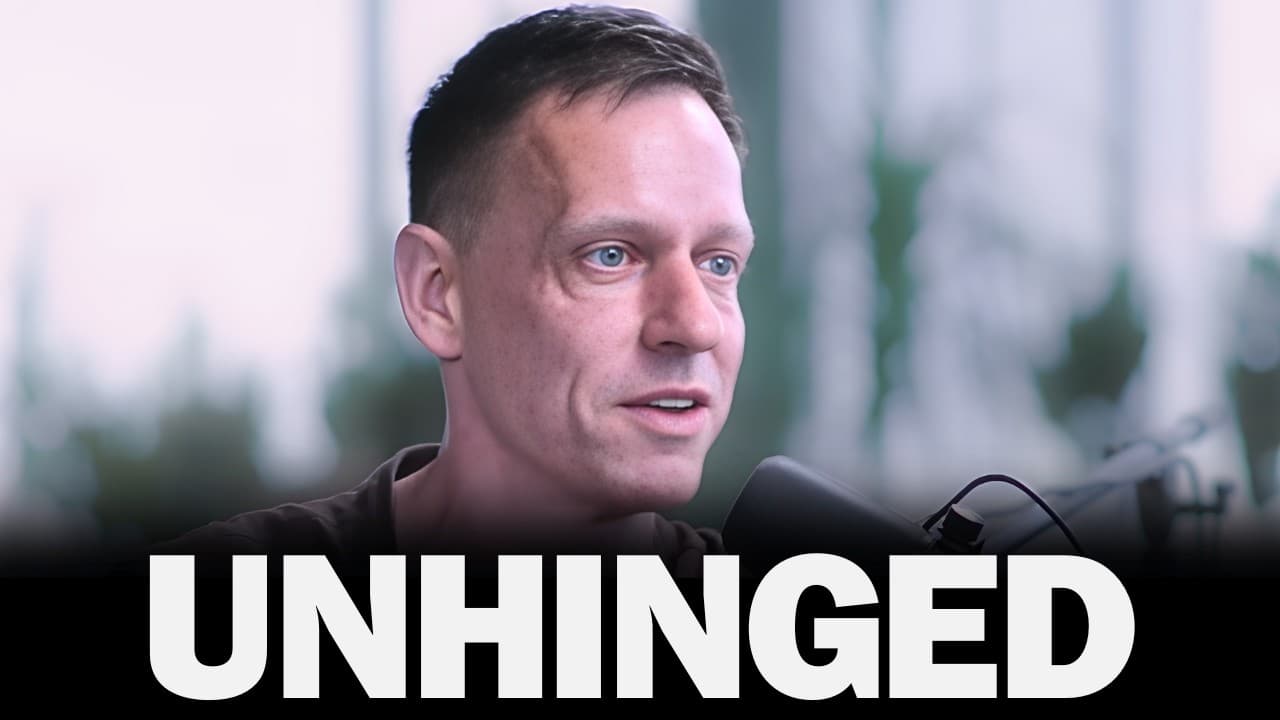
TL;DR
Peter Thiel supports Trump as a means to disrupt stagnation in innovation, which traditional institutions fail to address. He emphasizes that Palantir was designed to tackle issues that government tech couldn't solve, and underscores the need for proactive approaches to drive technological progress in today's landscape.
Transcript
Read and summarize the transcript of this video on Glasp Reader (beta).
Key Insights
- Peter Thiel argues that Silicon Valley's support for Trump stems from a need for disruption and innovation, which traditional institutions fail to provide.
- Palantir was created in response to 9/11 to address issues government technology couldn't solve, a vision that remains relevant today.
- Thiel highlights a shift among tech leaders like Eric Schmidt and Jeff Bezos, who now acknowledge the stagnation problem they once dismissed.
- Despite political affiliations, Thiel emphasizes that the move towards Trumpism in 2024 is driven by a need for technological innovation rather than ideology.
- Thiel criticizes the current system's inability to support scientific advancements, contrasting it with historical efforts like the Manhattan Project.
- Palantir's approach is proactive, developing tools independently rather than waiting for institutional change, which Thiel views as necessary in today's stagnant environment.
- The term 'moonshot' has lost its meaning, now symbolizing empty promises rather than ambitious projects with tangible outcomes.
- Thiel suggests that disruption is the only viable path forward, challenging the belief that existing systems will eventually deliver results.
- More videos with Peter Thiel:
Install to Summarize YouTube Videos and Get Transcripts
Explore YouTube Video Summarizer or Get YouTube Transcript Extractor
Questions & Answers
Q: What is Peter Thiel's view on Silicon Valley's support for Trump?
Peter Thiel believes that Silicon Valley's support for Trump is primarily due to a need for disruption and innovation, which traditional institutions have failed to provide. He sees this alignment not as a political endorsement but as a strategic move to foster technological advancement.
Q: Why was Palantir created, according to Peter Thiel?
Palantir was created in the aftermath of 9/11 to tackle problems that government technology couldn't solve. Thiel emphasizes that Palantir's core mission is to address issues arising from institutional stagnation, a vision that remains relevant as institutions continue to struggle with innovation.
Q: How have tech leaders like Eric Schmidt and Jeff Bezos changed their views on stagnation?
According to Thiel, tech leaders like Eric Schmidt and Jeff Bezos, who once dismissed concerns about stagnation, have now acknowledged its existence. This shift indicates a broader recognition of the challenges posed by stagnant systems, aligning with Palantir's founding principles.
Q: Is the support for Trump in 2024 purely political according to Thiel?
Thiel argues that the support for Trump in 2024 is not purely political but rather driven by a desire for technological innovation. He sees Trumpism as a vehicle for change, not because it's perfect, but because it offers a path forward in a landscape where traditional methods have failed.
Q: What criticism does Thiel have about the current state of scientific progress?
Thiel criticizes the current system for its inability to support scientific advancements, contrasting it with historical efforts like the Manhattan Project. He suggests that today's institutions lack the commitment and resources to drive significant scientific breakthroughs, highlighting the need for disruptive approaches like Palantir's.
Q: How does Palantir's approach differ from traditional institutions?
Palantir's approach is proactive, focusing on developing tools independently rather than waiting for institutional change. Thiel argues that this method is necessary in today's stagnant environment, where traditional systems are slow to adapt and innovate.
Q: What does Thiel mean by the term 'moonshot' losing its meaning?
Thiel argues that the term 'moonshot' has lost its original meaning, now symbolizing empty promises rather than ambitious projects with tangible outcomes. He suggests that this shift reflects a broader trend of institutions pretending to be ambitious without real plans to follow through.
Q: What is Thiel's perspective on the necessity of disruption?
Thiel suggests that disruption is the only viable path forward, challenging the belief that existing systems will eventually deliver results. He sees companies like Palantir, which push for change from the outside, as essential in a world where traditional models have stalled.
Summary & Key Takeaways
-
Peter Thiel discusses the stagnation in modern institutions and how Palantir was designed to address these issues by not relying on slow government processes. He notes a shift in Silicon Valley towards supporting Trump as a form of disruption needed for innovation.
-
Thiel critiques the current state of scientific progress, arguing that historical projects like the Manhattan Project were possible due to strong institutional support, which is lacking today. He emphasizes Palantir's role in taking initiative where traditional systems fail.
-
The conversation highlights how terms like 'moonshot' have become symbolic of unfulfilled ambitions. Thiel argues that disruption, as seen in Palantir's approach, is necessary to challenge and change stagnant systems that are not delivering results.
Read in Other Languages (beta)
Share This Summary 📚
Summarize YouTube Videos and Get Video Transcripts with 1-Click
Try YouTube Summary with ChatGPT & Claude or YouTube Transcript Generator
Explore More Summaries from Palantir Bite-Sized 📚



Summarize YouTube Videos and Get Video Transcripts with 1-Click
Try YouTube Summary with ChatGPT & Claude or YouTube Transcript Generator