How to boost your market value in the AI era
TL;DR
Market value rises when you are an all around candidate who stays curious and learns continuously. The key is to balance deep skill with broad experience across fields, and to spot where AI trends create real value. Focus on applying AI to practical workflows and expanding your influence beyond a single role.
Transcript
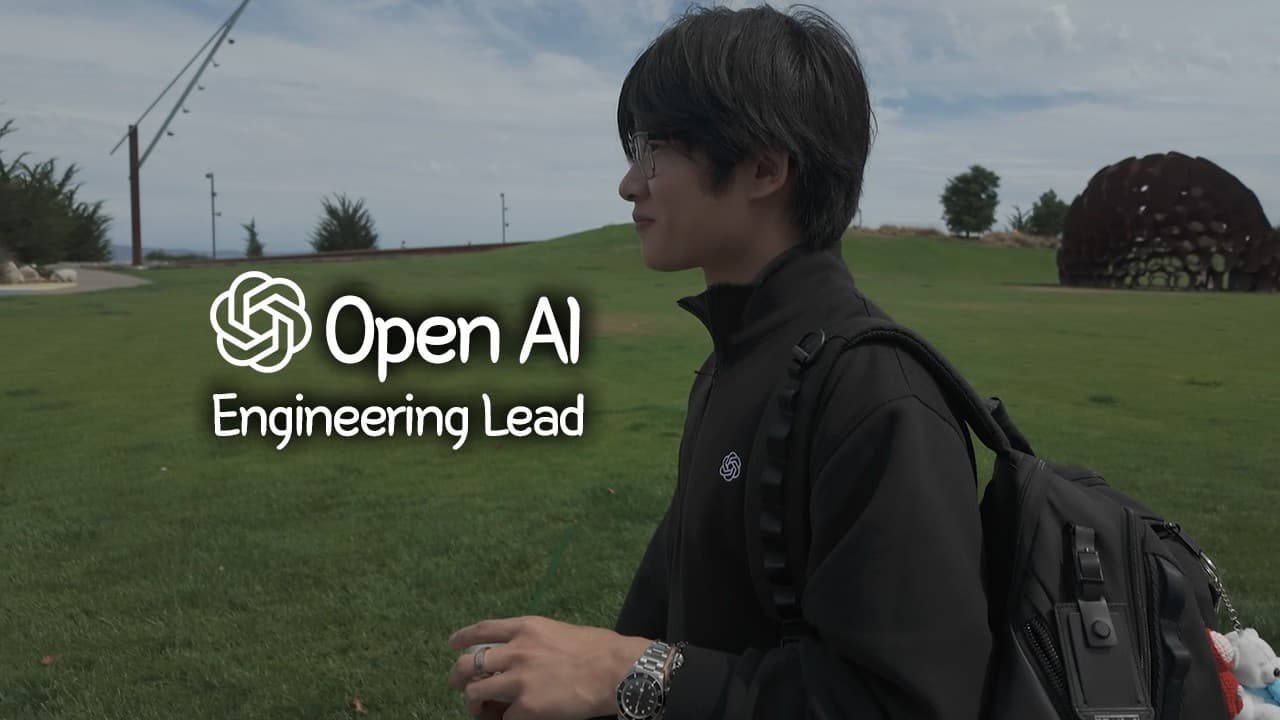
Headquarter. You don't I'm going to do Professional. I'm So let's start this interview at first. Could you introduce yourself briefly? >> Yeah. Hey, I'm Jay. I currently in innovation labs within OpenAI. Uh before that I worked at a couple of big tech places and right now I'm an engineering lead uh at the company. >> Okay. I prepared some questionn... Read More
Key Insights
- Jay built market value by accumulating diverse experiences across cloud, AI, and product roles
- Curiosity is a critical trait that helps engineers anticipate and shape AI driven opportunities
- Deep expertise plus breadth across related fields increases hiring appeal and compensation potential
- Strategic career moves toward AI opportunities can accelerate value in high demand markets
- Understanding how AI is deployed inside organizations is as important as building new models
- Balancing depth and breadth in skills helps sustain long term career growth
- Being at the frontier of AI requires continuous learning and evaluating new capabilities
- Choosing where to apply AI, and timing, heavily influences compensation and role quality
Install to Summarize YouTube Videos and Get Transcripts
Explore YouTube Video Summarizer or Get YouTube Transcript Extractor
Questions & Answers
Q: What is Jay’s approach to building market value across industries and roles?
Jay emphasizes that market value comes from being an all around candidate who combines curiosity, broad experience, and practical impact. He moved from AWS to Microsoft and Facebook, then startups, and finally OpenAI to build a portfolio of cloud, AI, and product skills. This diverse background enables him to connect technical capabilities with real business outcomes, making him highly valuable in AI integrated teams.
Q: Why is curiosity considered critical for engineers in the AI era?
Curiosity drives engineers to explore unpaved paths within AI and technology. It helps them understand how to leverage model capabilities and identify where AI can automate or improve workflows. By staying inquisitive, engineers can anticipate trends, push for innovative applications, and continuously learn, which enhances their usefulness and adaptability in fast evolving tech ecosystems.
Q: How does one balance depth and breadth in their career, according to Jay?
Jay argues that there is no single right path. Some people go deep in one topic, others build broad knowledge across cloud, AI, and vision. The key is to align your trajectory with personal goals and market needs, ensuring you remain deeply competent in core skills while also being able to pivot to related domains when opportunities arise.
Q: What differentiates AI technology trajectories from other tech hype cycles, as discussed?
AI is described as versatile and dynamic with numerous potential applications, making it harder to outpace. In contrast, other technologies like VR or AR may be hype heavy but have a narrower, slower evolving impact. AI offers a broader range of use cases, enabling faster, meaningful integration into many sectors and product lines.
Q: What internal OpenAI practices does Jay highlight that showcase successful talent?
Jay notes that OpenAI engineers and teams focus on practical product automation and internal use cases, such as automating document review and GTM workflows. They emphasize memory, agents, and real world impacts, showing that exceptional talent thrives on turning AI capabilities into tangible business improvements.
Q: How does Jay describe the impact of market conditions on compensation and value?
He explains that compensation reflects not only current skills but also market demand, volatility of equity, and the location of value within organizations. Being valued where the price is higher, while continually self improving and learning, allows engineers to capture greater value over time. Both skill and market fit matter.
Q: What guidance does Jay offer for distinguishing technologies years ahead of time?
The guidance centers on building context and knowledge, which reveals future opportunities. By learning deeply about AI fundamentals and watching how organizations adopt AI, one can identify where the greatest value will come from. This foresight helps in choosing roles and projects that position someone at the frontier of change.
Q: What mindset does Jay advocate for in the early career stages to avoid common mistakes?
In the early career, he advises avoiding tunnel vision, staying flexible, and not locking into a single path too soon. It is important to experiment with different roles and domains while continuing to build core skills. This openness prevents stagnation and keeps options open as AI driven opportunities emerge.
Summary & Key Takeaways
-
Jay describes a career path across AWS, Microsoft, Facebook, startups, and OpenAI, highlighting how diverse experiences boost market value.
-
He stresses curiosity, adaptability, and continuous learning as core drivers of career growth in AI driven markets.
-
OpenAI work emphasizes practical product automation and the importance of understanding how AI is used inside organizations.
Read in Other Languages (beta)
Share This Summary 📚
Summarize YouTube Videos and Get Video Transcripts with 1-Click
Try YouTube Summary with ChatGPT & Claude or YouTube Transcript Generator
Explore More Summaries from 희야기 | HeeChan 📚






Summarize YouTube Videos and Get Video Transcripts with 1-Click
Try YouTube Summary with ChatGPT & Claude or YouTube Transcript Generator