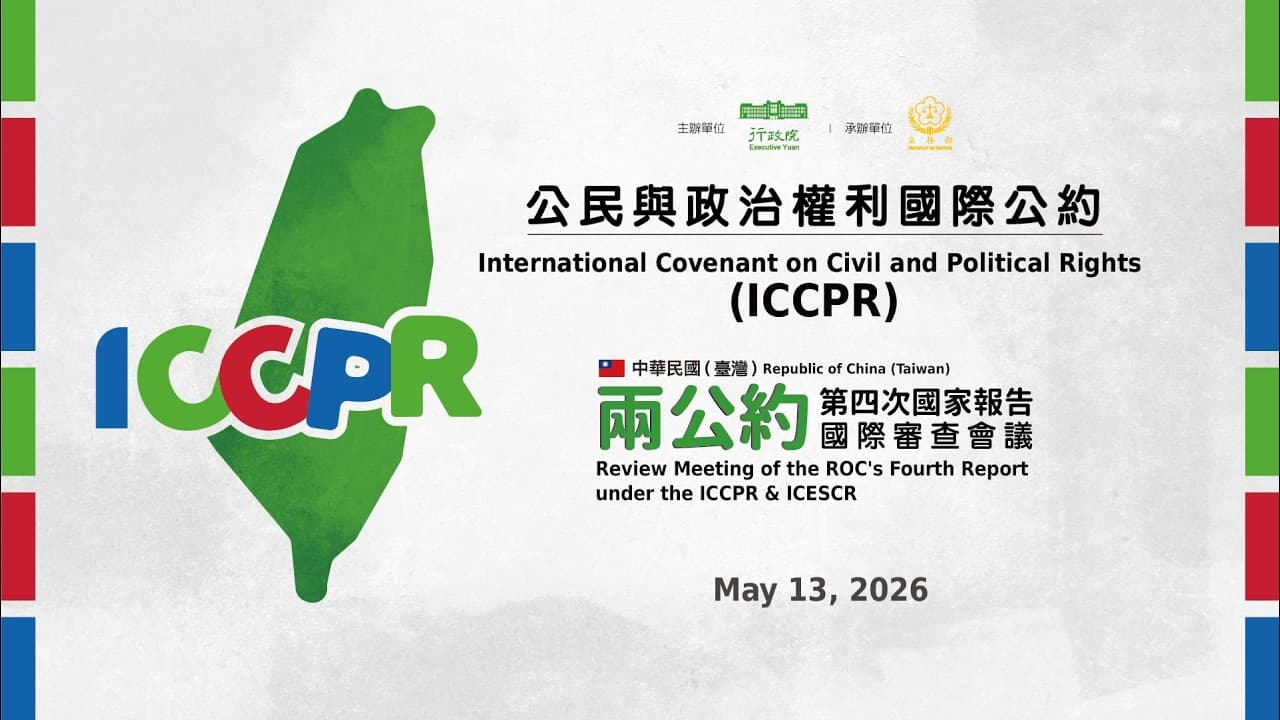
How to Address ICCPR Review Concerns in Taiwan
TL;DR
The ICCPR Review Meeting discusses Taiwan's compliance with civil and political rights, focusing on issues like asylum procedures, fair trials, and data protection. Concerns include the lack of transparency in asylum processes, the need for judicial oversight in data handling, and the protection of lawyer-client privilege. Recommendations urge Taiwan to align domestic laws with international human rights standards.
Transcript
Heat. Heat. Heat. Heat. Hey. Hey. Hey. Heat. Heat. Heat. Heat. Heat. Heat. I'm going to Heat. Heat. Heat. Heat. Behind you. Heat. Heat. Heat. Heat. Heat. Heat. Heat. Heat. Heat. Heat. Heat. Heat. Heat. Hey. Hey. Session four. In this session, we are going to cover ICCPR articles 12 to 17 and concluding observations and recommendations paragraphs 82... Read More
Key Insights
- Taiwan's asylum process lacks transparency, with no clear criteria or expert disclosure in protection claims.
- Exit bans for tax disputes in Taiwan lack judicial review, raising concerns about proportionality and oversight.
- Facial recognition technology in Taiwan lacks comprehensive legal guidelines, particularly in public spaces.
- Data protection in Taiwan imposes fines on private but not public entities, creating a discrepancy in accountability.
- Judicial oversight is absent in data protection orders, potentially compromising procedural safeguards.
- Gender affirmation surgery is no longer required by Taiwan's Supreme Administrative Court, but legislation has not been updated.
- Lawyer-client privilege protection is pending legislative action despite a constitutional court judgment.
- Concerns about fair trial rights include media influence during investigations and the use of foreign-obtained evidence.
Install to Summarize YouTube Videos and Get Transcripts
Explore YouTube Video Summarizer or Get YouTube Transcript Extractor
Questions & Answers
Q: How does Taiwan handle asylum seeker applications?
Taiwan's asylum process is criticized for its lack of transparency and clear criteria. Asylum seekers often face prolonged reviews without clear outcomes, and the process lacks expert involvement and disclosure. The current system does not adequately align with international human rights standards, leading to calls for comprehensive reform and the issuance of identification for asylum seekers.
Q: What are the concerns with exit bans in Taiwan?
Exit bans in Taiwan, particularly for tax disputes, are imposed without prior judicial review, raising concerns about proportionality and oversight. These bans can last for extended periods, significantly impacting individuals' freedom of movement. The lack of effective remedies and oversight mechanisms highlights the need for urgent legal reforms to ensure compliance with international human rights obligations.
Q: What issues surround facial recognition technology in Taiwan?
Facial recognition technology in Taiwan lacks comprehensive legal guidelines, especially regarding its use in public spaces. There are concerns about the absence of binding legislation and oversight mechanisms, particularly when used for identification without individuals' consent. This raises potential privacy violations and the need for clear legal frameworks to regulate its use.
Q: How is data protection enforced in Taiwan?
In Taiwan, data protection enforcement shows a disparity between private and public sectors. Private entities can be fined for violations, whereas public entities face no such penalties, only disclosure of their names. This discrepancy raises concerns about accountability and effective enforcement of data protection laws, highlighting the need for legislative amendments to address these gaps.
Q: What legal protections exist for lawyer-client privilege in Taiwan?
Lawyer-client privilege in Taiwan is protected by a constitutional court judgment, but legislative action is pending to formalize this protection. The delay in enacting legislation has led to differences in interpretation, underscoring the need for clear legal boundaries to safeguard the confidentiality of communications between lawyers and their clients, ensuring alignment with international standards.
Q: What are the challenges in Taiwan's fair trial rights?
Taiwan faces challenges in ensuring fair trial rights, including the influence of media during investigations and the use of evidence obtained from foreign jurisdictions. These issues highlight the need for stronger legal protections to maintain the presumption of innocence and ensure that trials are conducted impartially, in line with international human rights standards.
Q: How does Taiwan's Supreme Administrative Court ruling affect gender affirmation surgery?
The Supreme Administrative Court in Taiwan ruled that gender affirmation surgery is no longer required for legal gender marker changes, but the relevant administrative orders and legislation have not been updated. This inconsistency forces individuals to litigate for their rights, leading to calls for legislative changes to reflect the court's decision and ensure clarity and protection for transgender individuals.
Q: What oversight exists for data protection orders in Taiwan?
Data protection orders in Taiwan do not require judicial authorization, and there is limited oversight of compliance with procedural safeguards. This raises concerns about the protection of communication data and the potential for abuse. The absence of independent oversight or judicial review underscores the need for reforms to ensure that data protection practices align with human rights obligations.
Summary & Key Takeaways
-
Taiwan's asylum procedures face criticism for lack of transparency and expert involvement, with calls for clearer criteria and protection mechanisms. Exit bans imposed without judicial review highlight the need for legal reform to ensure proportionality and effective remedies. Concerns persist over Taiwan's use of facial recognition technology without comprehensive legal guidelines, particularly in public spaces.
-
Data protection in Taiwan shows a disparity between private and public sector accountability, as public entities face no fines for violations. Judicial oversight is absent in data protection orders, raising concerns about the enforcement of procedural safeguards. The Supreme Administrative Court's decision on gender affirmation surgery requires legislative alignment for clarity.
-
Lawyer-client privilege remains a contentious issue, with pending legislation needed to align with constitutional court judgments. Fair trial rights are under scrutiny due to media influence during investigations and the use of evidence obtained from foreign jurisdictions, prompting calls for stronger legal protections and adherence to international human rights standards.
Read in Other Languages (beta)
Share This Summary 📚
Summarize YouTube Videos and Get Video Transcripts with 1-Click
Try YouTube Summary with ChatGPT & Claude or YouTube Transcript Generator
Explore More Summaries from 一欣國際會議顧問有限公司 📚

Summarize YouTube Videos and Get Video Transcripts with 1-Click
Try YouTube Summary with ChatGPT & Claude or YouTube Transcript Generator