7 Best Meditation Videos on YouTube

Sep 15, 2026
12 min read
19 views
Last updated: September 2026
This is a seven-video sequence about meditation, ordered as a path rather than a ranking. It is for beginners, skeptics, and regular meditators who want practical instruction alongside evidence about habits, stress, attention, and the brain.
The full set runs about an hour and a half. It brings together enduring videos from Judson Brewer on habit loops, Andy Puddicombe on ten mindful minutes, and Sara Lazar on how meditation can reshape the brain.
The videos on this list, in the order to watch them, are:
How to Break Bad Habits Using Mindfulness Techniques (Judson Brewer)
How Can I Improve My Mindfulness in Just 10 Minutes? (Andy Puddicombe)
How Can Meditation Change Your Brain Structure? (Sara Lazar)
Dan Harris: Hack Your Brain's Default Mode with Meditation | Big Think (Dan Harris)
What Do Olympic Level Meditators' Brain Waves Reveal? (Daniel Goleman)
How to Practice Awareness Meditation Effectively (Yongey Mingyur Rinpoche)
How Can Meditation Improve Your Mental Health? (Dan Harris)
Total: 7 videos, 95 minutes of watch time (1 hour 35 minutes), and 23.5M combined views.
1. How to Break Bad Habits Using Mindfulness Techniques

"A simple way to break a bad habit | Judson Brewer | TED" · Judson Brewer · 9 min · 12M views · 2016
In short: Curiosity about cravings makes each part of a habit loop visible, helping people become disenchanted with harmful behavior and let it go.
Start here because meditation becomes easier to understand when it is attached to a familiar problem: repeating a behavior even when you want to stop. Brewer explains that reward-based learning can turn actions such as smoking and overeating into habit loops. Mindfulness interrupts that cycle by replacing automatic reaction with curiosity about the present experience, allowing the behavior to lose some of its appeal.
The clearest evidence is a smoking study in which mindfulness training was twice as effective as standard therapy at helping people quit. Brewer also makes the method concrete: a craving can be examined as a series of smaller moments instead of treated as one overwhelming command. The same approach can expose everyday loops such as checking email when bored or responding compulsively to messages while driving.
Key takeaways
Reward-based learning reinforces behaviors by teaching the brain to remember the context around a pleasurable result.
Curiosity helps break a craving into manageable moments and reveals the unpleasant parts of a habitual behavior.
Mindfulness training was twice as effective as standard therapy in helping people quit smoking.
The default mode network quiets when a person lets go of a craving through curiosity and awareness.
Watch on YouTube · Read the summary and Q&A
2. How Can I Improve My Mindfulness in Just 10 Minutes?
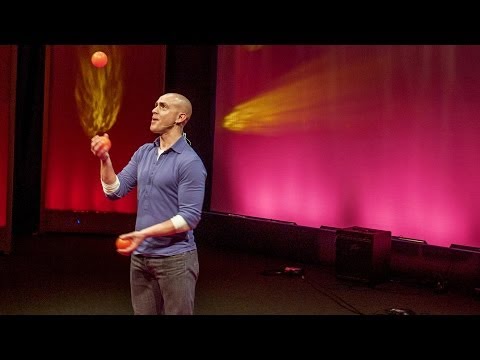
"All it takes is 10 mindful minutes | Andy Puddicombe | TED" · Andy Puddicombe · 9 min · 5.6M views · 2013
In short: Ten minutes of daily meditation trains you to observe thoughts and emotions without judgment, bringing more focus, calm, and clarity to everyday life.
After seeing how awareness can interrupt a habit, the next step is building a small daily practice. Puddicombe argues that meditation is a preventative way to care for the mind, not an attempt to stop thoughts or control every feeling. The practice is to step back, witness mental activity without judgment, and find a workable balance between focus and relaxation that carries into the rest of the day.
Puddicombe points to research suggesting that minds are lost in thought almost 47% of the time, connecting frequent mind-wandering with unhappiness and disconnection from the present. His response is deliberately modest: spend ten minutes a day becoming familiar with the present moment. No special equipment or posture is required, and the goal is not to change every event but to change the perspective from which it is experienced.
Key takeaways
Minds are lost in thought almost 47% of the time, which contributes to unhappiness and disconnection from the present.
Meditation involves witnessing thoughts and emotions without judgment rather than trying to stop them.
Ten minutes of daily mindfulness can improve focus, calm, clarity, and overall well-being.
A calm, focused mind depends on balancing attention with relaxation during practice and daily life.
Watch on YouTube · Read the summary and Q&A
3. How Can Meditation Change Your Brain Structure?

"How Meditation Can Reshape Our Brains: Sara Lazar at TEDxCambridge 2011" · Sara Lazar · 9 min · 1.8M views · 2012
In short: Repeated meditation can reshape brain regions tied to memory, attention, empathy, emotional regulation, and the stress response.
With a basic practice established, Lazar asks whether its effects reach beyond a calmer moment. She begins from her own skepticism about yoga and meditation, then uses neuroplasticity to explain how repeated behavior can produce structural change in the brain. The evidence links meditation with more gray matter in regions important for working memory and executive decisions, as well as a smaller stress-related amygdala.
The hippocampus provides one concrete example: meditation has been associated with an increase in its size, which matters because the region supports learning and memory. The findings also connect practice with frontal brain regions involved in attention and decision-making and with the temporo-parietal junction, which supports empathy and perspective-taking. Lazar further argues that regular practice may slow the age-related decline of cortical structure.
Key takeaways
Neuroplasticity allows repeated behaviors such as meditation to produce structural changes in the brain.
Meditation has been associated with more gray matter in the frontal cortex and hippocampus, supporting memory, attention, and executive functions.
Human studies link meditation with a smaller amygdala and a reduced stress response.
Activity in the temporo-parietal junction connects meditation with greater empathy, compassion, and perspective-taking.
Watch on YouTube · Read the summary and Q&A
4. Dan Harris: Hack Your Brain's Default Mode with Meditation | Big Think

"undefined" · Dan Harris · 4 min · 1.5M views · 2014
In short: Meditation can quiet the brain's default mode network while supporting attention, self-awareness, compassion, and physical health.
Harris follows Lazar with a compact account of why brain science persuaded a skeptical news anchor to meditate. He argues that the practice has measurable physical and mental effects, from lower blood pressure and immune support to changes in gray matter. Most important for the sequence, he connects those findings to attention: meditators can turn off the default mode network and return to the present moment.
The video cites Harvard and Yale research associating meditation with increased gray matter in areas related to self-awareness and compassion and reduced gray matter in a region connected with stress. Harris also names effects beyond the brain, including help with irritable bowel syndrome and psoriasis. For him, the ability to deactivate self-focused mental activity lets meditators experience something closer to being in the zone.
Key takeaways
Meditation has been shown to boost the immune system, lower blood pressure, and help with conditions including irritable bowel syndrome and psoriasis.
Harvard and Yale studies associate meditation with gray matter changes in areas related to self-awareness, compassion, and stress.
Meditators can deactivate the default mode network, improving their ability to focus on the present moment.
Harris presents happiness as a skill that can be cultivated rather than something fully determined by external circumstances.
Watch on YouTube · Read the summary and Q&A
5. What Do Olympic Level Meditators' Brain Waves Reveal?
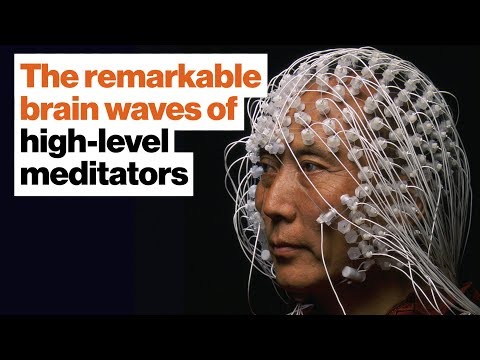
"Superhumans: The remarkable brain waves of high-level meditators | Daniel Goleman | Big Think" · Daniel Goleman · 3 min · 1.3M views · 2018
In short: Highly experienced meditators show sustained gamma waves, with activity rising by 700-800% within seconds during compassionate meditation.
The sequence now moves from changes linked with regular practice to the far end of meditation experience. Goleman describes Richard Davidson's research on Olympic level meditators, people whose brain activity differs even when they are not actively meditating. Their sustained gamma waves suggest a lasting trait rather than only a temporary state, raising questions about what long practice can do to consciousness.
Davidson brought meditators from Nepal, India, and France to a University of Wisconsin lab with dedicated scanners and about 100 staff members. Tests found consistently strong gamma waves instead of the brief bursts seen in ordinary people. During compassionate meditation, gamma activity rose by 700-800% within seconds, a change the source describes as previously unseen in scientific studies. The meditators described their experience as spacious and wide open.
Key takeaways
Olympic level meditators show sustained strong gamma waves rather than the short bursts experienced by ordinary individuals.
The gamma pattern remains present outside active meditation, suggesting a lasting trait rather than a temporary state.
Compassionate meditation increased their gamma wave activity by 700-800% within seconds.
Watch on YouTube · Read the summary and Q&A
6. How to Practice Awareness Meditation Effectively
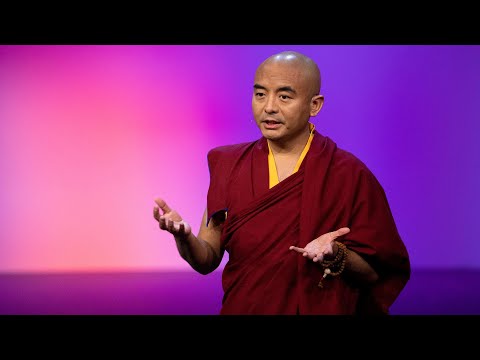
"How to Tap into Your Awareness | Yongey Mingyur Rinpoche | TED" · Yongey Mingyur Rinpoche · 11 min · 838K views · 2022
In short: Meditation means recognizing thoughts, feelings, and surroundings without trying to stop, resist, or judge them.
After the scientific findings, Rinpoche returns the sequence to direct practice. He challenges two common misunderstandings: that meditation requires thinking of nothing and that its goal is a blissful state of relaxation. Instead, he defines its essence as awareness itself. Thoughts and emotions can continue while the practitioner recognizes them, allowing discomfort to be observed without becoming the whole field of experience.
The simplest exercise is to listen to a sound, use it as a point of focus, and let thoughts and emotions come and go without resistance. Rinpoche compares awareness to the open sky and mental events to passing storms, which can be intense without changing the sky's nature. Applied to panic, this observation can reveal separate sensations, images, and beliefs rather than one solid experience, creating room for acceptance and self-compassion.
Key takeaways
The essence of meditation is awareness of thoughts, feelings, and surroundings rather than the absence of thought.
A sound or the breath can anchor attention while thoughts and emotions come and go without attachment.
Awareness is compared with an open sky, while thoughts and emotions are temporary storms passing through it.
Observing panic or discomfort can support acceptance, self-kindness, self-compassion, and clearer understanding.
Watch on YouTube · Read the summary and Q&A
7. How Can Meditation Improve Your Mental Health?

"10% Happier | Dan Harris | Talks at Google" · Dan Harris · 50 min · 529K views · 2014
In short: A short daily meditation practice can reduce stress and anxiety, improve focus, and make mindfulness practical for skeptics and beginners.
The final video turns the earlier techniques and evidence into a longer personal account. Harris explains how a panic attack on live television led him to seek help, reconsider meditation, and discover effects on his mental health and daily life. His path from skepticism to practice closes the sequence by showing that meditation does not require a particular background or expertise, only a willingness to begin.
Harris recommends starting with five to ten minutes of mindfulness a day, a commitment small enough to fit ordinary routines. He reports that daily practice improved his focus, decision-making, ability to respond wisely in difficult situations, relationships, career, and overall well-being. He also discusses meditation retreats as a way to deepen practice and positive psychology as a complementary approach centered on positive emotions, strengths, and well-being.
Key takeaways
A panic attack on national television prompted Harris to look for ways to manage stress and anxiety.
Five to ten minutes of daily mindfulness can help develop a more present and balanced mindset.
Harris connects daily practice with better focus, wiser responses, stronger relationships, and improved well-being.
Meditation is a learnable skill that does not require prior experience or expertise.
Watch on YouTube · Read the summary and Q&A
Frequently asked questions
What are the best meditation videos on YouTube?
Three strong places to start are Judson Brewer's video on using mindfulness to break bad habits, Andy Puddicombe's guide to ten mindful minutes, and Sara Lazar's explanation of meditation-related changes in brain structure. Together they cover a practical problem, an accessible daily routine, and the evidence for changes linked with repeated practice.
How long does it take to watch all seven videos?
The complete sequence takes 95 minutes, or 1 hour 35 minutes. Individual videos range from Daniel Goleman's three-minute look at experienced meditators' brain waves to Dan Harris's 50-minute account of meditation and mental health, so most entries fit easily into a short break while the final one suits a longer sitting.
Can mindfulness really help break a bad habit?
Brewer explains that curiosity makes the habit loop easier to observe in the moment. As people notice the unpleasant parts of a craving and behavior, they can become disenchanted with it rather than acting automatically. In the smoking research he cites, mindfulness training was twice as effective as standard therapy at helping people quit.
Do I need to stop thinking when I meditate?
No. Both Puddicombe and Rinpoche describe meditation as observing thoughts and emotions, not eliminating them. You can use a sound or the breath as an anchor, notice what appears, and let it pass without judgment or resistance. Trying to force thoughts to stop can produce even more thinking, while awareness changes your relationship to the activity already present.
How can meditation change the brain?
Lazar links repeated meditation with neuroplasticity and structural changes in regions related to memory, attention, executive function, empathy, and emotional regulation. Her research also reports more gray matter in the frontal cortex and hippocampus and a smaller amygdala, which is associated with the fight-or-flight response and lower stress levels.
What do advanced meditators' gamma waves show?
Goleman describes Olympic level meditators who displayed consistently strong gamma waves, rather than the brief bursts seen in ordinary individuals. The activity remained present outside active meditation, suggesting a lasting trait. When they practiced compassionate meditation, their gamma activity increased by 700-800% within seconds, a result described as previously unseen in scientific studies.
How much time should a beginner meditate each day?
Puddicombe recommends ten mindful minutes a day, while Harris says a beginner can start with five to ten minutes. Both frame meditation as a practical daily skill rather than an activity that needs special equipment, posture, or prior expertise. The useful first step is a small, repeatable period of attention to present experience.
Which meditation video should I watch first?
Start with Judson Brewer's nine-minute video. It ties mindfulness to an immediate, recognizable challenge and shows how curiosity can interrupt reward-based habit loops. That concrete use of awareness gives you a purpose for the practice before the sequence moves into a daily routine, brain research, advanced findings, and broader mental health effects.
Are older meditation videos still worth watching?
Yes. The videos from 2012, 2013, and 2014 address the same core questions as the newer entries: how to observe thought, build a brief daily practice, understand brain changes, and manage stress. Their value here comes from the specific explanations and findings, not from being recent.
How to use this list
Watch the videos in order: begin with a concrete habit loop, establish a ten-minute routine, examine evidence about brain structure and attention, look at advanced meditators, then return to awareness practice before hearing Harris's longer personal account. If you only have twenty minutes, start with Judson Brewer and Andy Puddicombe, which together take 18 minutes. If you want the single video that most directly teaches meditation without asking you to stop thinking, choose Yongey Mingyur Rinpoche.
Related lists
💡 Want summaries and transcripts for any YouTube video? Try YouTube Summary with ChatGPT & Claude.