10 Best YouTube Videos on Building Habits

Oct 21, 2026
12 min read
1 views
Last updated: October 2026
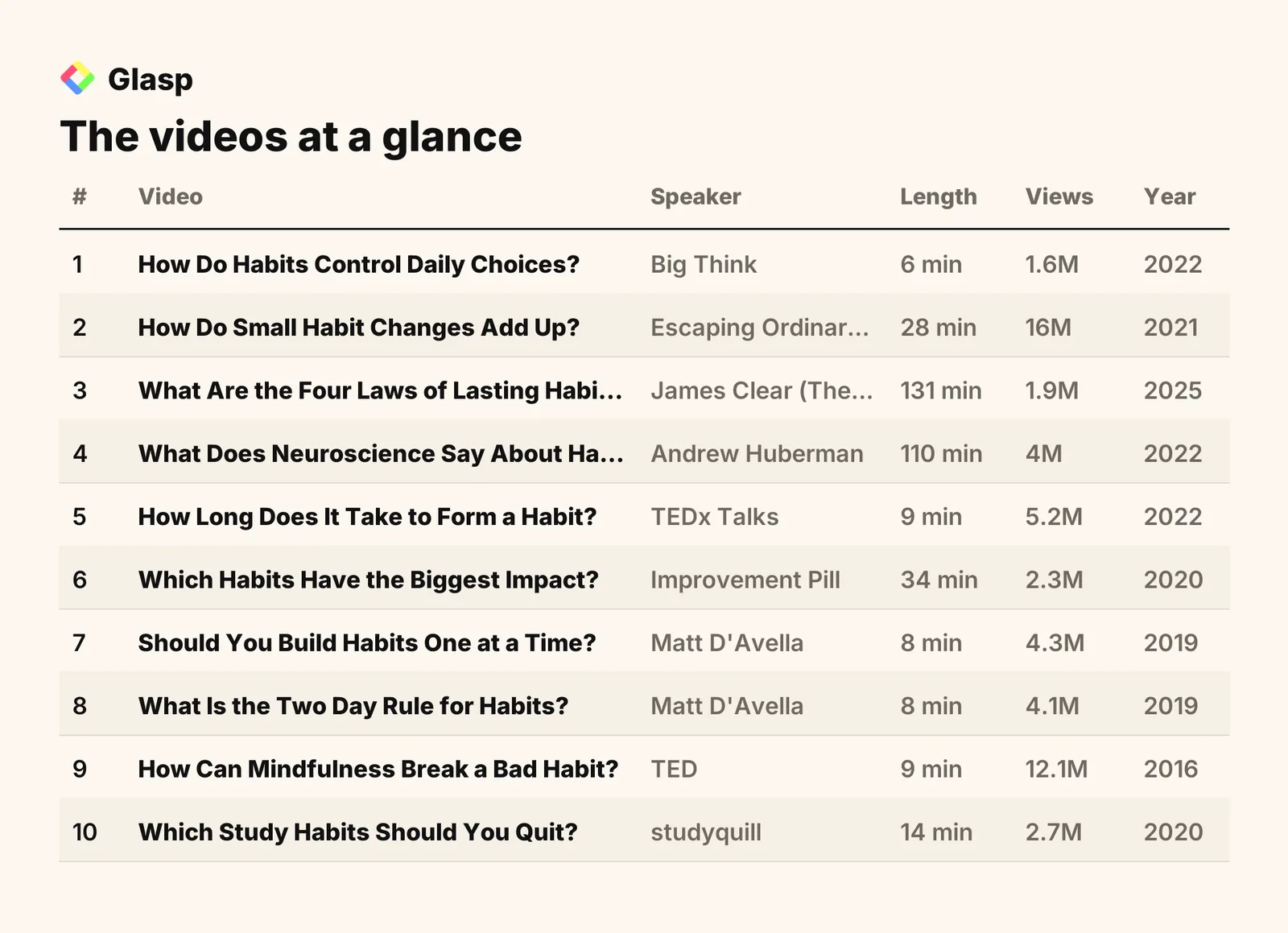
This is a curated list of ten YouTube videos on building habits, arranged as a learning path that starts with how habits work and ends with how to keep them. It is for students and self-learners who want habits that stick, not a week of motivation that fades.
Together the videos run about 357 minutes, just under six hours, and the long conversations with James Clear and Andrew Huberman take up most of that time. The set covers the core frameworks, such as the four stages of a habit and systems over goals, alongside research on how long habits take, the neuroscience of habit formation, and practical rules for staying consistent.
The videos on this list, in the order to watch them, are:
How Do Habits Control Daily Choices? (Big Think)
How Do Small Habit Changes Add Up? (Escaping Ordinary (B.C Marx))
What Are the Four Laws of Lasting Habits? (James Clear (The Diary Of A CEO))
What Does Neuroscience Say About Habits? (Andrew Huberman)
How Long Does It Take to Form a Habit? (TEDx Talks)
Which Habits Have the Biggest Impact? (Improvement Pill)
Should You Build Habits One at a Time? (Matt D'Avella)
What Is the Two Day Rule for Habits? (Matt D'Avella)
Which Study Habits Should You Quit? (studyquill)
Total: 10 videos, 357 minutes of watch time (5 hours 57 minutes), and 54.1M combined views.
1. How Do Habits Control Daily Choices?

"How Do Habits Control Our Daily Life and Choices?" · Big Think · 6 min · 1.6M views · 2022
In short: Habits automate many daily choices through rewards and environmental cues, and changing them takes consistent repetition plus an environment that supports the new behavior.
This short video is the starting point because it explains what a habit actually is before any advice begins. It answers why habits drive so much of what we do and introduces friction and cues, two ideas the rest of the list builds on.
Key takeaways
Habits influence behavior more than conscious thought does, and they are driven largely by rewards and by cues in the surrounding environment.
Friction such as time and effort shapes behavior, so adding or removing friction changes how likely an action is to become a habit.
Changing a habit requires repetition and an alternative behavior that can override the existing habitual action when the cue appears.
Professional chefs set up their stations before cooking, an example of how preparing the environment in advance supports the behavior you want.
Watch on YouTube · Read the summary and Q&A
2. How Do Small Habit Changes Add Up?

"How Can Small Changes in Habits Transform Your Life?" · Escaping Ordinary (B.C Marx) · 28 min · 16M views · 2021
In short: Improving just 1% each day can compound to make you nearly 38 times better in a year, so small habit changes add up.
This video makes the case for small changes and introduces the main ideas of Atomic Habits by James Clear: compounding, systems over goals, habit loops, and environment design. It answers why tiny improvements are worth the effort and prepares you for the full conversation with Clear that comes next.
Key takeaways
Building effective systems rather than setting strict goals supports long-term success, because the process is what keeps progress going.
Understanding the habit loop of cues and cravings lets you shape habits deliberately instead of leaving them to chance.
Making good habits easy and bad habits difficult increases the likelihood that the behavior you want actually becomes a habit.
Accountability partners and habit contracts can help you break bad habits and keep good ones in place over time.
Watch on YouTube · Read the summary and Q&A
3. What Are the Four Laws of Lasting Habits?

"How to Build Habits That Last in 2026" · James Clear (The Diary Of A CEO) · 131 min · 1.9M views · 2025
In short: James Clear says lasting habits are built by making them obvious, attractive, easy, and satisfying, then stacking them onto habits you already have.
This is the longest video on the list and the fullest explanation of the framework from the author himself. It answers how to design a habit step by step, from cue to reward, and why identity matters as much as action.
Key takeaways
Habits form through four stages, which are cue, craving, response, and reward, according to the framework James Clear lays out in this conversation.
Habit stacking means attaching a new habit to an existing one, which makes the new behavior easier to adopt.
Identity plays a central role in habit formation, so daily actions should align with the person you want to become.
Goals provide direction, but systems drive progress and consistency, and habits are a lifestyle to maintain rather than a finish line.
Watch on YouTube · Read the summary and Q&A
4. What Does Neuroscience Say About Habits?
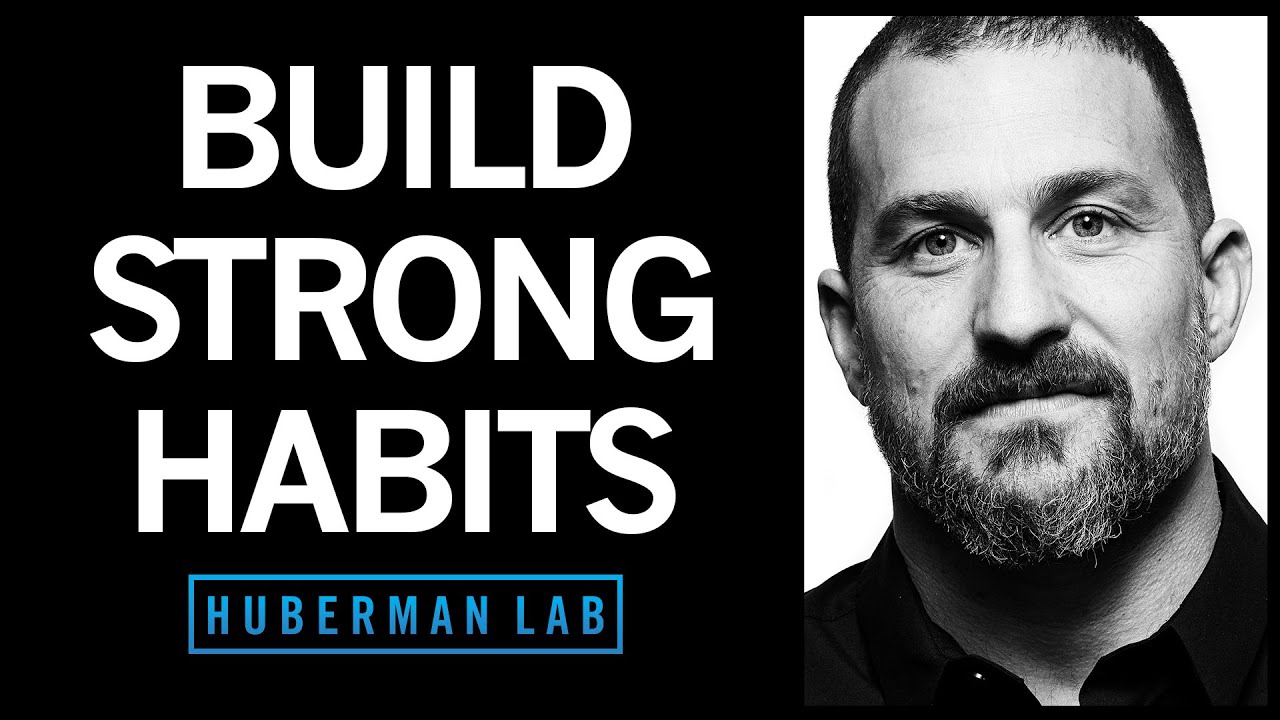
"How Do Habits Form and How Can You Break Them?" · Andrew Huberman · 110 min · 4M views · 2022
In short: Habits are learned behaviors built through neuroplasticity, and forming one can take anywhere from 18 to 254 days depending on the person and habit.
After the behavioral framework, this episode explains what is happening in the brain. It answers why some habits feel harder than others through the idea of limbic friction, and gives a practical scheduling tool called task-bracketing.
Key takeaways
Habits are learned behaviors that involve neuroplasticity, meaning they form and change as the brain's neural connections change.
Limbic friction is the emotional resistance to changing behavior, and it is affected by states such as anxiousness or fatigue.
Task-bracketing places habits in specific phases of the day, using the brain's neural circuits to improve the odds that a habit forms.
The first 0 to 8 hours after waking bring increased norepinephrine and dopamine, which makes that phase suited to the most challenging habits.
Watch on YouTube · Read the summary and Q&A
5. How Long Does It Take to Form a Habit?

"How Long Does It Really Take to Change a Habit?" · TEDx Talks · 9 min · 5.2M views · 2022
In short: Forming or breaking a habit takes roughly 2 to 8 months, with one study finding an average of 66 days, not the popular 21.
This talk sets realistic expectations before you commit to a new habit. It answers the most common timing question directly and explains where the 21-day myth came from.
Key takeaways
The idea that a habit takes 21 days to form is widely believed but lacks scientific support, according to this talk.
The origin of the popular 21-day habit myth can be traced back to observations made by plastic surgeon Dr. Maxwell Maltz.
A study by psychologist Philippe Lally found an average of 66 days to form a habit, and sometimes considerably longer than that.
Habit complexity and individual circumstances change the timeline, so setbacks are better treated as chances to learn than as failures.
Watch on YouTube · Read the summary and Q&A
6. Which Habits Have the Biggest Impact?

"What Are the Most Impactful Habits to Build?" · Improvement Pill · 34 min · 2.3M views · 2020
In short: Keystone habits like exercise and meditation rank highest because their benefits are large and they help you form other habits.
Once you know how habits work, the next question is which ones to build. This video ranks common habits by how effective they are and how easy they are to build, which helps you choose where to start.
Key takeaways
The video ranks habits by both how effective they are and how easy they are to build, placing keystone habits at the top.
Cooking meals instead of ordering out gives more control over ingredients and supports weight loss, mental clarity, energy, and overall health.
Reading non-fiction books ranks in the top tier for the knowledge it provides, though it can be more challenging to build than simpler habits.
Waking up early is treated as dependent on surrounding habits, with morning sunlight and workouts helping to regulate the sleep cycle.
Watch on YouTube · Read the summary and Q&A
7. Should You Build Habits One at a Time?

"What Are 12 Habits That Can Transform Your Life?" · Matt D'Avella · 8 min · 4.3M views · 2019
In short: Yes, building impactful habits one at a time through 30-day experiments works better than trying to change everything at once.
This video turns your list of habits into a plan you can follow. It answers how many habits to take on at once and offers the 30-day experiment as a low-pressure way to test each one.
Key takeaways
Inspiration alone is not enough to bring about change, because consistent effort and habit-building are what actually make it happen.
Taking on too many habits at once often leads to failure, since it becomes hard to keep focus and dedication on each one.
Treating habit change as a series of 30-day experiments creates a learning-oriented approach and helps you discover more about yourself.
Starting small and scaling routines to fit your own preferences, capabilities, and lifestyle is what makes habit change sustainable.
Watch on YouTube · Read the summary and Q&A
8. What Is the Two Day Rule for Habits?

"What Is the Two Day Rule and How Can It Transform Habits?" · Matt D'Avella · 8 min · 4.1M views · 2019
In short: The Two Day Rule means never taking more than one day off from a habit, which keeps you consistent and prevents slumps.
Most habits fail in the middle, not at the start, and this video gives one simple rule for that stage. It answers what to do when you miss a day without asking for a perfect streak.
Key takeaways
The brain is good at thinking but poor at remembering, which is why setting simple rules helps keep habit-building consistent.
Following the Two Day Rule allows a single day off but never two in a row, protecting momentum in any habit.
Rules like this act as a keystone habit, positively influencing other areas of life such as health, productivity, and well-being.
Successful people in many different fields have relied on rules or systems to stay consistent and reach their goals.
Watch on YouTube · Read the summary and Q&A
9. How Can Mindfulness Break a Bad Habit?
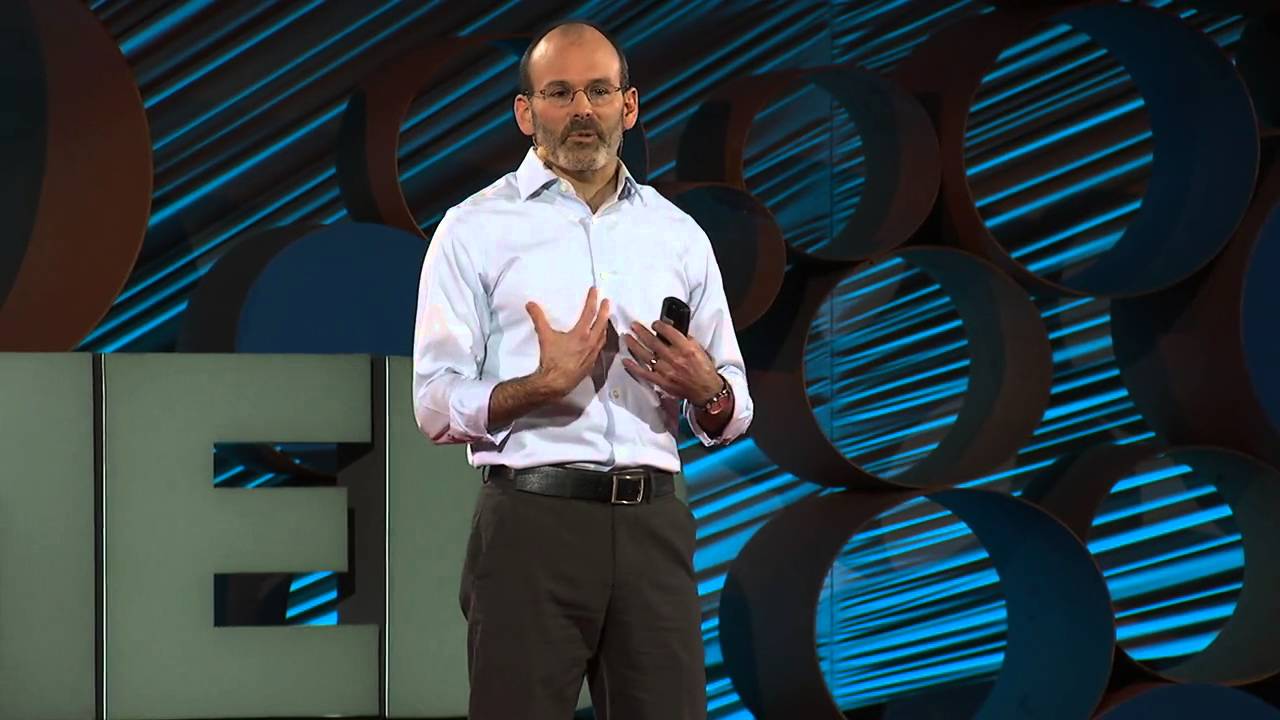
"How to Break Bad Habits Using Mindfulness Techniques" · TED · 9 min · 12.1M views · 2016
In short: Mindfulness breaks bad habits by bringing curiosity to cravings, which helps you become disenchanted with the behavior and let it go.
Building good habits is half the work, and this talk covers the other half: getting rid of bad ones. It answers how to handle cravings in the moment, using smoking and everyday phone checking as examples.
Key takeaways
The brain is wired to seek rewards and form habits through positive and negative reinforcement, which can lead to smoking and overeating.
Curiosity helps manage cravings by breaking them into bite-sized moments instead of treating them as one overwhelming experience.
Mindfulness training was found to be twice as effective as gold standard therapy in helping people quit smoking, according to the talk.
The same approach applies to everyday loops such as checking email when bored or answering text messages compulsively while driving.
Watch on YouTube · Read the summary and Q&A
10. Which Study Habits Should You Quit?

"What Are the Worst Study Habits to Quit Immediately?" · studyquill · 14 min · 2.7M views · 2020
In short: Quit multitasking, passive studying like re-reading notes, studying in bed, and studying without clear goals, and ask for help when you need it.
The list ends by applying everything to the habit most students care about: studying. It answers which specific study behaviors to stop and what to do instead, so you can put the earlier frameworks to use right away.
Key takeaways
Multitasking hinders focus and productivity, so working on one task at a time is the better approach to studying.
Passive methods such as re-reading notes do not promote proper comprehension and recall of the material being studied.
Studying in bed can lead to drowsiness and distraction, which is why a dedicated study space works better.
Setting clear goals and making concrete study plans leads to more efficient use of time and better results.
Watch on YouTube · Read the summary and Q&A
Frequently asked questions
How long does it take to build a habit?
A study by psychologist Philippe Lally found an average of 66 days to form a habit, and estimates range from about 2 to 8 months. The popular 21-day figure lacks scientific support.
What are the four stages of a habit?
Habits form through four stages: cue, craving, response, and reward. James Clear recommends making good habits obvious, attractive, easy, and satisfying.
Are systems better than goals for building habits?
Goals provide direction, but systems drive progress and consistency. Focusing on the daily process rather than a fixed target leads to more sustained progress.
What is habit stacking?
Habit stacking means attaching a new habit to one you already do, which makes the new behavior easier to adopt.
How do you break a bad habit?
Bring curiosity and awareness to the craving so you become disenchanted with the behavior, and make the bad habit harder to do by adding friction to it.
What should I do if I miss a day of my habit?
Follow the Two Day Rule: you can take one day off, but never more than one day in a row. This keeps you consistent and prevents slumps.
How many habits should I try to build at once?
Build one habit at a time, because taking on too many at once often leads to failure. Matt D'Avella suggests running each one as a 30-day experiment.
What time of day is best for a hard habit?
Andrew Huberman places challenging habits in the first 0 to 8 hours after waking, when norepinephrine and dopamine are higher and limbic friction is easier to overcome.
What are the worst study habits?
The worst study habits include multitasking, passive studying such as re-reading notes, studying in bed, studying without clear goals, and not asking for help.
How to use this list
Watch the videos in the listed order. The first five explain what habits are, how they form, and how long they take, and the last five turn that into choices and rules for picking, keeping, and breaking habits. If you are short on time, start with the 6-minute Big Think video, then the 9-minute TEDx talk on how long habit change really takes. Save the long conversations with James Clear and Andrew Huberman for when you can take notes, and try one habit at a time as you go.
Related lists
💡 Want summaries and transcripts for any YouTube video? Try YouTube Summary with ChatGPT & Claude.