What Is the Liquid Rope Coil Effect in Honey?
TL;DR
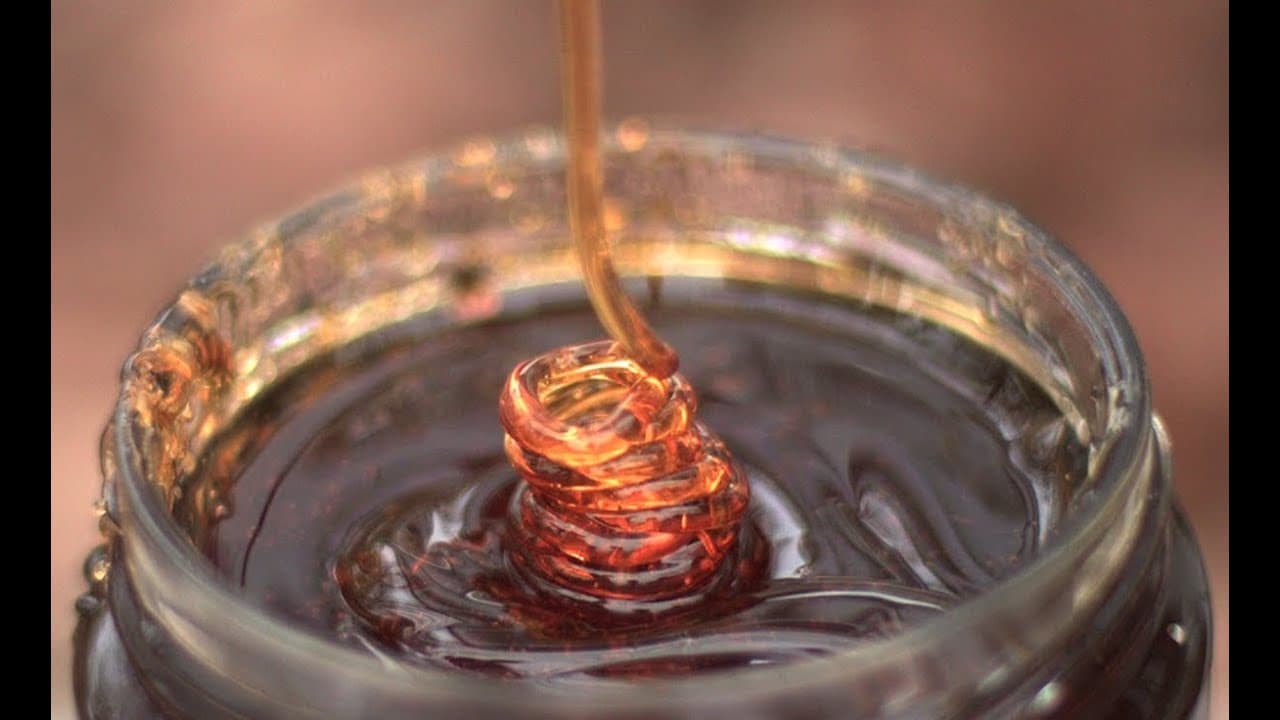
The liquid rope coil effect occurs when a viscous fluid, like honey, forms coiling patterns due to its viscosity as it is dripped. This phenomenon can be observed in various flow regimes, including viscous and gravitational, where the interactions of surface tension and fluid dynamics create mesmerizing shapes. Experimenting with viscous liquids, such as shampoo, can help visualize this effect in everyday situations.
Transcript
Hey it's me Destin welcome to Smarter Every Day and today we're going to show you some pretty cool high speed, and it has nothing to do with all those assault rifles. It's actually much sweeter than that, literally. Check this out. It is a jar of honey. So, I know this sounds a little strange but we've got a high speed camera setup, and we are go... Read More
Key Insights
- 💩 The liquid rope coil effect occurs due to the viscosity of the fluid, causing it to pile up and form coiling patterns.
- 💁 Different flow regimes, such as viscous, gravitational, and inertial, demonstrate varying behaviors in the formation of the liquid rope coil effect.
- ✋ Viscosity is a crucial factor in determining the coiling pattern, with higher viscosity yielding more pronounced coils.
- 💐 The liquid rope coil effect remains mysterious in some instances, with erratic behaviors occurring between different flow regimes.
- 🫗 Understanding fluid dynamics and viscosity can provide insights into various phenomena, such as the liquid rope coil effect.
- 🫵 The video encourages viewers to experiment with the effect using viscous fluids like shampoo in their own showers.
- 👨🔬 Further research and study have been conducted on the liquid rope coil effect, providing a complex understanding of its behavior.
Install to Summarize YouTube Videos and Get Transcripts
Explore YouTube Video Summarizer or Get YouTube Transcript Extractor
Questions & Answers
Q: What is the liquid rope coil effect?
The liquid rope coil effect occurs when a viscous fluid, such as honey, is dripped down from a chopstick, causing it to pile up and form mesmerizing coiling patterns due to the fluid's viscosity.
Q: What variables and equations are involved in describing the liquid rope coil effect?
The variables include height (H), mass flow rate (Q), initial and final radius (a0 and a1), and angular coiling frequency (omega). Equations describe the relationship between these variables and the behavior of the liquid flow.
Q: How does viscosity affect the liquid rope coil effect?
Viscosity, which measures the thickness and resistance to shear stress of a fluid, plays a crucial role in determining the behavior of the liquid rope coil effect. As viscosity increases, the coiling becomes more pronounced.
Q: What are the different flow regimes discussed in the video?
The video discusses four flow regimes: viscous flow, gravitational flow, inertial flow, and erratic flow. Each regime exhibits distinct behaviors based on the height and viscosity of the fluid.
Summary & Key Takeaways
-
The video showcases the liquid rope coil effect using honey and a high-speed camera, highlighting the piling up of the liquid due to its viscosity.
-
The narrator explains the variables and equations involved in describing the coil and tail sections of the liquid, as well as the properties of viscosity and surface tension.
-
Different flow regimes are discussed, including viscous, gravitational, inertial, and erratic, each exhibiting unique behaviors in the formation of the liquid rope coil effect.
Read in Other Languages (beta)
Share This Summary 📚
Summarize YouTube Videos and Get Video Transcripts with 1-Click
Try YouTube Summary with ChatGPT & Claude or YouTube Transcript Generator
Explore More Summaries from SmarterEveryDay 📚


Summarize YouTube Videos and Get Video Transcripts with 1-Click
Try YouTube Summary with ChatGPT & Claude or YouTube Transcript Generator