How Did Napoleon Bonaparte Rise to Power in France?
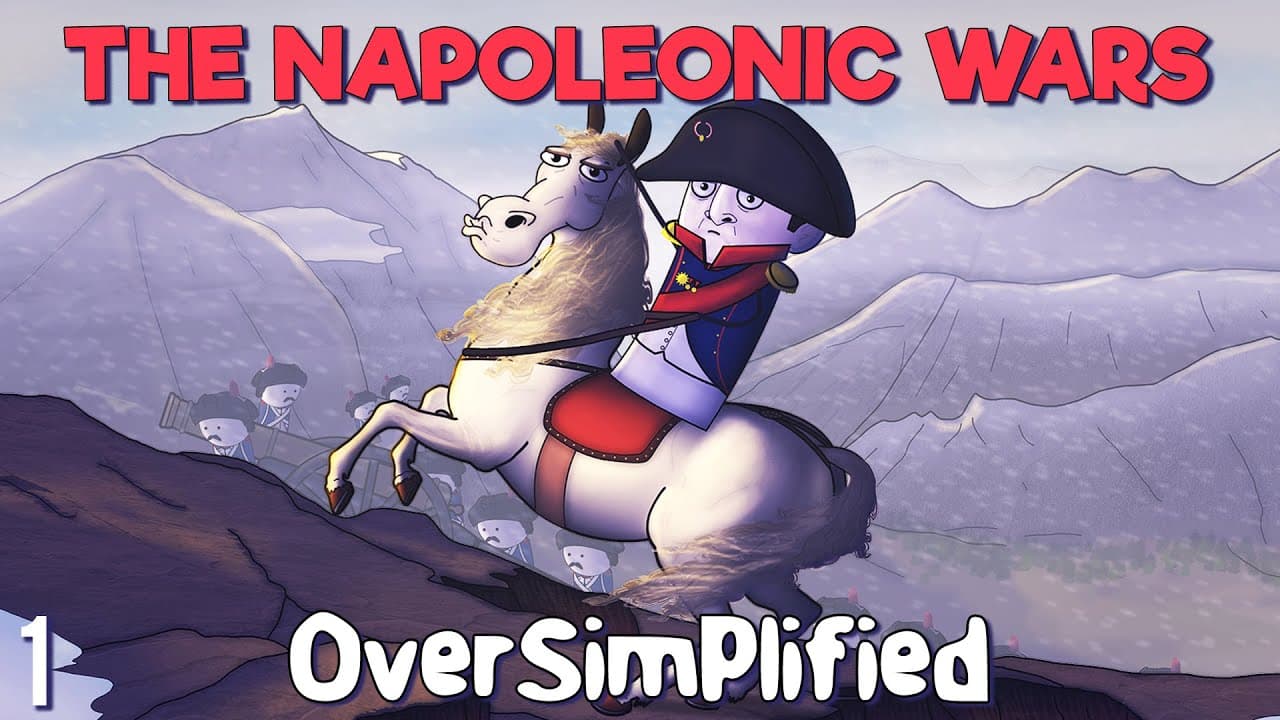
TL;DR
Napoleon Bonaparte rose to power through a combination of military genius and strategic reforms during the chaotic French Revolution. His ability to adapt and lead, particularly through key battles like Austerlitz, solidified his reputation, while his reforms aimed to stabilize France's economy and government. His marriage to Josephine also played a role in his social ascent, despite personal challenges.
Transcript
- This video was made possible by NordVPN. Stay safe online by clicking the link below and get a huge discount off a two year plan with a risk-free 30 day money back guarantee. Also, why not grab yourself a character pin of the little corporal himself before they sell out and big shout out to the patrons head on over to learn about benefits such as... Read More
Key Insights
- Napoleon Bonaparte's early life on Corsica shaped his initial anti-French sentiments, but his father's acceptance of French rule created familial tension.
- Despite being bullied at military school for his Corsican accent and family's lack of wealth, Napoleon excelled in academics, particularly math and geography.
- The French Revolution provided Napoleon an opportunity to rise through military ranks, as he defended the revolution and gained recognition for his military prowess.
- Napoleon's marriage to Josephine was strategic for social status, but her infidelity and his own affairs complicated their relationship.
- Napoleon's military strategies, including speed and surprise, were key to his successes, as demonstrated in battles like Marengo and Austerlitz.
- Napoleon's reforms in France included economic stabilization, legal codification, and educational improvements, although some rights, especially for women, were curtailed.
- Napoleon's diplomatic maneuvers and military conquests expanded French influence, leading to the dissolution of the Holy Roman Empire.
- Despite his successes, Napoleon faced challenges from coalitions of European powers, but his strategic brilliance often led to French victories.
Install to Summarize YouTube Videos and Get Transcripts
Explore YouTube Video Summarizer or Get YouTube Transcript Extractor
Questions & Answers
Q: How did Napoleon's early life influence his career?
Napoleon's early life on Corsica, a relatively insignificant island, instilled in him a sense of ambition and determination. His father's acceptance of French rule and his own anti-French sentiments created a complex relationship with his identity, motivating him to rise through military ranks and prove himself.
Q: What role did the French Revolution play in Napoleon's rise?
The French Revolution dismantled the old social hierarchy, allowing individuals like Napoleon to rise based on talent rather than nobility. Napoleon seized this opportunity, defending the revolution and earning recognition for his military skills, which facilitated his rapid ascent to power.
Q: How did Napoleon's marriage to Josephine affect his personal and public life?
Napoleon's marriage to Josephine was partly strategic, aimed at elevating his social status. Despite their mutual infidelities, the marriage was significant in shaping his personal life. Josephine's connections and social standing initially aided Napoleon, but their relationship's complexities also posed personal challenges.
Q: What were some key military strategies employed by Napoleon?
Napoleon was known for his speed and surprise tactics, often reorganizing his army into independent corps that could move quickly and live off the land. This allowed him to outmaneuver and isolate enemies, as seen in battles like Marengo and Austerlitz, leading to decisive victories.
Q: How did Napoleon reform France during his rule?
Napoleon implemented significant reforms in France, including establishing a national bank, currency reform, and a centralized legal code. He improved education and infrastructure, although he rolled back some rights, particularly for women, to ensure stability and control over the newly formed Republic.
Q: What was Napoleon's approach to religion in France?
Napoleon restored the Catholic Church's presence in France with power limitations, recognizing its importance to many citizens. He also ensured freedom for other religions, using religious tolerance as a tool for social stability, although his motivations were more strategic than purely ideological.
Q: How did Napoleon's military campaigns affect European politics?
Napoleon's military campaigns significantly altered European politics by expanding French influence and territorial control. His victories led to the dissolution of the Holy Roman Empire and the establishment of French sister republics, challenging the traditional monarchies and spreading revolutionary ideals.
Q: What challenges did Napoleon face from European coalitions?
Despite his military successes, Napoleon faced continuous challenges from coalitions of European powers, such as the Third and Fourth Coalitions. These coalitions aimed to curb French expansion, but Napoleon's strategic brilliance and rapid maneuvers often resulted in French victories, maintaining his dominance.
Summary & Key Takeaways
-
Napoleon Bonaparte's journey from a Corsican family to becoming the Emperor of France is marked by his military genius and strategic reforms. His early life was influenced by anti-French sentiments, but he rose through the ranks during the French Revolution.
-
Napoleon's marriage to Josephine was both a personal and strategic decision, though it was marred by infidelity. His military campaigns, such as the Battle of Austerlitz, showcased his tactical brilliance and solidified his reputation as a formidable leader.
-
Napoleon's reforms in France focused on stabilizing the economy, legal system, and education, while also navigating complex European politics. His ambition and strategic prowess led to significant territorial gains and the establishment of French influence across Europe.
Read in Other Languages (beta)
Share This Summary 📚
Summarize YouTube Videos and Get Video Transcripts with 1-Click
Try YouTube Summary with ChatGPT & Claude or YouTube Transcript Generator
Explore More Summaries from OverSimplified 📚



Summarize YouTube Videos and Get Video Transcripts with 1-Click
Try YouTube Summary with ChatGPT & Claude or YouTube Transcript Generator