How far would you go for a $500,000 prize?

TL;DR
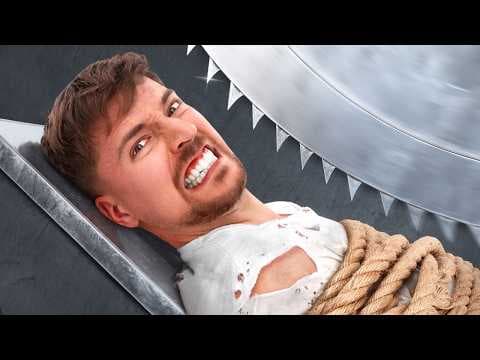
The video follows a professional stunt performer risking life-threatening traps to win cash, starting with $250,000 and climbing to higher prizes by surviving increasingly dangerous challenges such as fire, a cannon, and a meteor finale. The core idea is to maximize the prize by enduring dangerous stunts and timing risks.
Transcript
Would you risk burning alive for half a million dollars? Yes. Let's do it, man. Ok, good luck man, you're braver than me. This is gonna be crazy. This man is literally in a burning building. There's fire around the door! The entire room is on fire. Oh my gosh, this is the craziest thing we’ve ever filmed. And behind him is $500,000, which he could ... Read More
Key Insights
- Fire traps are used to raise tension and demonstrate physical vulnerability while money is at stake.
- The participant progresses by choosing higher cash values and attempting harder tasks that test timing, precision, and fear management.
- Stunt calibration includes dummy runs to dial in distance, angle, and speed for the main shot.
- Personal motivation can influence risk tolerance and drive performance under pressure.
- Each success increases the prize pool, incentivizing riskier maneuvers and longer sequences of stunts.
- The narrative highlights real stakes such as a family member’s health to justify risks and emotional investment.
- The production uses high stakes visuals like burning money and explosive fireworks to create dramatic payoff.
- The final challenge combines multiple elements and requires precise execution to avoid losing everything.
- More videos from this channel:
- More from this channel: MrBeast
Install to Summarize YouTube Videos and Get Transcripts
Explore YouTube Video Summarizer or Get YouTube Transcript Extractor
Questions & Answers
Q: How to survive a sequence of deadly stunts for cash rewards
Surviving a sequence of deadly stunts for cash rewards involves careful risk assessment, preparation, and training. Viewers should note that the participant negotiates escalating challenges, reads the environment to gauge danger, and relies on practice runs to calibrate movements. The process emphasizes controlled decision making, timing, and adherence to safety protocols.
Q: What motivates a stunt performer to take extreme risks for money
Motivation can come from personal reasons such as supporting a family member, medical expenses, or long term security, which gives meaning to the risk. In the video the contestant cites a parent’s health as a driver, showing how emotional stakes can influence risk tolerance and commitment in high pressure performance situations.
Q: Why use dummy runs before the final stunt in a dangerous challenge
Dummy runs are used to map distance, angle, and timing without risking the final prize. They allow the performer and crew to observe dynamics, adjust equipment, and choose safe yet effective parameters. This approach reduces unforeseen errors and helps ensure that the last attempt has the best possible chance of success.
Q: How does escalating prize money affect decision making in risky tasks
Escalating prize money tends to shift risk assessment by increasing the perceived payoff of successful risk taking. Participants may choose more dangerous routes or bolder moves when more money is on the line, balancing fear with potential reward and often requiring rapid recalibration of strategies under pressure.
Q: What safety considerations are implied in a ‘fire traps’ video format
Safety considerations implied include controlled environments, protective measures for performers, and emergency protocols. Although the scenes depict dangerous elements like fire and explosions, production typically plans for rapid response, uses specialized equipment, and relies on trained professionals to manage risk and minimize harm.
Q: How do performers cope with fear during high risk stunts
Performers cope with fear through preparation, mental focus, and controlled exposure to risk. Techniques may include breathing strategies, visualization, stepwise practice, and choreography that distributes risk across multiple team members. Maintaining composure helps ensure precise execution during critical moments.
Q: What storytelling elements enhance the intensity of extreme stunts on YouTube
Storytelling elements that boost intensity include personal motivation, high stakes, dramatic timing, and clear progression through increasingly difficult challenges. Visuals such as fire, explosions, and dramatic music create a sense of danger, while real incentives and personal connections provide emotional engagement for the audience.
Q: What is the impact of viewing extreme stunts on audiences
Viewing extreme stunts can evoke adrenaline and curiosity, encouraging viewers to study risk management and resilience. It can also raise awareness of the effort and planning behind performances, while highlighting the contrast between controlled professional risk and everyday danger. Responsible production and clear safety messaging help contextualize the spectacle.
Summary & Key Takeaways
-
A professional stuntman is placed inside a burning room with the goal of retrieving cash while escaping before a structure collapses and flames spread, illustrating the high stakes and physical danger involved.
-
The format alternates between escalating cash options and perilous challenges, including precise jumps, cannon shots, and a grappling hook task that directly ties risk to reward, culminating in a large final prize.
-
The video emphasizes personal motivation, such as supporting a parent, to justify the calculated risks, while also showcasing teamwork and test runs that calibrate the stunts before the final challenge.
Read in Other Languages (beta)
Share This Summary 📚
Summarize YouTube Videos and Get Video Transcripts with 1-Click
Try YouTube Summary with ChatGPT & Claude or YouTube Transcript Generator
Explore More Summaries from MrBeast 📚




Summarize YouTube Videos and Get Video Transcripts with 1-Click
Try YouTube Summary with ChatGPT & Claude or YouTube Transcript Generator