What Was the Spanish Inquisition and Its Impact?
TL;DR
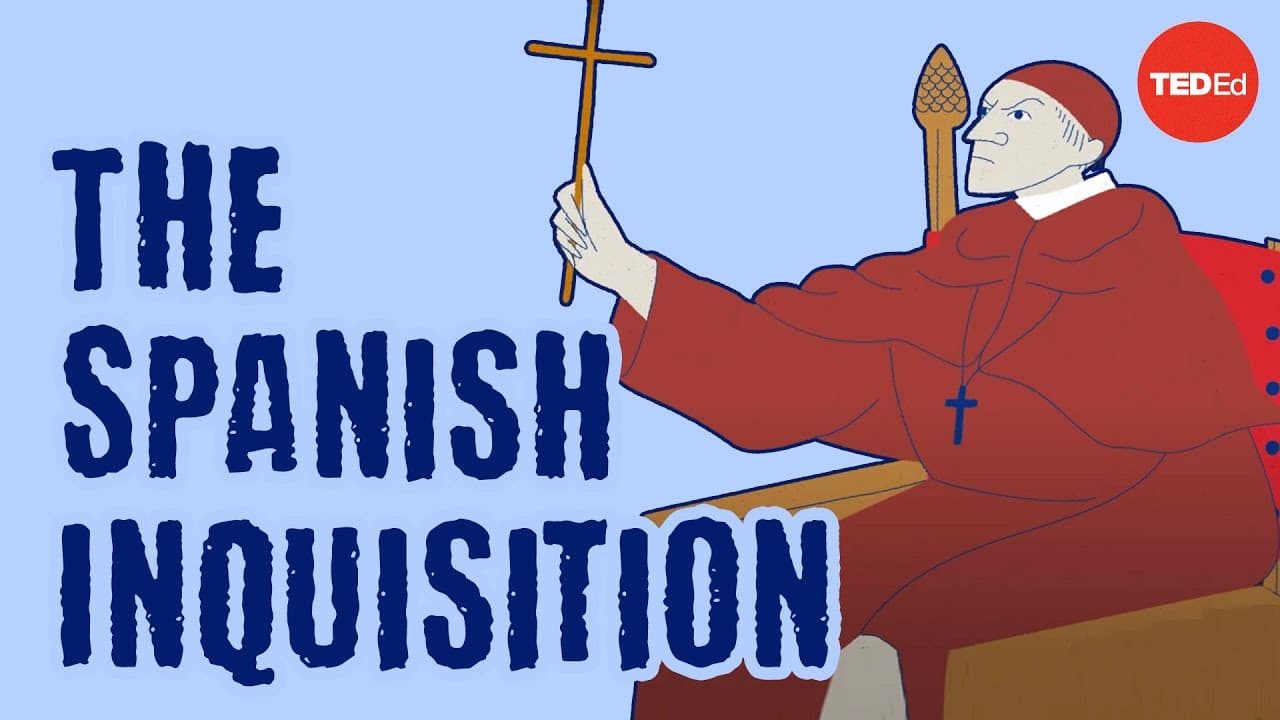
The Spanish Inquisition lasted over 350 years, targeting Jews, Muslims, and conversos with severe penalties for heresy. It began in 1478 under Ferdinand and Isabella, leading to thousands being expelled, tortured, or killed. The Inquisition created a climate of fear and paranoia, significantly impacting Spanish society and its religious landscape.
Transcript
It’s 1481. In the city of Seville, devout Catholics are turning themselves in to the authorities. They’re confessing to heresy— failure to follow the beliefs of the Catholic Church. But why? The Spanish Inquisition has arrived in Seville. The Inquisition began in 1478, when Pope Sixtus IV issued a decree authorizing the Catholic monarchs, Ferdin... Read More
Key Insights
- 😣 The Spanish Inquisition targeted non-Catholics, including Jews, Muslims, and converts, resulting in severe punishments and societal impacts.
- 😨 Punishments ranged from exile to burning at the stake, with paranoia and fear driving people to report each other.
- 💯 The Spanish Inquisition lasted for over 350 years, impacting hundreds of thousands of individuals and shaping Spain's religious history.
Install to Summarize YouTube Videos and Get Transcripts
Explore YouTube Video Summarizer or Get YouTube Transcript Extractor
Questions & Answers
Q: What prompted the arrival of the Spanish Inquisition in Seville?
The Spanish Inquisition began in 1478 after a decree from Pope Sixtus IV, giving monarchs the power to root out heresy, leading to its arrival in Seville in 1481.
Q: What were the punishments imposed by the Spanish Inquisition?
Punishments included imprisonment, exile, wearing a garment marking them as sinners, and the severe punishment of burning at the stake for unrepentant heretics.
Q: How did the Spanish Inquisition target different subsets of the population?
Initially targeting Jews, the focus shifted to conversos and later to moriscos, forcibly expelling or persecuting them based on suspicions of secret religious practices.
Q: What led to the formal end of the Spanish Inquisition in 1834?
Queen Isabella II formally ended the Spanish Inquisition in 1834 after over 350 years, marking a shift from Catholic dominance to embracing enlightenment values in Spain.
Summary & Key Takeaways
-
In 1481, the Spanish Inquisition arrived in Seville, targeting heretics who failed to follow Catholic beliefs.
-
Tribunals led by a Grand Inquisitor persecuted non-Catholics, forcing them to convert or face severe punishments.
-
Over 350 years, thousands were expelled, tortured, and killed, leaving lasting impacts on Spanish society.
Read in Other Languages (beta)
Share This Summary 📚
Summarize YouTube Videos and Get Video Transcripts with 1-Click
Try YouTube Summary with ChatGPT & Claude or YouTube Transcript Generator
Explore More Summaries from TED-Ed 📚


Summarize YouTube Videos and Get Video Transcripts with 1-Click
Try YouTube Summary with ChatGPT & Claude or YouTube Transcript Generator