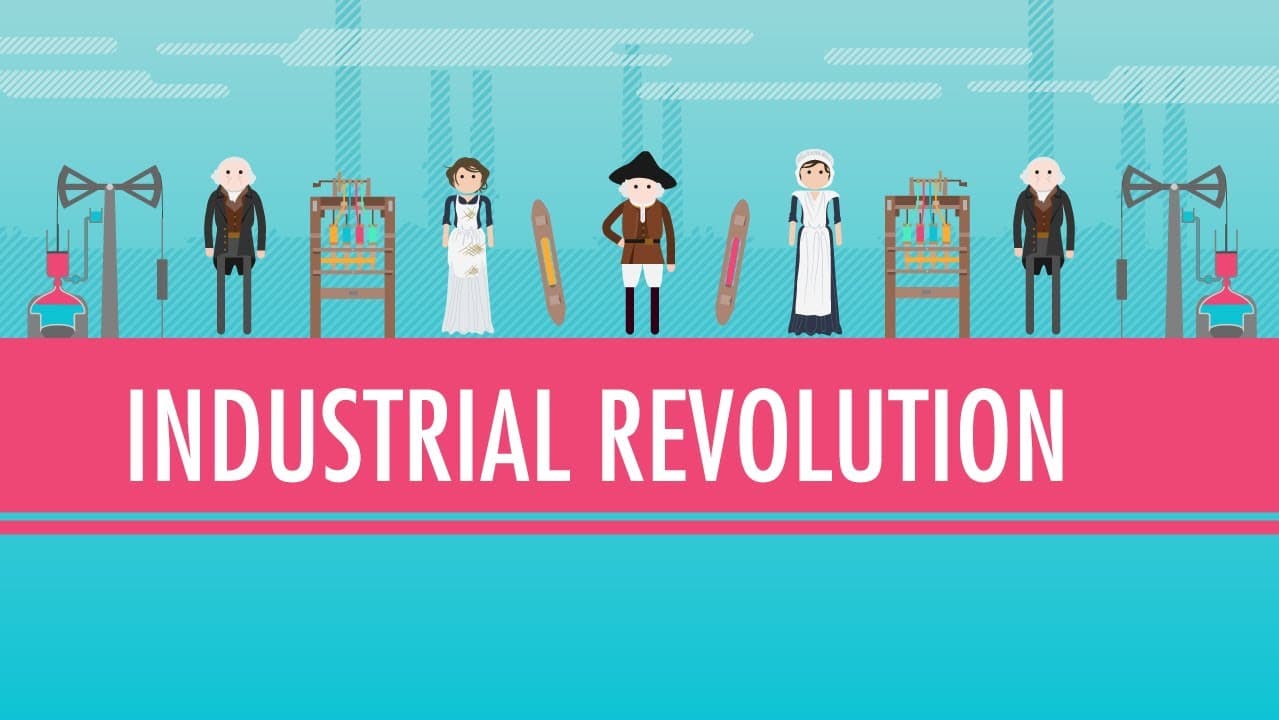
Coal, Steam, and The Industrial Revolution: Crash Course World History #32
TL;DR
This video explains the profound impact of the Industrial Revolution, which transformed societies by introducing mechanized production and new energy sources. It explores why this revolution began in Britain and examines cultural and economic factors, such as coal availability and high wages, that contributed to its onset. The video also contrasts Europe's development with China and India's pre-industrial conditions.
Transcript
Hi, I’m John Green; this is Crash Course World History, and today we’re going to discuss the series of events that made it possible for you to watch Crash Course. And also made this studio possible. And made the warehouse containing the studio possible. A warehouse, by the way, that houses stuff for warehouses. That’s right, it’s time to talk about... Read More
Key Insights
- The Industrial Revolution was a transformative period between 1750 and 1850 that introduced mechanized production and new energy sources, fundamentally altering society.
- Before the Industrial Revolution, 80% of the global population was engaged in farming; today, in the U.S., less than 1% are farmers, highlighting the revolution's impact on labor distribution.
- Key technological advancements, such as the flying shuttle and steam engine, were pivotal in enhancing production efficiency, especially in the British textile industry.
- The availability of coal in Britain played a crucial role in the Industrial Revolution, providing a cheap and abundant energy source that powered steam engines and other innovations.
- High wages in Britain incentivized manufacturers to develop labor-saving technologies, contrasting with countries like India, where low wages did not necessitate such innovations.
- China, despite its rich history of invention and large population, did not industrialize like Britain due to different economic structures and resource availability.
- Indian cotton production significantly influenced British industrialization by creating a market demand and inspiring technological advancements to compete with Indian textiles.
- The interconnected nature of industrial advancements made it difficult to pinpoint a single cause for the revolution, with cultural, economic, and geographic factors all playing roles.
Install to Summarize YouTube Videos and Get Transcripts
Explore YouTube Video Summarizer or Get YouTube Transcript Extractor
Questions & Answers
Q: What was the primary catalyst for the Industrial Revolution according to the video?
The primary catalyst for the Industrial Revolution, as highlighted in the video, was the availability of cheap and accessible coal in Britain. This abundant energy source powered steam engines and other technological innovations, facilitating mechanized production and transforming industries.
Q: How did the Industrial Revolution impact labor distribution globally?
The Industrial Revolution drastically altered global labor distribution by reducing the reliance on agricultural work. Before the revolution, about 80% of the world's population engaged in farming. Today, particularly in the United States, less than 1% of people are farmers, illustrating the shift towards industrial and service-oriented economies.
Q: Why was Britain able to lead the Industrial Revolution despite similar conditions in other countries?
Britain led the Industrial Revolution due to a combination of factors, including the availability of coal, high wages, and a culture that encouraged innovation. These conditions incentivized the development of labor-saving technologies, whereas countries like China and India, despite having large populations and rich histories, did not have the same economic pressures or resource availability.
Q: What role did the British textile industry play in the Industrial Revolution?
The British textile industry was central to the Industrial Revolution, driven by innovations like the flying shuttle and spinning jenny, which increased production speed and efficiency. The demand for yarn spurred further technological advancements, and mechanization was enhanced by water and steam power, establishing textiles as a cornerstone of industrial growth.
Q: How did Indian cotton production influence British industrialization?
Indian cotton production significantly influenced British industrialization by creating a high demand for cotton textiles, which were more comfortable and cheaper than woolens. This demand prompted British manufacturers to invest in machinery and adopt Indian techniques to compete, highlighting the global interconnectedness of industrial developments.
Q: What were some technological advancements during the Industrial Revolution?
Technological advancements during the Industrial Revolution included the flying shuttle, spinning jenny, water frame, and steam engine. These innovations increased production efficiency, particularly in textiles, and were powered by new energy sources like coal, leading to mechanized manufacturing processes and expanding industrial capabilities.
Q: Why is the Industrial Revolution considered more revolutionary than other contemporary revolutions?
The Industrial Revolution is considered more revolutionary because it fundamentally changed how societies functioned, affecting every aspect of daily life. Unlike political revolutions that altered governance structures, the Industrial Revolution introduced mechanization, new energy sources, and production methods that reshaped economies and social structures globally.
Q: What challenges exist in identifying the root cause of the Industrial Revolution?
Identifying the root cause of the Industrial Revolution is challenging due to the interconnected nature of technological, economic, and cultural factors. Each potential cause, such as coal availability or high wages, is linked to deeper underlying causes, making it difficult to isolate a single driving factor for this complex historical event.
Summary & Key Takeaways
-
The Industrial Revolution, occurring between 1750 and 1850, revolutionized production with machines and new energy sources, transforming societal structures. Britain led this change due to cheap coal and high wages, which encouraged innovation.
-
Technological advancements like the steam engine and flying shuttle were crucial in the Industrial Revolution, particularly in the British textile industry. These innovations were interconnected, creating a feedback loop that spurred further development.
-
The Industrial Revolution's origins in Britain can be attributed to factors like coal availability and economic incentives. However, similar conditions in China and India did not lead to industrialization, highlighting the complex interplay of global factors.
Read in Other Languages (beta)
Share This Summary 📚
Summarize YouTube Videos and Get Video Transcripts with 1-Click
Try YouTube Summary with ChatGPT & Claude or YouTube Transcript Generator
Explore More Summaries from CrashCourse 📚





Summarize YouTube Videos and Get Video Transcripts with 1-Click
Try YouTube Summary with ChatGPT & Claude or YouTube Transcript Generator