Making anisole
TL;DR
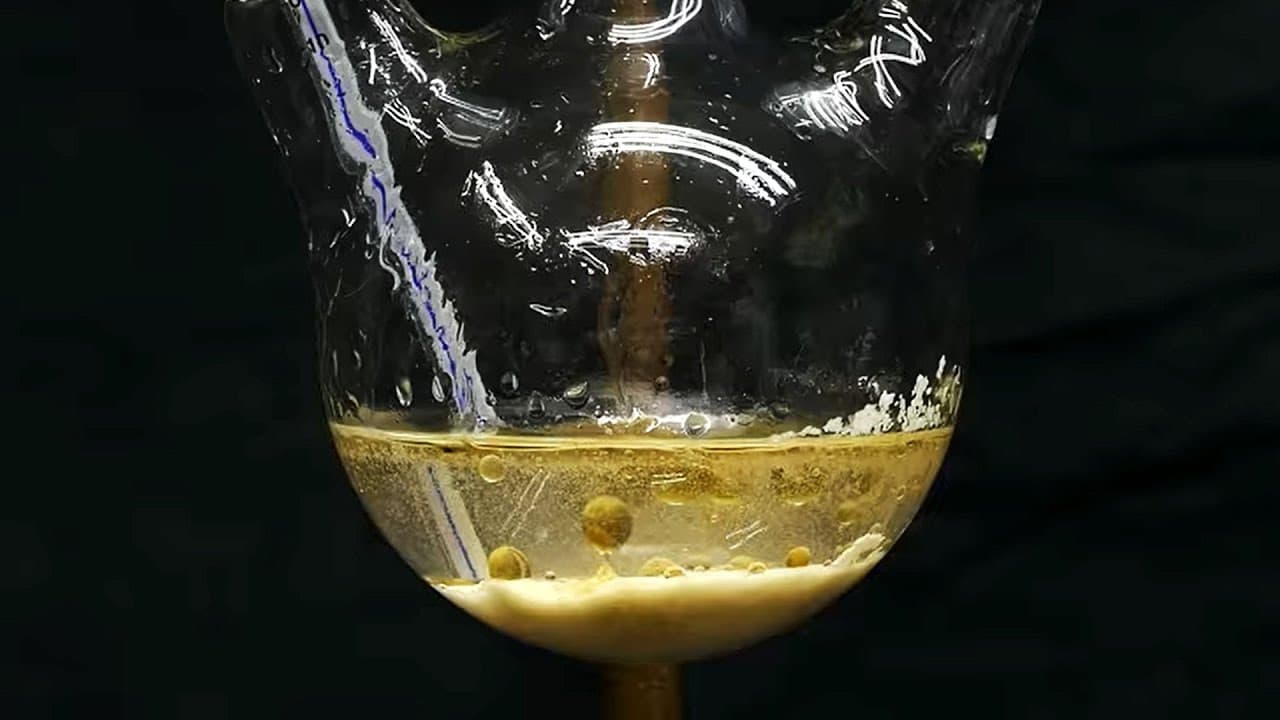
This video demonstrates the synthesis and distillation of anisole, a precursor to perfumes and pharmaceuticals, which will be used to make a sweeter sugar substitute.
Transcript
today we're making anisole which is a somewhat nice smelling organic liquid anisole itself doesn't have many direct applications and it's mostly used as a precursor to perfumes and pharmaceuticals I plan to use the anisole to make something called an ethyl which is 13 times sweeter than regular sugar the reaction that we'll be doing to make the ani... Read More
Key Insights
- ❓ Anisole is primarily used as a precursor in the production of perfumes and pharmaceuticals.
- 🤲 The Williamson ether synthesis is a common method to synthesize anisole.
- 🤩 Sodium methoxide, formed from the reaction between sodium and methanol, is a key reagent in the synthesis process.
Install to Summarize YouTube Videos and Get Transcripts
Explore YouTube Video Summarizer or Get YouTube Transcript Extractor
Questions & Answers
Q: What is the purpose of the sodium metal in the synthesis of anisole?
Sodium metal reacts with methanol to form sodium methoxide, which is a key reagent in the production of anisole. It acts as a strong base and deprotonates the phenol.
Q: Why is a high-efficiency condenser necessary for the reaction?
The reaction between sodium and methanol is highly exothermic and generates a lot of heat. A high-efficiency condenser, such as a dim Roth or Friedrich style condenser, is needed to prevent methanol from boiling off and ensure proper heat control.
Q: How is anisole separated from the reaction mixture after synthesis?
Anisole is separated through a series of distillations. First, methanol is distilled off, followed by the collection of anisole in a receiving flask. Water and dichloromethane are then used to wash out any remaining impurities before the final distillation of anisole.
Q: How is iodine recovered from the reaction mixture?
Iodine is recovered from the reaction mixture through a series of steps. The aqueous waste is acidified with hydrochloric acid, followed by the addition of hydrogen peroxide. This produces purple iodine vapors, which are then separated through vacuum filtration and further washed with water and methanol.
Summary & Key Takeaways
-
Anisole is synthesized using the Williamson ether synthesis, involving sodium metal, methyl iodide, phenol, and methanol.
-
The reaction produces sodium methoxide and hydrogen gas, which reacts with phenol and methyl iodide to form anisole and sodium iodide.
-
After distillation and washing steps, pure anisole is obtained with a yield of 55%.
Read in Other Languages (beta)
Share This Summary 📚
Summarize YouTube Videos and Get Video Transcripts with 1-Click
Try YouTube Summary with ChatGPT & Claude or YouTube Transcript Generator
Explore More Summaries from NileRed 📚
Summarize YouTube Videos and Get Video Transcripts with 1-Click
Try YouTube Summary with ChatGPT & Claude or YouTube Transcript Generator