The History of Black History Month
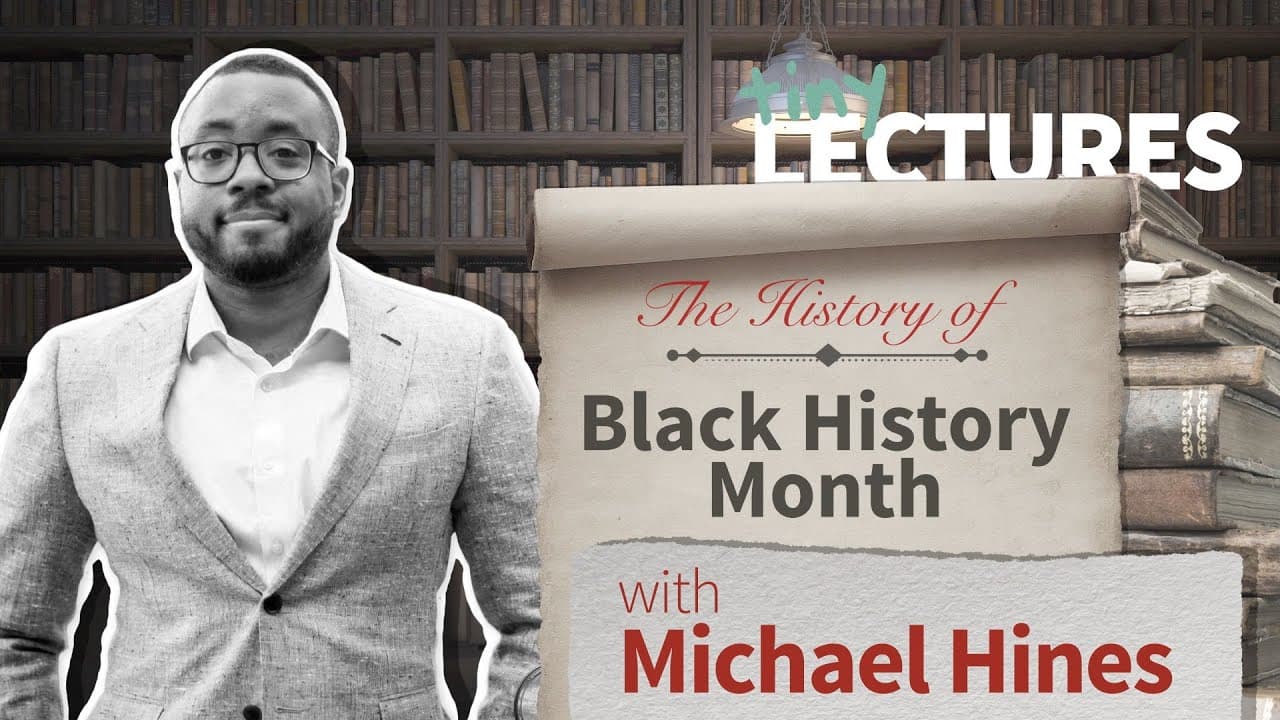
TL;DR
Black History Month, originally known as Negro History Week, was created to challenge traditional curricula and promote social and political equality. While some argue its relevancy has diminished, research shows the need to honor diverse voices and provide historical context in classrooms.
Transcript
- It's February, so many teachers and schools are celebrating Black History Month, but there are still many misconceptions and misunderstandings about the past, present, and future of this celebration. So today, I thought we'd go back to the beginning. Hi, this is Mike Hines and I'm a professor here at the Stanford Graduate School of Education wher... Read More
Key Insights
- 🖤 Negro History Week, initiated by Carter G. Woodson in 1926, served as a direct challenge to the degradation of Black people in traditional curricula.
- 😯 Carter G. Woodson's Association for Negro Life and History aimed to disseminate information on Black history through various means, including textbooks, journals, and speeches.
- 🥳 The celebration of Black History Month evolved to reflect the involvement of entire communities, emphasizing the importance of lay people preserving and presenting their own histories.
- 🖤 Critics argue that progress has made Black History Month irrelevant, but research shows that schools still fail to honor diverse voices and provide historical context.
- 🎆 Black History Month continues to be a celebration, a call to action, and a reminder of the work that still needs to be done to promote equality and challenge dominant narratives.
- 👶 New and emerging movements for racial justice highlight the need for historical context, which schools often overlook.
- 💨 Carter G. Woodson believed in teaching in ways that honor and elevate all students, with the ultimate goal of eliminating the need for Black History Month.
Install to Summarize YouTube Videos and Get Transcripts
Explore YouTube Video Summarizer or Get YouTube Transcript Extractor
Questions & Answers
Q: How did Black History Month begin?
Black History Month started as Negro History Week, initiated by Carter G. Woodson in 1926, as a response to the degradation of Black people in traditional curricula.
Q: What was the purpose of Negro History Week?
Negro History Week aimed to challenge existing narratives by promoting the achievements and experiences of Black individuals and calling for social and political equality.
Q: Who played a significant role in shaping the celebration of Black History Month?
Thousands of Black teachers, predominantly women, were instrumental in shaping Black History Month through their work in the classroom, while various communities, including churches, fraternities, sororities, and civic organizations, also contributed.
Q: Is Black History Month still relevant today?
While some argue that progress has rendered Black History Month irrelevant or that singling out Black history is counterproductive to inclusion efforts, research shows that schools still struggle to honor diverse voices and provide historical context in classrooms.
Summary & Key Takeaways
-
Black History Month began as Negro History Week, created by Carter G. Woodson in 1926, to combat the dehumanization of Black people in traditional curricula and advocate for equality.
-
Woodson established the Association for Negro Life and History, which aimed to disseminate information on Black history through various mediums, including journals, textbooks, and speeches.
-
The celebration of Black History Month grew and evolved over time, reflecting the involvement of communities and the changing social climate.
Read in Other Languages (beta)
Share This Summary 📚
Summarize YouTube Videos and Get Video Transcripts with 1-Click
Try YouTube Summary with ChatGPT & Claude or YouTube Transcript Generator
Explore More Summaries from Stanford 📚






Summarize YouTube Videos and Get Video Transcripts with 1-Click
Try YouTube Summary with ChatGPT & Claude or YouTube Transcript Generator