How Trump's Tariff Plan Affects Middle Class Economy
TL;DR
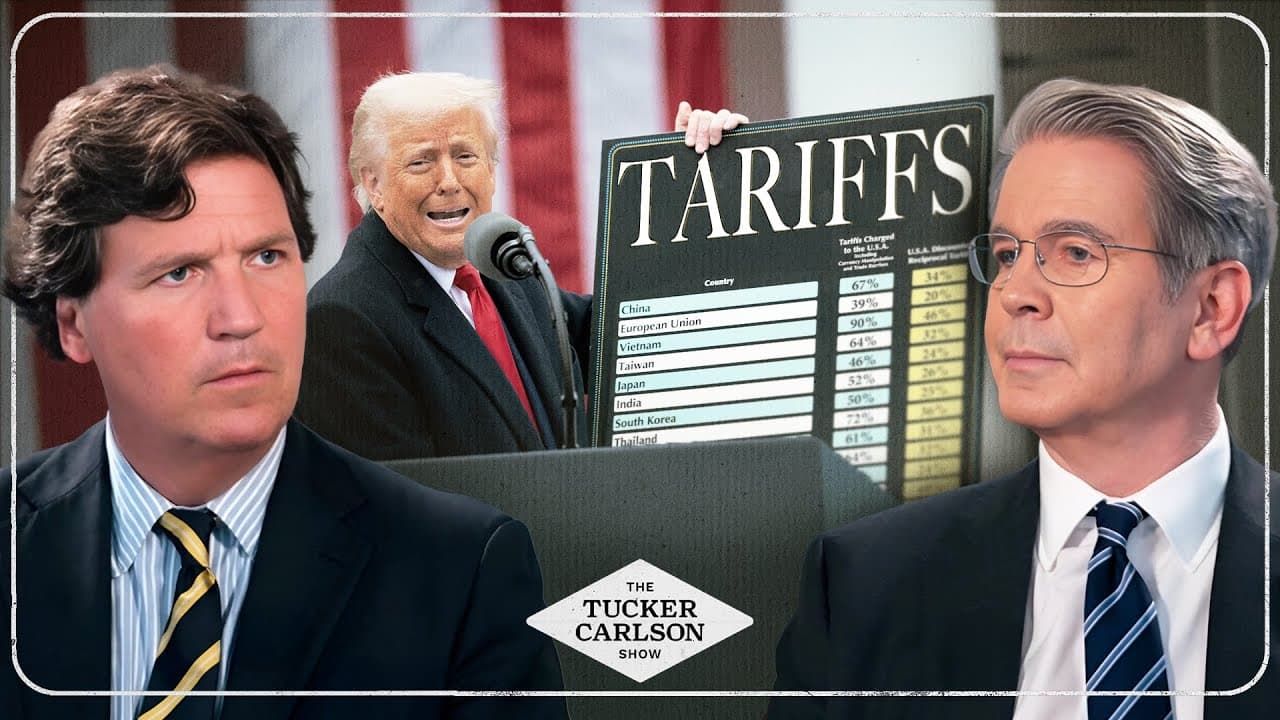
Trump's new tariff plan aims to revitalize the American economy by encouraging domestic manufacturing and reducing reliance on foreign imports. By imposing tariffs, the administration hopes to generate significant revenue, potentially leading to tax cuts for the middle class. The plan also seeks to address economic imbalances with countries like China, promoting national and economic security.
Transcript
Mr. Secretary, thank you very much for joining us. So we're at the Treasury Department, the president had a press conference yesterday next door in which he announced a whole new tariff regime global. He'd been promising to do this, well, for 40 years, really. It came not out of nowhere, but it was clearly his intent all along as stated, but it did... Read More
Key Insights
- Trump's tariff plan is a strategic move to boost domestic manufacturing and reduce dependency on foreign imports.
- Tariffs could potentially generate $300 billion to $600 billion annually, which may fund tax cuts for the middle class.
- The plan aims to address economic imbalances, particularly with China, and promote national security.
- The administration believes that re-industrializing the U.S. will lead to long-term economic benefits despite initial market fluctuations.
- There is skepticism about the immediate effects of tariffs, but the administration is confident in their long-term positive impact.
- The tariffs are part of a broader strategy to enhance economic security and reduce the federal government's borrowing.
- The plan involves encouraging companies to relocate manufacturing to the U.S. to avoid tariffs.
- There are concerns about potential international pushback and retaliation, especially from China.
Install to Summarize YouTube Videos and Get Transcripts
Explore YouTube Video Summarizer or Get YouTube Transcript Extractor
Questions & Answers
Q: How will Trump's tariff plan affect the American economy?
Trump's tariff plan is expected to revitalize the American economy by encouraging domestic manufacturing and reducing reliance on foreign imports. The tariffs aim to generate significant revenue, potentially leading to tax cuts for the middle class. The plan also seeks to address economic imbalances with countries like China, promoting national and economic security.
Q: What is the expected revenue from the tariffs?
The administration anticipates that the tariffs could generate between $300 billion to $600 billion annually. This revenue could be used to fund tax cuts for the middle class and reduce the federal government's borrowing, thereby enhancing economic security.
Q: How does the tariff plan address economic imbalances with China?
The tariff plan targets economic imbalances by imposing tariffs on Chinese imports, encouraging U.S. companies to relocate manufacturing domestically. This approach aims to reduce the trade deficit with China and promote national security by decreasing dependency on foreign imports.
Q: Will the tariffs lead to tax cuts for the middle class?
The administration hopes that the revenue generated from the tariffs will allow for substantial tax cuts for the middle class. By funding government operations through tariff income, the burden on taxpayers could be reduced, leading to potential tax relief.
Q: How might foreign countries react to the new tariffs?
Foreign countries, particularly China, may push back against the tariffs. The administration anticipates potential international retaliation, but believes that the U.S. holds a stronger position due to its trade deficit with these countries. The plan encourages foreign manufacturers to relocate to the U.S. to avoid tariffs.
Q: What are the long-term benefits of re-industrializing the U.S.?
Re-industrializing the U.S. is expected to create jobs, enhance economic security, and reduce trade deficits. By encouraging domestic manufacturing, the administration aims to boost the economy and provide wage gains for American workers, ultimately leading to a more balanced and secure economic landscape.
Q: How does the administration plan to manage potential market fluctuations?
The administration acknowledges the possibility of initial market fluctuations due to the tariffs. However, they are confident that the long-term benefits of re-industrializing the U.S. and enhancing economic security will outweigh any short-term market disruptions. They emphasize the importance of sound economic fundamentals for stability.
Q: What is the administration's stance on the relationship between economic and national security?
The administration views economic security as integral to national security. By reducing dependency on foreign imports and strengthening domestic manufacturing, the tariff plan aims to enhance both economic and national security. This approach seeks to protect American industries and ensure a stable and secure economic environment.
Summary & Key Takeaways
-
Trump's tariff plan is designed to revitalize the U.S. economy by encouraging domestic manufacturing and reducing reliance on foreign imports. The administration hopes the tariffs will generate significant revenue, potentially leading to tax cuts for the middle class. The strategy also aims to address economic imbalances with countries like China.
-
The administration views the tariffs as a step towards re-industrializing the U.S., which they believe will lead to long-term economic benefits. Despite initial market fluctuations, they are confident that the plan will enhance national and economic security.
-
There are concerns about international pushback and retaliation, especially from China. However, the administration believes that the tariffs will ultimately benefit the U.S. economy by promoting national security and reducing federal borrowing.
Read in Other Languages (beta)
Share This Summary 📚
Summarize YouTube Videos and Get Video Transcripts with 1-Click
Try YouTube Summary with ChatGPT & Claude or YouTube Transcript Generator
Explore More Summaries from Tucker Carlson 📚




Summarize YouTube Videos and Get Video Transcripts with 1-Click
Try YouTube Summary with ChatGPT & Claude or YouTube Transcript Generator