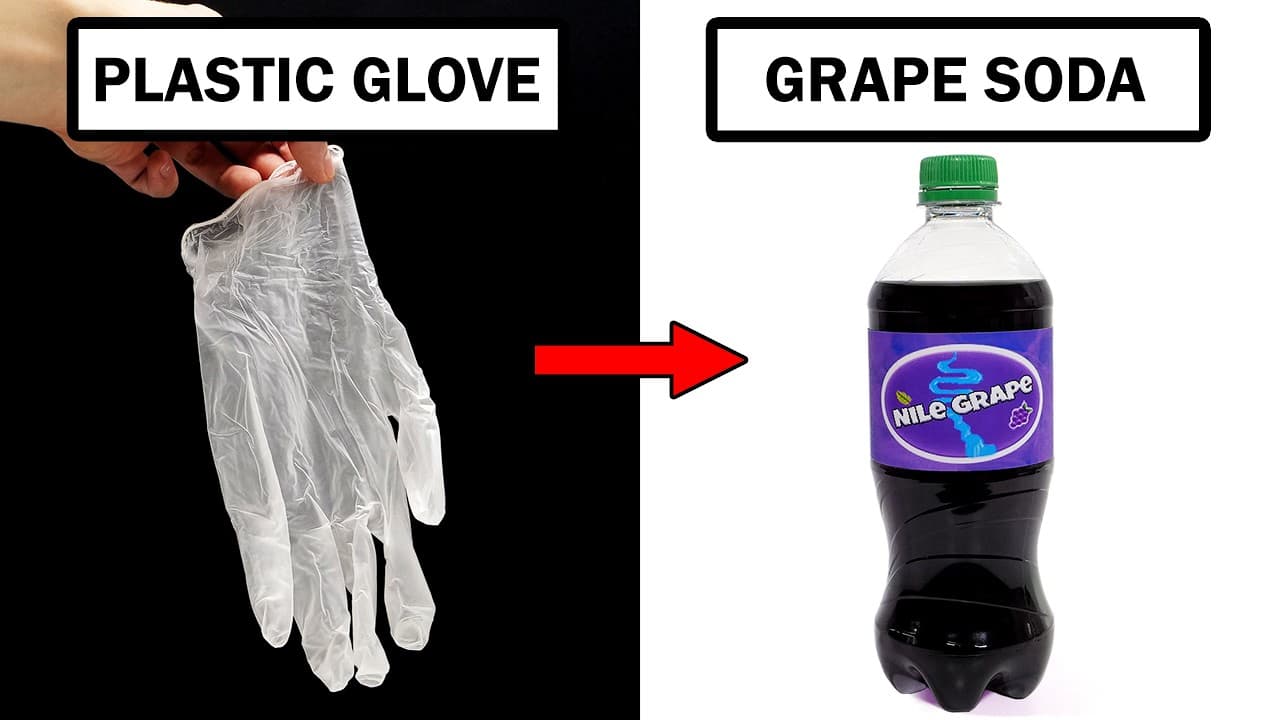
How Do You Turn Plastic Gloves Into Grape Soda?
TL;DR
You can turn plastic gloves into grape soda by extracting phthalate ester, converting it through several chemical reactions into phthalic anhydride, and finally synthesizing methyl anthranilate for flavor. The process involves multiple steps and requires careful temperature control and purification, ultimately resulting in a grape-flavored soda.
Transcript
this video has been sponsored by audible in general i've always liked weird chemical transformations and over the years i think i've done a few good ones like turning my pee into an artificial sweetener and tasting it and turning toilet paper into drinkable alcohol something that i've always wanted to do though was turn plastic gloves into grape so... Read More
Key Insights
- 🥊 Plastic gloves, specifically vinyl gloves, contain a chemical called phthalate ester, which is extracted and used as a key ingredient in the chemical transformation process.
- 🍇 Chemical reactions, such as converting phthalate ester into sodium phthalate, phthalic anhydride, and anthranilic acid, are carried out to obtain the desired grape flavor compound.
- 🥳 The process of transforming plastic gloves into grape soda involves multiple steps and can be time-consuming, taking over 40 days to complete.
Install to Summarize YouTube Videos and Get Transcripts
Explore YouTube Video Summarizer or Get YouTube Transcript Extractor
Questions & Answers
Q: How does the presenter extract the phthalate ester from the vinyl gloves?
The presenter cuts the gloves into small pieces and dissolves them in isopropyl alcohol, which helps dissolve the phthalate ester and separate it from the vinyl plastic. The solution is then filtered to remove glove pieces.
Q: What is the purpose of converting phthalic anhydride into anthranilic acid?
Anthranilic acid is the precursor for producing methyl anthranilate, which is the compound responsible for the grape flavor. By converting phthalic anhydride into anthranilic acid, the presenter prepares the necessary building block for creating the grape flavor compound.
Q: How does the presenter determine the quantity of grape flavor to add to the homemade soda?
The presenter refers to the ingredients list of grape Kool-Aid and adjusts the sugar content to match that of other grape sodas in the market. The amount of grape flavor (methyl anthranilate) added is based on personal preference, with the presenter using approximately 25mg for each batch of soda.
Q: Is the homemade grape soda similar in taste to commercially available grape sodas?
The presenter mentions that the homemade grape soda has a distinct grape flavor, but it may not have the same complexity or intensity as commercial grape sodas. The aroma of the homemade soda might have a slight musty or off-putting scent, which is different from the pure grape candy smell.
Summary & Key Takeaways
-
The presenter aims to extract a chemical called phthalate ester from vinyl gloves and convert it into grape flavor using various chemical reactions.
-
The transformation involves steps such as dissolving the phthalate ester, converting it into sodium phthalate, converting it into purified phthalic anhydride, and further converting it into anthranilic acid.
-
The final step involves using methyl anthranilate to flavor the grape soda.
Read in Other Languages (beta)
Share This Summary 📚
Summarize YouTube Videos and Get Video Transcripts with 1-Click
Try YouTube Summary with ChatGPT & Claude or YouTube Transcript Generator
Explore More Summaries from NileRed 📚
Summarize YouTube Videos and Get Video Transcripts with 1-Click
Try YouTube Summary with ChatGPT & Claude or YouTube Transcript Generator