How OpenAI Uses AI and Why Korea Matters
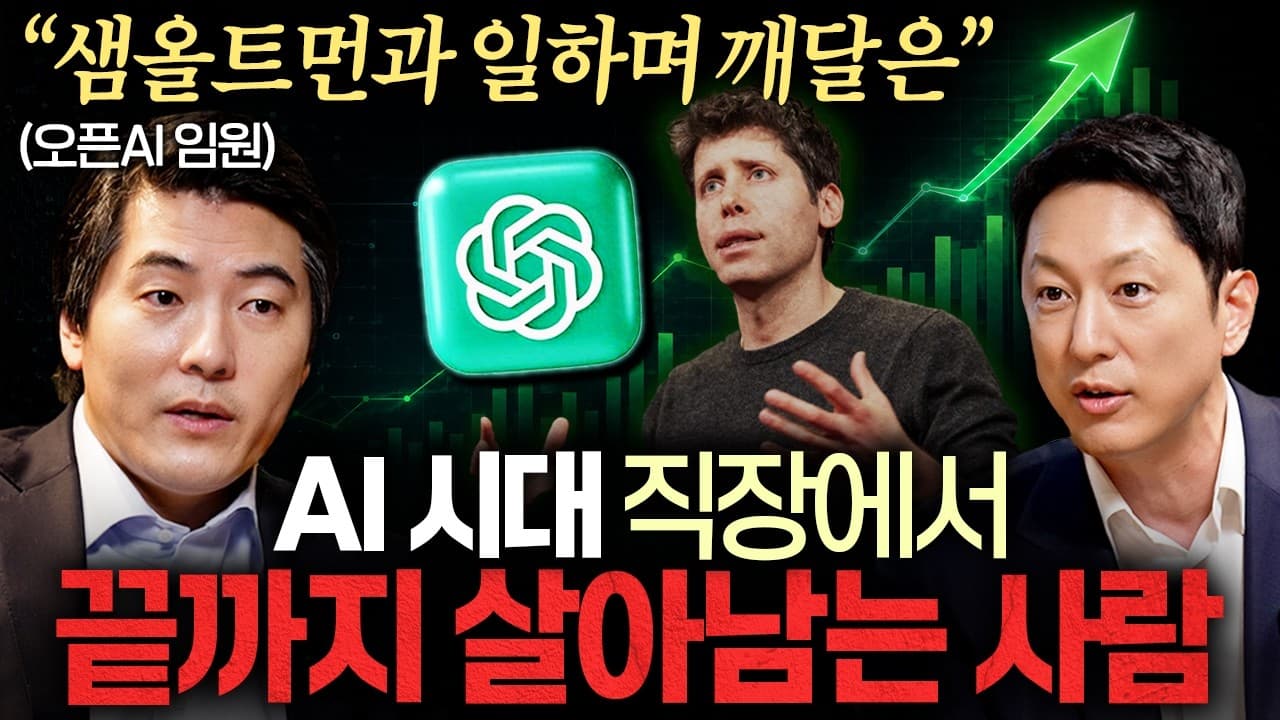
TL;DR
AI becomes most useful when it can search connected workplace systems, synthesize scattered information, create software, and carry out approved actions. OpenAI strategy chief Jason Kwon says these capabilities save him hours, while Korea matters because of its unusually strong ChatGPT adoption, advanced digital economy, semiconductor supply chain, and position in high-bandwidth memory production.
Transcript
The place where Korea is really number one is in HBM. One of the most critical components of AI Korea [music] produces. Oh, sorry. [laughter] Right now, what you see is AI [music] demand is going like this. And so, one of the three most important countries I would say [music] Thanks for having me here today. My name is Jason Quan. I'm the chief str... Read More
Key Insights
- AI is most useful at work when it connects to email, messaging, calendars, documents, and other internal systems. It can search these sources, understand their contents, prioritize important information, and present a consolidated answer without requiring the user to inspect every source manually.
- Codex can create and execute software programs in response to natural-language instructions. Kwon uses it to assemble dashboards from arbitrary data sources, track selected statistics, and produce a functioning application without personally programming it or assigning the work to another person.
- Computer use shifts AI from drafting content to carrying out supervised actions. An AI system can open an email application, prepare a message for a specified recipient, ask the user to confirm or revise it, and then send it after approval.
- AI can increase capability as well as save time. Kwon can generate draft campaign images, marketing copy, and a campaign concept from an idea, then use those artifacts to communicate his intentions more clearly to a marketing professional.
- Korea is one of OpenAI's top five markets for consumer subscriptions, according to Kwon. He attributes this strong adoption to high achievement, interest in learning languages, competitiveness, broad generational appeal, strong internet connectivity, and a tendency to adopt technology quickly.
- Conversational AI makes computers feel more natural because users can ask varied questions and receive nonidentical responses. Kwon describes a broader transition in which computers increasingly interpret ordinary language, answer questions, and execute instructions instead of forcing people through rigid interfaces.
- Korea is strategically important to the AI supply chain because data centers require both logic chips and memory chips. Kwon identifies high-bandwidth memory as a field where Korea leads and says SK Hynix and Samsung together hold more than 80 percent of the market.
- AI compute capacity remains constrained by hardware production. Kwon says AI laboratories periodically run out of compute and argues that current production of both logic and memory chips is still insufficient relative to the observed growth in AI usage and development.
Install to Summarize YouTube Videos and Get Transcripts
Explore YouTube Video Summarizer or Get YouTube Transcript Extractor
Questions & Answers
Q: How does an OpenAI executive use AI at work each day?
Jason Kwon uses ChatGPT and Codex to review connected workplace information, including Slack, email, calendars, and documents. He asks the system to identify the ten most important matters requiring attention or to gather every relevant source on a subject. He also uses AI for legal analysis, email drafting, dashboard creation, software generation, and supervised computer actions, which he says saves him hours each day.
Q: How can AI organize information across workplace systems?
AI can search connected systems such as Slack, email, Google Docs, and calendars, then read, interpret, analyze, and combine the relevant material. For example, a user can request the key sources needed to understand a subject within the next hour. The system can identify useful channels, messages, emails, and documents, then present a synthesized answer instead of requiring separate manual searches.
Q: What is the difference between conversational AI and computer use?
Conversational AI primarily responds with information or drafts, while computer use can interact with software to complete a requested task. Kwon gives the example of asking Codex to write an email to a particular person. The system can open the email program, prepare the message, return for confirmation or editing, and send it after the user approves the result.
Q: How can Codex create dashboards from business data?
Codex can be directed toward multiple data sources and given a natural-language request describing which statistics to track and over what period. It then writes the required program and produces a dashboard. Kwon says this gives him a custom software application for understanding large amounts of information, without requiring him to program it personally or ask another person to build it.
Q: Why is ChatGPT especially popular in Korea?
Kwon says Korea ranks among OpenAI's top five markets for consumer subscriptions even though its GDP ranking is outside the top ten. He connects this adoption to Koreans being high achievers, interested in rapid learning, enthusiastic about language study, competitive in seeking practical advantages, and quick to adopt new technology. Strong internet connectivity and interest across generations also contributed to early usage.
Q: Why does OpenAI consider Korea strategically important?
Korea combines advanced digital adoption with a central role in the AI hardware supply chain. Kwon highlights its internet connectivity, major consumer use of AI, device manufacturing through companies such as Samsung, and leadership in high-bandwidth memory. These characteristics make Korea important both as a market where new usage patterns emerge and as a supplier of components required for AI data centers.
Q: Why is high-bandwidth memory important for AI infrastructure?
AI data centers need both logic chips and memory chips to provide the compute used for training and operating AI systems. Kwon identifies high-bandwidth memory as one of the most critical AI components and says Korea is the leading producer. He states that SK Hynix and Samsung together hold more than 80 percent of that market, giving Korea a major strategic position.
Q: How does AI enable work that a person could not do before?
AI can help a person create useful drafts outside their own professional specialty. Kwon gives the example of turning an idea for a marketing campaign into images, copy, and an initial campaign concept. Those materials let him show a marketing professional what he has in mind more clearly than an improvised verbal explanation or a rough drawing could, expanding his practical capabilities.
Summary & Key Takeaways
-
Jason Kwon describes using ChatGPT and Codex as connected workplace assistants rather than simple chat tools. They review email, Slack, calendars, documents, and other sources, identify important items, research topics, draft communications, build dashboards, and perform computer actions after requesting confirmation, saving him hours of work each day.
-
AI expands the range of work an individual can attempt, not merely the speed of existing tasks. Kwon can turn an early marketing idea into draft imagery, copy, and a campaign concept, making it easier to communicate his intent to specialists. He also uses AI for structured legal analysis and rapid software creation.
-
Korea is important to OpenAI because adoption exceeds what baseline economic measures might suggest, while the country also has exceptional connectivity, fast technology adoption, major device manufacturing, and a critical semiconductor role. Kwon particularly highlights Korean production of high-bandwidth memory, which data centers need alongside logic chips for AI training and operation.
Read in Other Languages (beta)
Share This Summary 📚
Summarize YouTube Videos and Get Video Transcripts with 1-Click
Try YouTube Summary with ChatGPT & Claude or YouTube Transcript Generator
Explore More Summaries from 지식인사이드 📚






Summarize YouTube Videos and Get Video Transcripts with 1-Click
Try YouTube Summary with ChatGPT & Claude or YouTube Transcript Generator