Is Thomas Bernhard's Woodcutters Worth Reading?
TL;DR
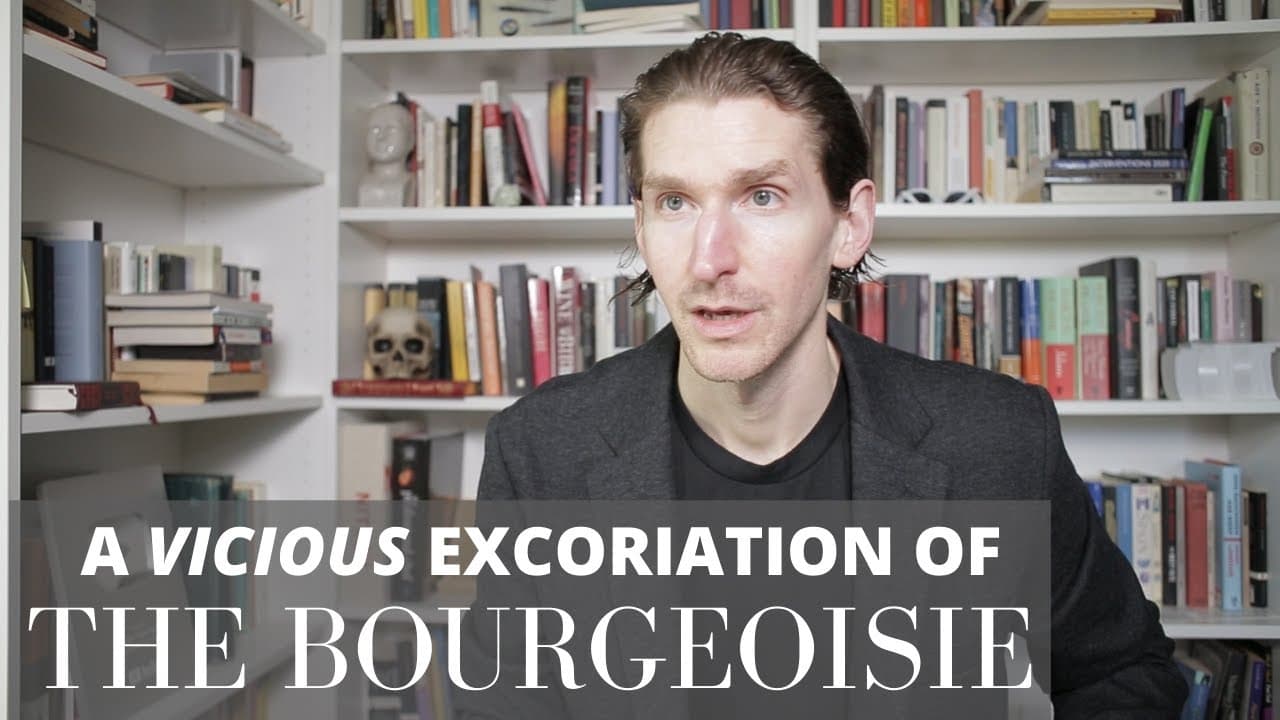
Woodcutters is worth reading for its flowing, caustic examination of artistic pretension, hypocrisy, damaged relationships, and the narrator's own failings. Set mainly at a Viennese dinner party after a friend's funeral, the novel turns private resentment into dark comedy and social criticism, while earning credibility by subjecting the narrator to the same ruthless scrutiny directed at everyone else.
Transcript
his vitriol you know for some i imagine is off-putting but for me it possesses a crystal clear gravitational pull because after a couple sentences you realize you are reading a caustic courageous genius better than food man good afternoon everyone welcome to better than food book reviews i'm your host clifford lee sergeant great to see you ... Read More
Key Insights
- Woodcutters is a short novel published in Austria in 1984, and its initial controversy included a temporary ban following a defamation accusation by Gerhard Lampersberg, whom the reviewer identifies as the basis for the character Auersberger.
- The novel's central setting is a bourgeois artistic dinner party in Vienna, where the hosts and guests present themselves as culturally important while the narrator sees their circle as pretentious, mediocre, and sustained by mutual self-regard.
- The dinner party serves two purposes: it welcomes a well-known local actor performing in Ibsen's The Wild Duck, and it becomes an informal memorial after the guests attend Joana's funeral earlier that day.
- The narration works through concentric circles of thought, beginning with silent attacks on the party guests and gradually expanding into memories that disclose the narrator's past, relationships, resentments, disappointments, and compromised place within the same social world.
- The narrator's hatred of the author Jeannie Billroth is tied to their former affair and its bitter aftermath, showing that his judgments arise not only from cultural observation but also from intimate conflicts and longstanding personal grievances.
- Auersberger represents wasted artistic promise because the narrator once considered him a musical genius capable of genuine achievement, but now views him as a pathetic alcoholic whose decline makes him both contemptible and darkly comic.
- Bernhard's social criticism gains force through self-accusation because the narrator recognizes that he remains connected to the people he condemns and may be every bit as mendacious, objectionable, and insufferable as they are.
- The reviewer's central lesson for cynical writers is that criticism becomes convincing when authors expose themselves as ruthlessly as their targets. Woodcutters succeeds because its scrutiny turns inward, preventing the narrator from claiming moral superiority over the people at the party.
Install to Summarize YouTube Videos and Get Transcripts
Explore YouTube Video Summarizer or Get YouTube Transcript Extractor
Questions & Answers
Q: What is Thomas Bernhard's Woodcutters about?
Woodcutters centers on an artistic dinner party hosted by the Auersbergers in Vienna. The guests have attended the funeral of their friend Joana earlier that day and are also waiting for a well-known local actor performing in Ibsen's The Wild Duck. From a wingback chair, the narrator silently attacks the guests while recalling his complicated history with them and exposing his own failings.
Q: Is Woodcutters worth reading?
Woodcutters is worth reading if caustic, introspective prose and severe criticism of artistic society appeal to you. The reviewer calls Bernhard a courageous genius and finds the writing engaging, flowing, observant, and darkly humorous. Its strongest quality is that the narrator does not reserve judgment for other people. His reflections also uncover his hypocrisy, damaged relationships, and participation in the social world he despises.
Q: Why was Woodcutters banned after its publication?
The review says Woodcutters was temporarily banned after Gerhard Lampersberg accused Thomas Bernhard of defamation. Lampersberg reportedly served as the basis for Auersberger, a character portrayed as an alcoholic who had once seemed capable of major musical achievement. According to the reviewer, Lampersberg later dropped the action, making the ban a temporary episode in the novel's publication history.
Q: How does the dinner party shape Woodcutters?
The dinner party confines the novel's social world and gives the narrator a fixed group of people to observe. While sitting in a wingback chair and drinking champagne, he silently criticizes the hosts and guests. Those judgments widen into memories of affairs, friendships, resentments, artistic ambitions, and betrayals, allowing one evening to reveal a much larger portrait of his past and personality.
Q: What role does Joana's death play in Woodcutters?
Joana's suicide gives the gathering its grief and moral unease. Many guests attended her funeral that morning, but the previously planned dinner still proceeds because they are expecting a prominent actor. The occasion therefore becomes both a cultural social event and an informal memorial. The narrator's lack of surprise at Joana's death also points toward their shared past and the darkness beneath the group's pretensions.
Q: How does Woodcutters criticize artistic society?
Woodcutters portrays its Viennese artistic circle as bourgeois, pretentious, mediocre, and eager to appear culturally important. The Auersbergers surround themselves with people whom the narrator regards as similarly limited, even though everyone behaves as if the gathering has great significance. Through his silent tirades, Bernhard exposes vanity, wasted talent, alcoholism, false prestige, resentment, and the gap between artistic ambition and actual achievement.
Q: Why is self-criticism important to Bernhard's style?
Self-criticism keeps the narrator's attacks from becoming simple claims of superiority. He admits that he continues to associate with the people he calls mendacious and insufferable, and he considers whether he may be even worse than they are. The reviewer argues that cynical writing becomes believable when the critic exposes himself with equal severity, turning the same uncompromising scrutiny inward.
Q: What is distinctive about the prose style of Woodcutters?
The prose is described as blunt, eloquent, vitriolic, and driven by intense excoriations. The narrator's thoughts move in expanding circles, repeatedly returning to the guests while revealing deeper layers of memory and personal involvement. This creates a flowing form of silent rant that combines dark humor, social observation, self-deprecation, and psychological exposure without allowing the narrator to escape his own criticism.
Summary & Key Takeaways
-
Thomas Bernhard's 1984 novel centers on a Viennese artistic dinner hosted by the Auersbergers. Guests gather after attending the funeral of their friend Joana, who died by suicide, while awaiting a well-known actor appearing in Ibsen's The Wild Duck. The uneasy occasion functions as both social event and informal memorial gathering.
-
Most of the novel follows the narrator sitting in a wingback chair, drinking champagne and silently criticizing the assembled guests. His circling thoughts gradually reveal his history with them, including a former affair, lost friendships, artistic disappointments, and his earlier admiration for Auersberger, a musician whom he now regards as a pathetic alcoholic.
-
The reviewer praises Bernhard's prose as blunt, eloquent, darkly humorous, and intensely engaging. Its attack on Vienna's bourgeois artistic society feels applicable to cultural circles elsewhere. Crucially, the narrator also exposes his own hypocrisy and objectionable behavior, demonstrating that convincing criticism requires the critic to withstand the same scrutiny applied to others.
Read in Other Languages (beta)
Share This Summary 📚
Summarize YouTube Videos and Get Video Transcripts with 1-Click
Try YouTube Summary with ChatGPT & Claude or YouTube Transcript Generator
Explore More Summaries from Better Than Food 📚


Summarize YouTube Videos and Get Video Transcripts with 1-Click
Try YouTube Summary with ChatGPT & Claude or YouTube Transcript Generator