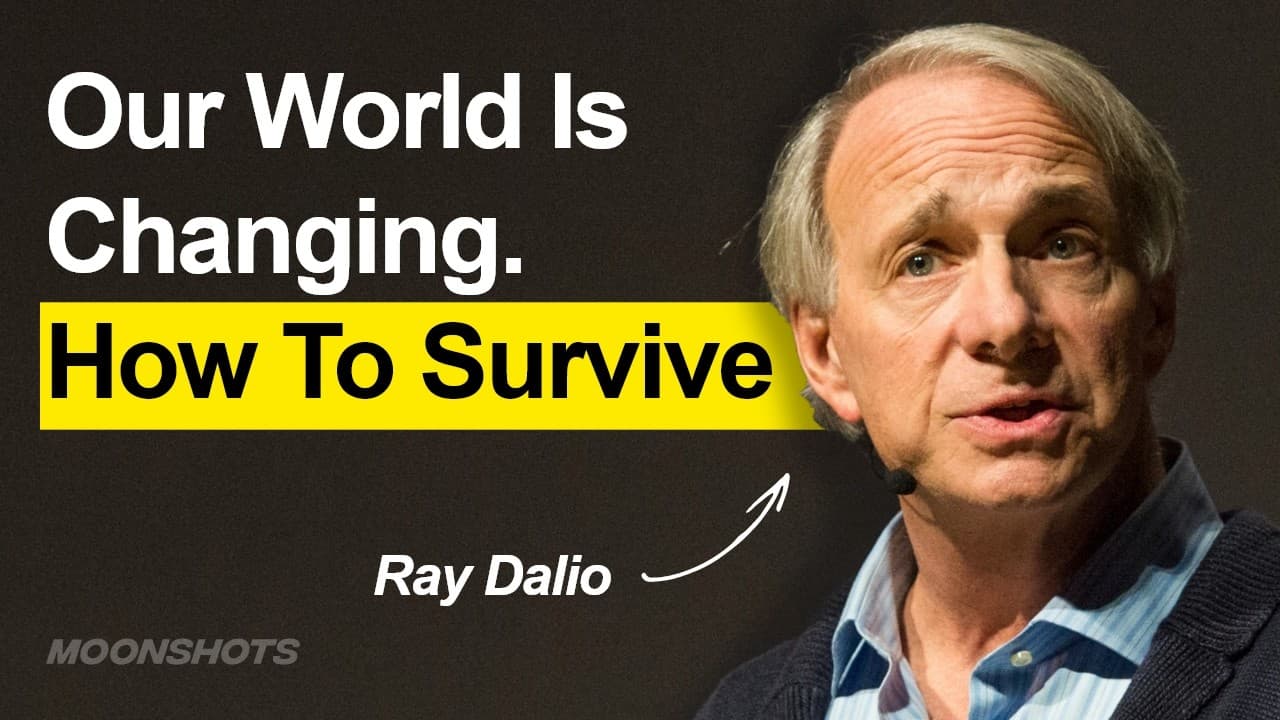
How Will AI and Robotics Reshape Jobs and the Economy? Ray Dalio | EP #148
TL;DR
AI and robotics could increase productivity and abundance while also accelerating financial strain, replacing jobs, and widening wealth gaps. Ray Dalio frames these risks through five forces shaping nations, including debt and economic cycles, political conflict, international order, natural events, and technological innovation. Read on to understand how these forces interact and why managing technological disruption matters.
Transcript
our country is going to go broke faster because of AI and Robotics that is likely to happen there's going to be great disruption I can vibrantly feel the energy in the biotech world in the AI World technology and AI is going to be a force and it's a Tailwind the question is is the Tailwind greater than the head wind listen I'm the guy who not the G... Read More
Key Insights
- AI and robotics are likely to replace many jobs, causing significant economic disruption.
- Technology raises productivity but also increases wealth inequality.
- The political and economic cycles are interconnected and influence each other.
- Global conflicts, like those between the US and China, impact economic stability.
- The rise of technology is a continuous force, but geopolitical and economic headwinds persist.
- Managing social issues is critical to mitigating the negative impacts of technological advancements.
- Governments face challenges in balancing debt and economic growth.
- The future of the economy depends on how well we manage the interplay of technology, politics, and global relations.
Install to Summarize YouTube Videos and Get Transcripts
Explore YouTube Video Summarizer or Get YouTube Transcript Extractor
Questions & Answers
Q: How will AI and robotics affect jobs and the global economy?
AI and robotics are likely to replace many jobs and cause major economic disruption. They can also raise productivity and create abundance, but the transition may increase wealth gaps and social tensions.
Q: What five forces does Ray Dalio identify as shaping the health and wealth of nations?
Dalio identifies economic cycles, political cycles, international order, climate and natural events, and technological innovation. These forces interact to influence national wealth, stability, and decline.
Q: Could AI cause countries to go broke faster?
Dalio says AI and robotics are likely to create great disruption and could make the country go broke faster. He presents technology as a tailwind, but asks whether it will be strong enough to overcome economic and geopolitical headwinds.
Q: How does Ray Dalio describe the short-term debt and economic cycle?
During a recession, inflation falls and credit is introduced, creating buying power that lifts spending and financial markets. As capacity becomes limited and inflation rises, interest rates are raised; Dalio says the current period is the 13th such cycle he has experienced.
Q: What is the long-term debt cycle?
Dalio describes a long-term debt cycle lasting about 80 years, give or take roughly 30 years. During that cycle, debt rises relative to incomes until it reaches a limitation.
Q: How are political conflict and economic cycles connected?
Dalio says the political cycle often coincides with the debt and economic cycle. Growing wealth and values gaps produce greater conflict, including populism on both the left and right and intensified fighting between them.
Q: Why do societies fail to learn from earlier economic and political crises?
Dalio argues that major breakdowns, wars, and long cycles typically happen only once in a lifetime. Because people have not personally experienced them, they often miss lessons that are visible in history.
Q: How does the US-China conflict affect economic stability?
The conversation characterizes the relationship with China as a war that cannot be lost. The existing discussion connects US-China conflict with broader geopolitical headwinds that can undermine global economic stability.
Summary & Key Takeaways
-
AI and robotics will transform the global economy by enhancing productivity but also displacing jobs. This disruption requires careful management to avoid exacerbating wealth gaps and social tensions. The interplay between technology and economic cycles is crucial in determining future prosperity.
-
Ray Dalio emphasizes the importance of understanding economic cycles and the forces driving national wealth. He highlights the role of technology in creating abundance but warns of the headwinds posed by geopolitical conflicts and demographic shifts.
-
The conversation explores the potential of AI to revolutionize decision-making and productivity, while also examining the challenges of managing economic cycles and geopolitical tensions. The future hinges on fostering collaboration and innovation to harness technology's benefits.
Read in Other Languages (beta)
Share This Summary 📚
Summarize YouTube Videos and Get Video Transcripts with 1-Click
Try YouTube Summary with ChatGPT & Claude or YouTube Transcript Generator
Explore More Summaries from Peter H. Diamandis 📚


Summarize YouTube Videos and Get Video Transcripts with 1-Click
Try YouTube Summary with ChatGPT & Claude or YouTube Transcript Generator