How Are Humanoid Robots Entering Real-World Jobs?
TL;DR
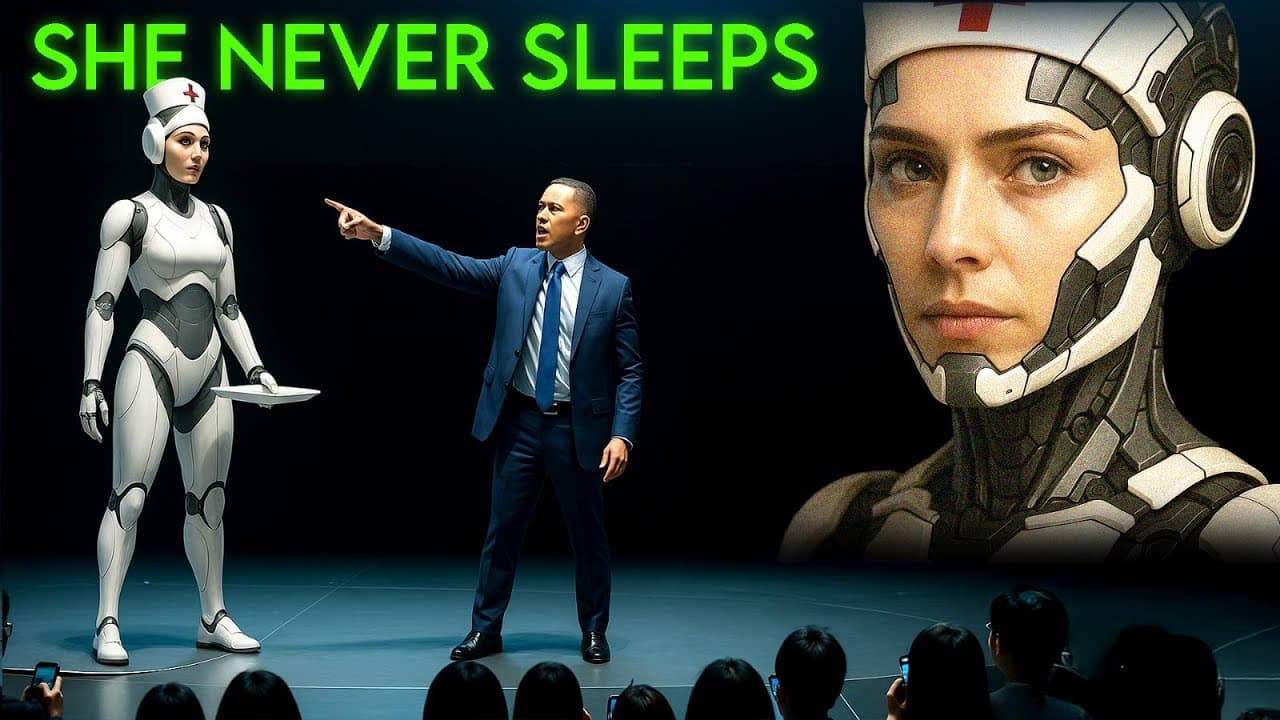
Humanoid robots are moving into hospitals, security trials, shipyards, and hazardous industrial sites to handle repetitive, physically demanding, or risky work. NuraBot supports patient care, while Persona AI and RoboForce target heavy industry. Carnegie Mellon’s FALCON framework improves the balance and precision needed for robots to walk while exerting force.
Transcript
Let's be honest, just a few years ago, humanoid robots were mostly stage performers. They looked impressive, sure, but they weren't doing anything useful in the real world. That's changing fast. In this video, we're diving into how Foxcon and Nvidia built a robotic nurse that's already assisting real patients, how Singapore, just brought in its fir... Read More
Key Insights
- NuraBot is an AI-powered humanoid nursing robot developed by Foxconn, Nvidia, Kawasaki, and Taichung Veterans General Hospital. It is designed to reduce pressure from healthcare labor shortages by taking responsibility for repetitive assistance and monitoring tasks.
- NuraBot can monitor vital signs, help patients move, deliver meals and medication, and provide companionship. Its sensors, language capabilities, and autonomous navigation also allow it to recognize recurring needs and adjust its routine as patient behavior changes.
- Certis is treating its first Agibot humanoid as a controlled research project rather than immediately assigning it security duties. The company is evaluating potential roles in building security, customer service, and facilities management while studying safe collaboration with existing staff.
- Persona AI is developing durable, agile humanoids for shipbuilding, large manufacturing sites, and outdoor environments. The company raised $27 million in pre-seed funding and reached an agreement with HD Hyundai, with initial shipyard deployments planned in about 18 months.
- Persona AI’s commercial model is robotics as a service, which allows companies to rent the robots they need instead of purchasing costly machines outright. Persona plans to manage the supporting service while customers use the robots to address shortages and hazardous work.
- Titan is a modular industrial robot available with wheels for smooth surfaces or tracks for rough terrain. RoboForce says it can handle 40 kilograms, operate for eight hours on one charge, and move items with one-millimeter precision in changing outdoor or industrial conditions.
- RoboForce’s industrial strategy centers on five primitive actions: pick, place, press, twist, and connect. The company argues that mastering these reusable movements allows Titan to perform many manufacturing, solar installation, wiring, material-handling, and equipment tasks with limited retraining.
- FALCON is a Carnegie Mellon control framework for forceful loco-manipulation, where a humanoid walks while applying controlled force with its arms. Separate leg and arm agents share information, helping tested robots maintain balance amid shifting loads, awkward angles, and unpredictable forces.
Install to Summarize YouTube Videos and Get Transcripts
Explore YouTube Video Summarizer or Get YouTube Transcript Extractor
Questions & Answers
Q: How does NuraBot help nurses and hospital patients?
NuraBot handles repetitive patient-support duties so nurses can spend more time on serious clinical work. It can monitor vital signs, flag unusual readings, help patients move, deliver meals and medication, and offer companionship. Its high-resolution sensors, language understanding, and autonomous navigation let it operate around patients while learning recurring needs, such as when someone usually gets up or requires help turning in bed.
Q: Who developed the NuraBot nursing robot?
NuraBot was developed through cooperation involving Foxconn, Nvidia, Kawasaki, and Taiwan’s Taichung Veterans General Hospital. The project applies Nvidia’s AI platform to real-time data processing while targeting practical hospital challenges, including labor shortages, patient monitoring, and caregiver burnout. The robot is presented as more than a mobile delivery device because it combines perception, navigation, language understanding, and the capacity to adapt its routines over time.
Q: Why is Certis testing a humanoid robot in Singapore?
Certis is testing its first Agibot humanoid to determine how this kind of machine could fit into security, customer service, and facilities management. It is currently a research project, not a deployed guard. Certis wants to study whether the robot can walk, converse, assist people, collaborate with employees, and potentially connect with Mozart, its platform for coordinating security, maintenance, and customer-facing operations.
Q: What is Persona AI building for shipyards?
Persona AI is building humanoid robots for physically demanding environments such as shipyards, large manufacturing sites, and outdoor workplaces. The machines are intended to combine human-like agility with durability for work that can be dangerous or exhausting. Persona has an agreement with HD Hyundai, described in the source as the world’s largest shipbuilder, and expects the first shipyard rollouts to occur in about 18 months.
Q: How does Persona AI’s robotics-as-a-service model work?
Persona AI plans to offer robots through a rental model instead of requiring companies to purchase expensive machines. Customers can rent the robotic capacity they need, while Persona manages the broader service. The approach is intended to make adoption easier for companies seeking to address labor shortages, improve workplace safety, and modernize operations without committing millions upfront to robot ownership and supporting infrastructure.
Q: What tasks and environments is RoboForce Titan designed for?
Titan is designed for demanding settings such as mines, solar farms, industrial manufacturing floors, and potentially off-world construction. It can use wheels on smoother surfaces or tracks on rough and uneven terrain, while its modular design supports different bases and attachments. RoboForce says Titan can carry up to 40 kilograms, achieve one-millimeter handling precision, and operate for a full eight-hour shift on one charge.
Q: What are RoboForce’s five primitive robot actions?
RoboForce defines five primitive actions as pick, place, press, twist, and connect. Its strategy is to perfect these reusable movements instead of creating a separate custom program for every assignment. The company argues that many industrial jobs, including installing solar panels, wiring assemblies, moving equipment, and handling materials, can be decomposed into these actions, allowing Titan to enter different sectors with minimal retraining.
Q: How does Carnegie Mellon’s FALCON framework improve humanoid control?
FALCON trains two AI agents separately, one for the legs and another for the arms, while allowing them to share information in real time. This arrangement helps a humanoid walk, preserve balance, and apply strong, precise hand forces simultaneously. Tests on Unitree G1 and Booster T1 robots handled shifting loads, awkward angles, and unpredictable forces, while arm accuracy improved by 100 percent compared with older methods.
Summary & Key Takeaways
-
Foxconn, Nvidia, Kawasaki, and Taichung Veterans General Hospital developed NuraBot to address healthcare labor shortages and caregiver burnout. The humanoid can monitor vital signs, support patient movement, deliver meals and medication, provide companionship, navigate autonomously, understand language, and adapt its routines when it recognizes recurring patient needs.
-
Singapore security company Certis is evaluating its first humanoid from Agibot as a research project. Possible applications include security, customer service, and facilities management. The controlled rollout will examine whether a walking, conversational robot can work alongside employees and connect with Mozart, Certis’s platform for coordinating security, maintenance, and customer-facing operations.
-
Industrial robotics companies are targeting difficult work beyond controlled factories. Persona AI plans shipyard deployments with HD Hyundai, while RoboForce’s Titan combines modular mobility, precision handling, a 40-kilogram payload, and an eight-hour runtime. Carnegie Mellon’s FALCON separately coordinates arm and leg agents so humanoids can exert force without losing balance.
Read in Other Languages (beta)
Share This Summary 📚
Summarize YouTube Videos and Get Video Transcripts with 1-Click
Try YouTube Summary with ChatGPT & Claude or YouTube Transcript Generator
Explore More Summaries from AI Revolution 📚


Summarize YouTube Videos and Get Video Transcripts with 1-Click
Try YouTube Summary with ChatGPT & Claude or YouTube Transcript Generator